
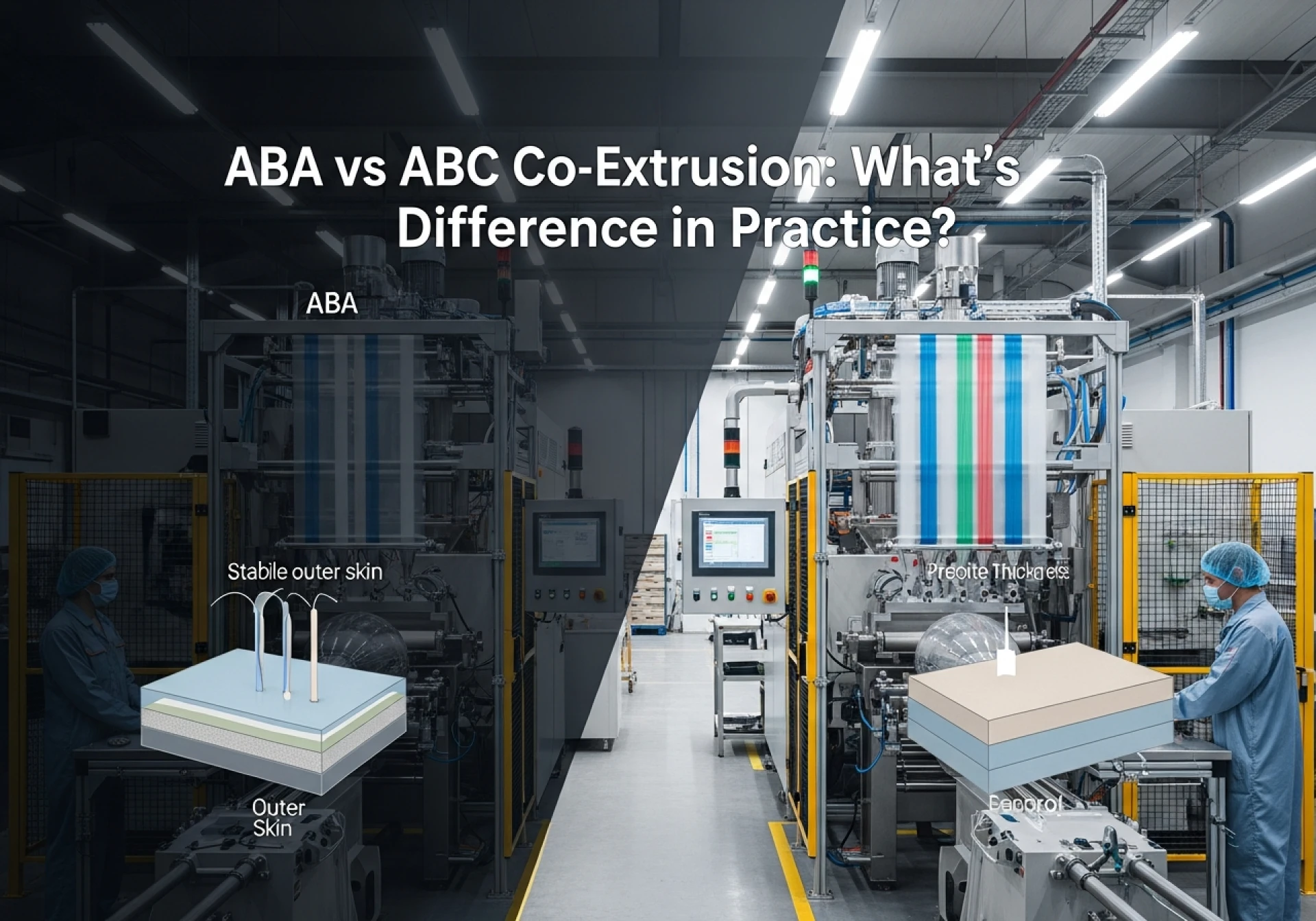
Flexible packaging relies on layered films for strength and control. Many US and UK plants use co-extrusion for daily output. An ABA film blowing machine places one core layer between two skin layers. This design lowers cost while holding key properties. ABC systems add a third material layer for more control.
How ABA and ABC differ on the floor
ABA lines run simpler layouts with fewer material feeds. Operators manage fewer settings during changeovers. According to 2025 US plastics trade data, ABA setups cut startup scrap by about 12%. You can check out ABA film blowing machine options to control waste. ABC lines offer more tuning but need longer setup time.
Material use and cost control
ABA uses recycled or filler-rich material in the center layer. Clean resin stays on the outer skins. UK packaging groups reported rising resin prices through 2025. Plants using ABA reduced virgin resin use by up to 18%. An ABA film blowing machine supports this approach without complex tooling.
Performance in real packaging jobs
ABC shines when barrier control matters most. Food packs needing gas or moisture limits benefit from a true third layer. ABA performs well for liners, mailers, and carry bags. A 2025 US retail mailer case study showed equal tear strength between ABA and ABC films. Output speed favored ABA during long runs.
Case study from US and UK plants
A US bag maker shared results with industry media in late 2025. The firm shifted 60% of SKUs from ABC to ABA. Energy use per ton dropped by 9%. A UK recycler-backed plant reported similar gains while boosting recycled content. Both relied on a modern ABA film blowing machine for steady output.
Planning for 2026 demand
Forecasts from trade groups expect steady flexible packaging growth into 2026. Cost pressure will remain high in the US and UK. Simpler lines reduce downtime during labor gaps. Many plants choose ABA for volume SKUs and keep ABC for specialty runs. An ABA film blowing machine fits this split strategy well.
Choosing what fits your product mix
No system wins every job. ABA suits a high volume and cost focus. ABC suits films needing precise barrier control. Matching the system to demand protects margins. Clear goals lead to better equipment choices.
Conclusion
ABA and ABC co-extrusion serve different needs in practice. ABA focuses on speed, cost, and recycled content use. ABC offers tighter layer control for specialty films. Data from 2025 shows many US and UK plants shifting volume work to ABA. The right choice depends on product goals, not theory.
FAQs
1. What is the main benefit of ABA over ABC?
Lower cost and simpler operation. It suits high-volume films.
2. Does ABA allow the use of recycled materials?
Yes. Recycled resin often sits in the core layer.
3. Is ABC always better for food packaging?
Often yes. Barrier control is stronger with three materials.
4. Which system runs faster at scale?
ABA usually runs faster. Fewer controls mean less downtime.
5. Will ABA remain popular in 2026?
Trends suggest yes. Cost pressure favors simpler multilayer systems.