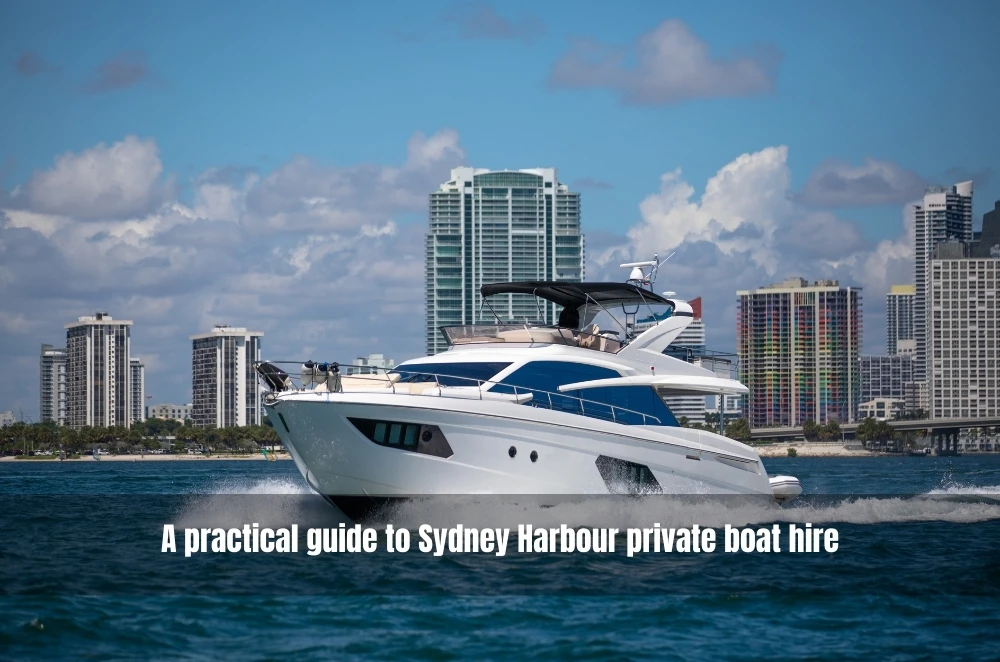
Sydney Harbour is one of the few places where the “postcard view” holds up in real life. From the water, the city looks wider and calmer, and you notice details you miss from land: the way coves tuck behind headlands, the change in light across the foreshore, and the rhythm of ferries and sailing boats moving through the channels.
But booking a private charter can feel unclear at first, because “private boat hire” covers a lot of different experiences. Some trips are relaxed, skippered cruises where you mostly turn up and enjoy. Others are sailing-focused days where you can be hands-on. Some are planned around swimming and a long lunch; others are all about sunset and a short, scenic loop.
If you’re researching private boat hire for Sydney Harbour trips, this guide breaks the process into a few simple decisions—so you can compare options without getting lost in boat specs or marketing language.
Start with the kind of day you actually want
Before you compare vessels or inclusions, decide what the trip should feel like. Most Sydney Harbour charters fall into a few common “day types”:
A relaxed sightseeing cruise
Best for mixed groups (locals plus visitors, families, out-of-towners) where the focus is conversation, comfort, and the Harbour’s landmark views. These trips tend to work well when you want a low-planning, low-pressure day.
A celebration with structure
Birthdays, hens/bucks gatherings, anniversaries and small corporate outings often benefit from a clear plan: when you board, when you stop, when you eat, when you take photos, and when you’re back. The more people you have, the more useful that structure becomes.
A sailing-forward experience
If you’re booking because you want the feel of being under sail—wind, movement, leaning into a breeze—look for charters described as sailing experiences (not just “Harbour cruise”). This is also where you might choose a longer duration, because sailing time matters.
Pick your route style: icons, coves, or a bit of both
Sydney Harbour offers two kinds of appeal at once: the big-ticket landmarks and the quieter pockets.
- Landmark loop: Opera House, Harbour Bridge, and key foreshore views. Ideal for first-time visitors or anyone who wants “classic Sydney” photos.
- Cove-and-foreshore cruise: calmer water and a more intimate feel—good if your group prefers a relaxed pace or is sensitive to motion.
- Balanced route: some landmark time, then a shift into calmer bays for swimming, lunch, or a longer stop.
If you have a must-see list (or a must-avoid list), say so early. It helps the skipper shape a route that suits your group rather than defaulting to a standard loop.
Timing changes everything: plan around light, heat and crowd levels
On the water, the same route can feel completely different depending on the time of day.
- Morning: typically cooler and often calmer. Great for sightseeing, photos with softer light, and avoiding peak crowds.
- Midday: bright, high-contrast light and more heat. Often best if swimming is a priority (where safe and appropriate), but shade becomes important.
- Late afternoon into sunset: the most atmospheric window, with warmer light and a more “occasion” feel. It’s also a popular time, so good logistics matter.
If you’re trying to keep things simple for a group, the easiest win is choosing a time that matches your goal: comfort (morning), swim and sun (midday), ambience (late afternoon).
Skippered vs self-drive: which is realistic for your group?
For Sydney Harbour trips, most private hires are skippered, which keeps the day straightforward—especially if you’re bringing guests, planning food and drinks, or you’re unfamiliar with local conditions and rules.
Self-drive options (where available) are a different type of day. They can be great for experienced hirers, but they come with extra requirements and responsibilities. If your priority is relaxing and hosting your group, a skippered charter usually makes the experience smoother.
Group size and comfort: what matters more than “capacity”
When comparing boats, “capacity” is only the starting point. Comfort depends on layout and how the group will use the space.
Consider:
- Shade: Where do people sit if they don’t want full sun for hours?
- Seating flow: Can everyone settle comfortably, or will people feel like they’re standing and shifting constantly?
- Movement: Is it easy to move from seating to viewing spots without bottlenecks?
- Facilities: For longer trips, toilet access becomes a real comfort factor.
A practical way to think about it: plan for the “quiet majority” in your group—people who want to sit, talk, snack, and take in the view—then add features for the energetic few who want to move around more.
Food and drinks: clarify the rules early
Different charters handle catering and BYO differently. Even if you’re keeping it casual, it helps to confirm:
- What food and drinks are allowed
- Whether glass is permitted
- Whether there’s cold storage (or if you need to bring your own)
- Any setup/pack-down expectations
- How waste is handled
If your trip is built around a long lunch, don’t leave this vague. Food planning is one of the easiest places for a day to feel “messy” if expectations aren’t clear.
Weather and conditions: set expectations without overthinking it
Sydney conditions can shift quickly—wind can build, temperatures can spike, or a day can turn cooler than you planned. You don’t need to become a forecast expert, but you can make the day more comfortable with simple preparation:
- Bring layers, even in warm months (it can feel cooler on the water).
- Pack sun protection and water—sun exposure is stronger on open water.
- If anyone is prone to motion sickness, plan a calmer route and avoid unnecessary open stretches.
A good charter feels unhurried and adaptable. The goal is a plan with enough flexibility that a small weather change doesn’t derail the whole experience.
Boarding logistics: the unglamorous detail that saves the day
Most “rough starts” come from logistics, not the Harbour. Aim to lock down:
- Exact boarding location and the meeting time
- Arrival buffer for the group (late arrivals compound quickly)
- Parking/public transport reality for that location
- What to bring and what not to bring (including footwear expectations)
- Accessibility needs if relevant
If you’re organising a group, consider sending one simple message with these details and a reminder to arrive early. It prevents last-minute confusion and keeps the trip feeling relaxed from the start.
A short checklist to compare options confidently
When you’re weighing up providers, these questions usually reveal the differences that matter:
- What style of trip is this best for—relaxed cruise, celebration, or sailing-focused?
- What route do you recommend for this group and time of day, and why?
- What’s included vs optional (food/drinks, ice, storage, equipment)?
- Where exactly do we board, and what should guests know in advance?
- How does the boat suit our group’s comfort needs (shade, seating, facilities)?
- What happens if conditions change on the day?
You don’t need technical answers. You’re listening for clarity, planning, and whether the operator is thinking about your group’s experience—not just the boat.
Key Takeaways
- Decide the type of day first (relaxed cruise, celebration, or sailing-forward) to narrow choices quickly.
- Route style matters: iconic landmarks, quiet coves, or a balanced mix.
- Timing shapes the mood—morning for comfort, midday for sun/swim plans, late afternoon for atmosphere.
- Comfort depends on shade, seating flow, and facilities—not just “capacity.”
- Clear logistics (boarding point, what to bring, food rules) prevent avoidable stress.