Sports streaming has become an important part of the media landscape. Fans increasingly expect to watch competitions on phones, computers, connected TVs, and other devices. For organizations planning a sports streaming platform, delivering live events reliably is a central technical challenge.
A successful service needs more than a video player. It must receive live sources, manage production workflows, distribute streams, and provide viewers with a clear way to discover events. Understanding ingest in broadcasting is an important step in designing this system.
Define the Sports Streaming Service
Begin by identifying the sports, leagues, teams, or communities the platform will serve. A service focused on local competitions may have different needs from one covering professional tournaments across multiple regions.
Decide whether the platform will offer:
- Live event streaming
- Replay and on-demand content
- Highlights and short clips
- Commentary and analysis
- Event schedules and notifications
- Subscription or advertising-supported access
A focused offering can help the platform establish its audience and make content acquisition more manageable.
Understand Ingest in Broadcasting
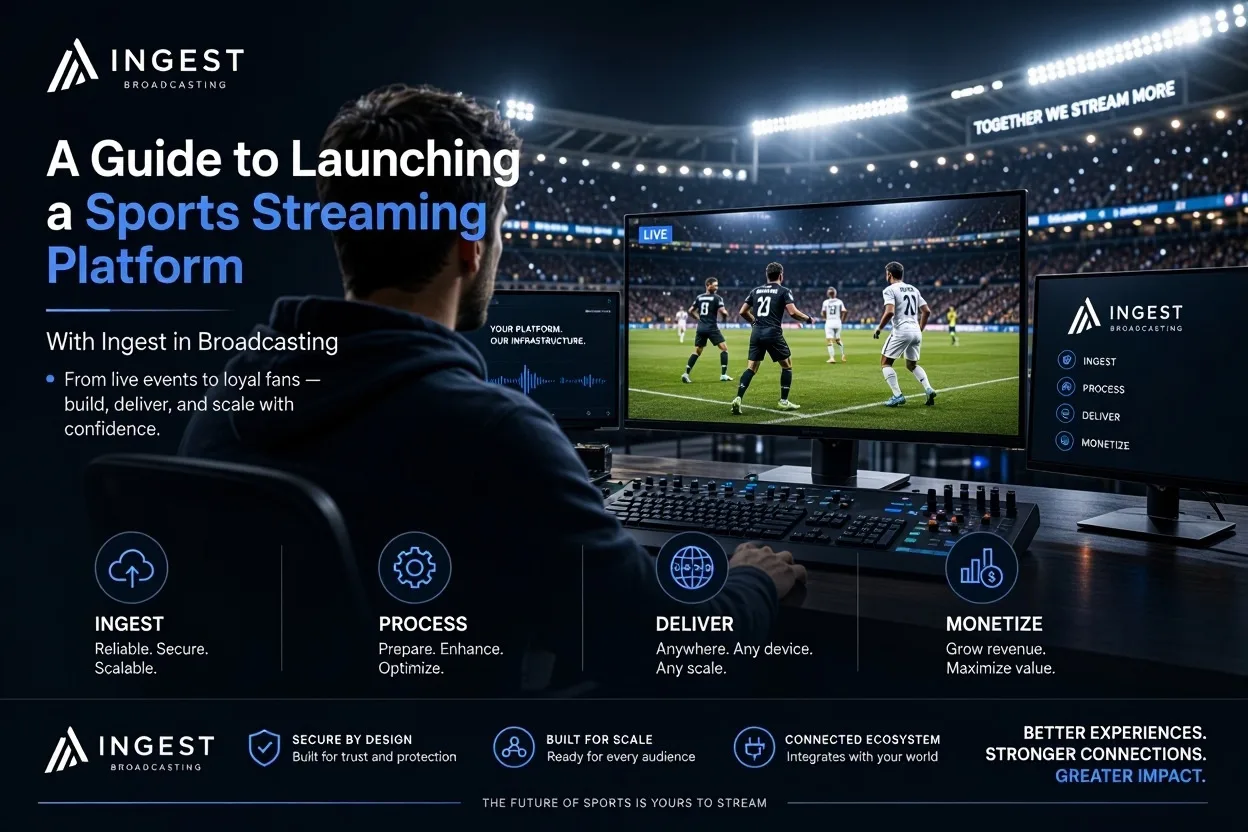
Ingest in broadcasting refers to receiving media signals from a source and bringing them into a system for production, processing, or distribution.
For sports streaming, sources may include cameras at the venue, production trucks, remote commentators, or an external broadcast partner. The incoming feeds may need to be monitored, switched, encoded, or routed before reaching viewers.
The ingest workflow should account for the source format, network conditions, latency, audio quality, and synchronization. These details can have a significant impact on the live viewing experience.
Plan the Live Production Workflow
A sports event may use multiple cameras, graphics, commentary, and replay sources. The production workflow combines these elements into a program feed.
For a smaller event, a single camera and a simple encoder may be sufficient. Larger events may require multiple cameras, dedicated switching, replay systems, and professional audio.
Test the complete production path before the event. Verify camera connections, audio levels, graphics, network bandwidth, and the destination of the final stream.
Deliver the Stream to Viewers
After production, the stream must be encoded and distributed to viewers. A content delivery network can help deliver media from infrastructure closer to the audience.
Adaptive bitrate streaming can allow compatible players to adjust video quality based on network conditions. This can help maintain playback when a viewer’s connection changes.
Test the platform on a range of devices and networks. Check startup time, buffering, audio synchronization, and the ability to recover from temporary connection issues.
Manage Event Schedules and Content
A sports platform should provide accurate event information. Viewers need to know when matches begin, which teams are playing, and whether a stream is live or available as a replay.
A schedule or guide can help users find events. If a match is delayed or its start time changes, update the relevant program information.
After the event, the platform may offer replays, highlights, and short clips. Organizing these assets can extend the value of the live production.
Choose a Revenue Model
Sports streaming platforms may use subscriptions, pay-per-view, advertising, sponsorships, or a combination. The appropriate model depends on the content rights, audience, and distribution strategy.
Make pricing and access rules clear. Viewers should understand whether an event is included in a subscription, requires a separate purchase, or is available for free.
Conclusion
Launching a sports streaming platform requires a strong content strategy, reliable live production, and dependable distribution. Ingest in broadcasting helps bring venue and remote sources into the production workflow. By testing the entire signal path, managing event information carefully, and designing for different devices, a platform can provide sports fans with a more consistent live viewing experience