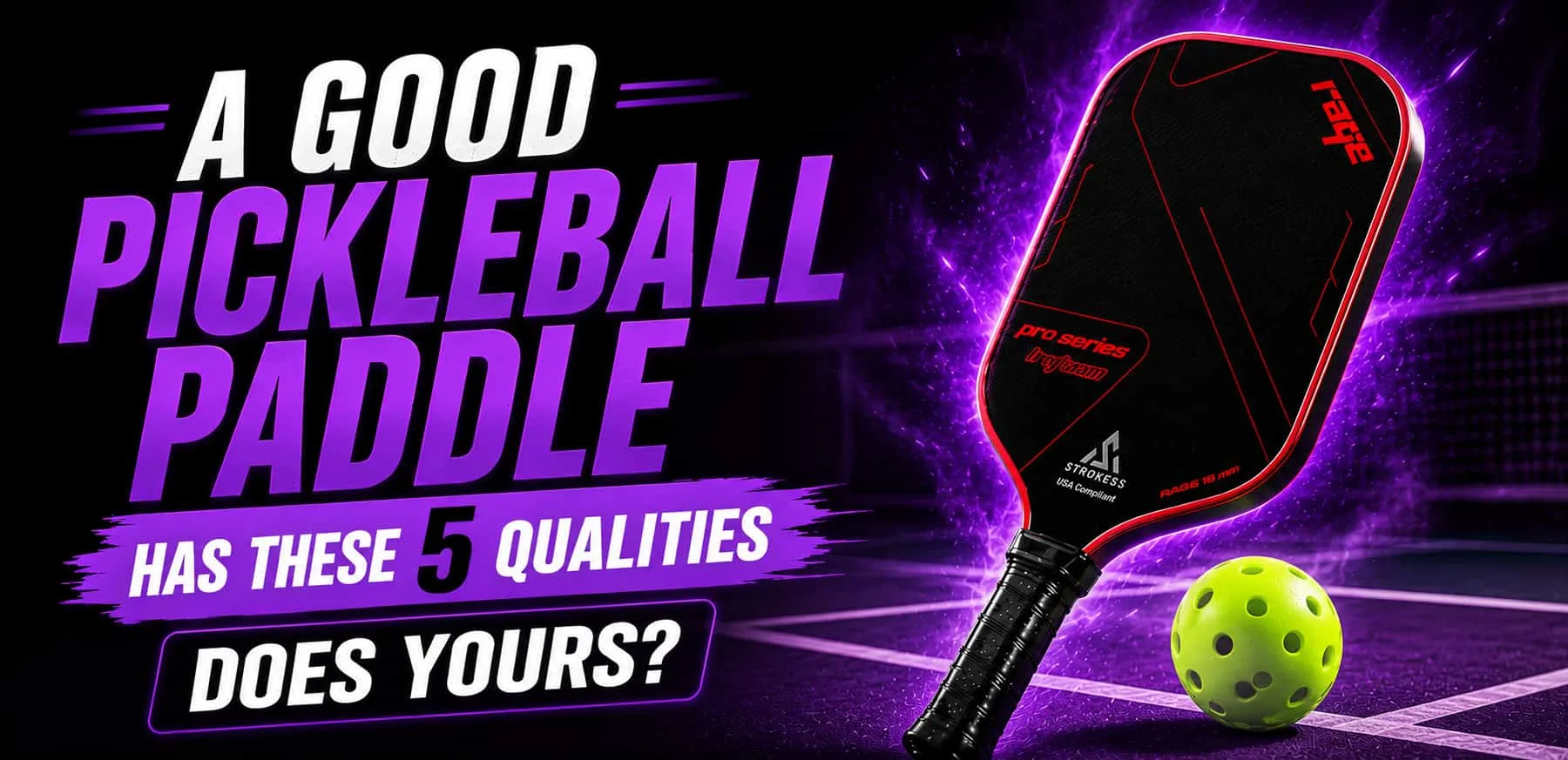
Most players pick up a pickleball paddle based on how it looks, what it costs, or what someone else recommended. And for a while, that feels fine. But then the results do not come. The control is inconsistent. The spin is not there. The feel is just — off.
Here is the thing nobody tells you upfront. A good pickleball paddle is not about brand name or price tag. It is about five specific qualities that determine how the paddle performs in your hands, on your shots, in your game. Get all five right and everything clicks. Miss even one and you will always feel like something is holding you back.
This is your checklist. Go through it honestly — and find out if your current paddle actually measures up.
Top 5 Qualities of a Good Pickleball Paddle
Quality 1 — The Right Face Material
The face of your pickleball paddle is the first thing that touches the ball on every single shot. And yet most players buying pickleball paddles spend more time looking at the color than the face material. That is a mistake that costs them every time they step on the court.
What are the best pickleball paddles made of on the face? There are three options:
- Graphite — Light, stiff, and precise. Good for players who prioritize control and fast reactions at the net. But it has a ceiling — limited spin potential and less power compared to newer materials. A graphite paddle can be a good pickleball paddle for certain playing styles but it is not the top performer anymore.
- Fiberglass — More power, softer feel, and a more forgiving sweet spot. A solid choice for beginners and intermediate players. Many entry-level best pickleball paddles use fiberglass because it is easy to play with from day one. Great for learning — but players who grow serious about the game eventually want more.
- Carbon Fiber — This is where the real difference lives. A carbon fiber pickleball paddle with a raw T700 surface gives you elite spin, strong control, and a feel that simply cannot be matched by graphite or fiberglass. The textured surface grips the ball naturally and generates spin without extra effort on your part.
What is the best material for pickleball paddles if you want to play seriously? Carbon fiber — every time. The face material alone can be the difference between a good paddle and a great one.
Quality 2 — A Core That Matches Your Game
The core is the inside of your pickleball paddle — the part nobody sees but everybody feels. And it is the most underrated quality in the entire paddle buying decision.
A good pickleball paddle needs a core that matches how you play. Here is what the options actually mean:
Polypropylene Honeycomb Core — The most widely used core in pickleball paddles today. Reliable, durable, and available in different thicknesses. A 16mm core gives you a softer, more controlled feel — better for kitchen play and dinking. A 13mm core gives you more pop — better for power players and baseline hitters. Most best pickleball paddles in the mid-range use this core.
Foam Core — The newest and most advanced option in pickleball equipment technology right now. Foam core paddles offer better vibration dampening, a significantly larger sweet spot, and longer lasting durability compared to honeycomb. This is the technology that premium pickleball paddles are built around today — and it represents a genuine upgrade for players who take their game seriously.
What is the best type of pickleball paddle overall? One that combines a carbon fiber face with a foam core — giving you the best of spin, power, control, and durability in one package.
Quality 3 — The Correct Weight for Your Playing Style
Weight is the quality that changes how the entire paddle feels in your hand — and most players get it wrong at least once before they find what works.
Pickleball paddles come in three weight ranges and each one suits a different type of player:
1. Lightweight — Under 7.3 oz
Fast swing speed and easy maneuverability. Great for net play, quick reactions, and players who have shoulder or arm issues. But you trade power — drives and serves will not have the same punch as a heavier paddle.
2. Midweight — 7.3 to 8.3 oz
The sweet spot for most players. Enough power for baseline play, enough control for the kitchen, and comfortable enough for long sessions without fatigue. Most best pickleball paddles for all-round players fall in this range.
3. Heavyweight — Over 8.3 oz
Maximum power on drives and serves. But slower swing speed and more physical toll over time. Only makes sense for players who specifically need that extra punch and have the strength to sustain it.
What is the best pickleball paddle for a beginner? Almost always midweight — forgiving enough to learn with, powerful enough to grow into. Start here and adjust as your game develops.
A good pickleball paddle always matches the player’s physical game — not just what looks impressive in the product listing.
Quality 4 — Surface Texture That Actually Generates Spin
Spin is one of the most important weapons in modern pickleball. A paddle that generates spin gives you more shot options, more placement control, and more ways to put pressure on your opponent with every rally.
What is the best pickleball paddle for spin? The answer is always about surface texture. A raw carbon fiber pickleball paddle surface — especially T700 — has a natural micro-weave that grips the ball on contact and generates spin automatically. The rougher the surface within official limits, the more spin potential you get.
Here is something worth knowing — USA Pickleball regulates surface roughness at Rz ≤ 30 µm and Rt ≤ 40 µm. This means not all carbon fiber pickleball paddle options perform equally. The best ones are engineered right at the performance limit to give you maximum legal spin on every shot.
But here is the hidden problem. That raw carbon texture wears down with repeated use. The micro-weave that creates friction gradually smooths out over weeks and months of play. This is why premium pickleball paddles built with advanced durable grit technology are worth the investment — they maintain peak spin performance significantly longer than standard surfaces.
A good pickleball paddle does not just generate spin on day one. It keeps generating spin on day one hundred.
Quality 5 — The Right Grip Size and Comfort
All four qualities above mean nothing if the paddle does not feel right in your hand. Grip size is the most personal quality of any pickleball paddle — and it is the one most players figure out too late.
Pickleball paddles typically come in grip sizes ranging from 4 inches to 4.5 inches in circumference. The right way to find your size — measure from the bottom of your palm to the tip of your ring finger. That is your grip size.
Too small and you over-squeeze the handle, causing arm fatigue and reduced shot accuracy. Too large and you lose wrist flexibility — which kills your ability to react quickly during fast kitchen exchanges.
Pickleball paddle covers and overgrips can help fine-tune your grip size after purchase. A quality overgrip applied under your cover can increase the circumference slightly — giving you a more custom feel without replacing the paddle. Most premium pickleball paddles come with high-quality grips already installed, but always check the size before you buy pickleball paddles so you are not adjusting from the start.
A good pickleball paddle feels like a natural extension of your hand — not something you are fighting to control.
Final Word — Does Your Paddle Have All 5?
Go back through the list. Be honest.
- Right face material — carbon fiber for serious players
- Right core — foam or polypropylene matched to your style
- Right weight — midweight for most, adjusted for your game
- Surface texture — generates and maintains spin over time
- Right grip size — feels natural, not forced
A good pickleball paddle is not the most expensive one in the shop. It is not the flashiest. It is the one that ticks every box on this list for your specific game and your specific hands.
If you are still searching for that paddle — if you are looking for pickleball paddles near me or exploring pickleball paddles in India options online — use this checklist every single time. It will save you money, save you frustration, and get you playing better faster.
Because the right paddle does not just feel good. It makes you play good.