Demand for strong boxes keeps growing in India. Factories ship heavy goods. Online stores send parcels across the country. Exporters need cartons that survive long trips. All of them need board that does not crush, tear, or sag.
This is where 5 ply board earns its place. It is stronger than 3 ply board, and many buyers now ask for it. To make it well, a box maker needs the right line.
In this guide, we explain the 5 ply high-speed plant in plain words. You will learn how it works, what it needs, how to size it, and how to pick a maker. We wrote it for corrugated box plant owners in India, from first-time buyers to owners who want to add a second line.
Why 5 Ply Board Matters for Indian Box Makers
Corrugated board is paper glued in layers. Flat sheets called liners sit on the outside. Wavy sheets called flutes sit between them. The wave shape works like a row of small arches. It carries load and cushions the goods.
Ply means layer. A 3 ply board has two liners and one flute. A 5 ply board has three liners and two flutes. People also call it double wall board.
Two flute layers give more cushion and more stacking strength. This helps in many Indian trade lanes. Boxes ride on trucks for days. They sit in hot, humid godowns. They get stacked high on pallets. A stronger board gives you a better chance of arriving whole.
5 ply board also lets you serve buyers who pay for strength. These include makers of machine parts, appliances, auto parts, bulk food items, and export goods. Many of these buyers will not accept a weak box.
What Is a 5 Ply High-Speed Plant?
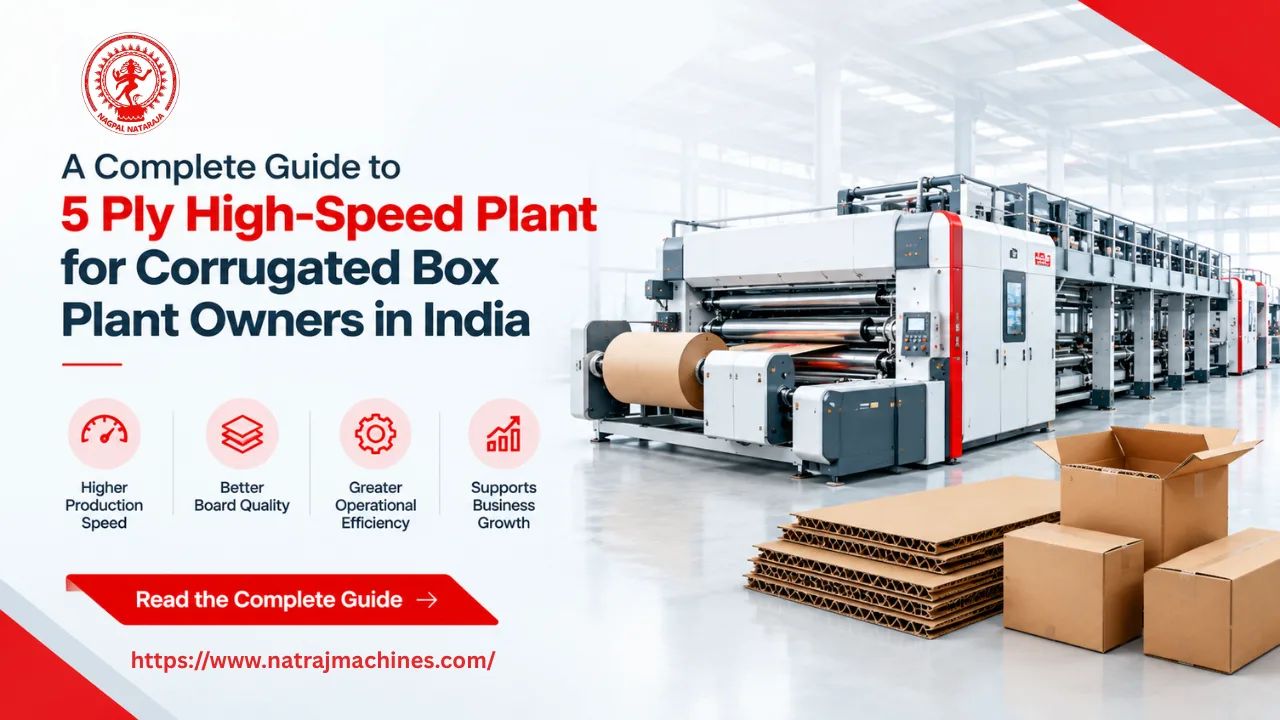
A 5 ply high-speed plant is a full line that makes 5 ply corrugated board. Paper rolls go in at one end. Cut and stacked sheets come out at the other end. The machines in between work as one connected system.
“High speed” means the line runs fast and holds quality while it does. Speed is not the only goal. A fast line that gives poor board only makes waste faster. A good plant keeps speed and quality together.
Many people call the whole factory a corrugated box plant. It has two parts. The board line makes the sheets. The converting machines turn the sheets into finished boxes.
How the Plant Works, Step by Step
A complete 5 ply line has several machines. Each one has a clear job. Here is the flow, from start to end.
Step 1: Mill roll stands. These hold the paper rolls. A 5 ply line runs five rolls at once. Three are liners. Two are flute paper. The stands feed the paper at steady tension. Good tension keeps the paper flat and straight.
Step 2: Single facers. A 5 ply plant needs two. Each single facer forms one flute layer. The paper passes between hot, grooved rolls. Steam heat and pressure shape the wave. Glue goes on the flute tips, and the flute bonds to a liner. The result is called single face board.
Step 3: Bridge. The single face webs travel up to a bridge. It holds a stored length of web. This gives the line a small buffer, so a short stop at the front does not halt the whole line at once.
Step 4: Double facer. This machine joins the two single face webs. It also adds the last liner. The layers pass over heated plates under a pressure belt. Heat sets the glue. The five layers become one board. This section has a strong effect on how fast the line can run.
Step 5: Slitter scorer. The board is slit to the width each order needs. Scoring tools press crease lines into the board. These lines show where the box will fold.
Step 6: NC cut-off. NC means numerically controlled. You enter the sheet length on a control panel. The knife cuts to that size, sheet after sheet. This gives sheets that match and makes order changes quick.
Step 7: Stacker. The stacker piles the cut sheets neatly. Neat piles are easier to move. They also protect the edges.
Step 8: Converting machines. The board line only makes sheets. Converting machines print, slot, cut, fold, and join the sheets into boxes. The right set depends on the box types you make.
A complete setup, like the one on our 5 ply corrugated plant page, covers all of these stages.
3 Ply vs 5 Ply: A Quick Comparison
Use this table to see how the two board types differ.
Point3 Ply Board5 Ply BoardLayers3 (two liners, one flute)5 (three liners, two flutes)Other nameSingle wallDouble wallSingle facers needed12Paper rolls on the line35Stacking strengthGood for light and medium loadsHigher, for heavy loadsCushionModerateBetter, with two flute layersCommon useRetail boxes, light cartonsHeavy goods, machine parts, export cartonsPlant sizeSmaller lineLonger line with more partsPaper use per boxLowerHigherA 5 ply box uses more paper, so it costs more to make. But it carries more load. For heavy goods, this trade often pays off. A damaged shipment costs far more than a stronger carton.
Who Needs a 5 Ply Plant?
Not every box maker needs one. Here is how to decide.
A 5 ply line suits you if:
- Your buyers ship heavy goods, such as machine parts, appliances, tiles, or bulk packs.
- You serve exporters who need strong cartons for long sea or road trips.
- You get calls for stacking strength that 3 ply cannot give.
- You want to move up from low-margin light boxes to higher-value work.
A 3 ply line may be enough if most of your orders are light retail cartons or small parcels. Look at your last six months of orders. Count how many asked for double wall board. That number tells you a lot.
What You Need Before the Plant Arrives
A good machine can still run badly in a poor setup. Plan these points first.
Floor space. A 5 ply line is long. Measure your hall. Leave room for paper rolls, sheet stacks, and walkways. Also leave room for converting machines.
Steam. The single facers and the double facer use steam. Check that your boiler can meet the full load at peak, not just the average. Weak steam gives weak glue bonds and forces the operator to slow the line. In India, boilers fall under the Indian Boilers Act and its regulations, so boiler approval and inspection are part of your plan. Check the rules with your local authorities.
Fuel. Plants in India use different fuels for boilers, such as coal, wood, biomass, or gas. The right choice depends on cost and supply in your area, and on local pollution rules.
Power. A 5 ply line draws more power than a 3 ply line. Ask the maker for the power need. Check it against your supply. Many plants also keep a backup source, since a power cut in the middle of a run wastes board.
Dry paper storage. Paper takes in moisture from the air. This is a big issue in humid months. Wet paper gives weak bonds and curled board. A dry, closed store protects your rolls.
A trained crew. The same line gives very different output in different hands. Good operators spot small faults early.
Approvals. Check which licences and registrations apply to your factory, such as factory licence, state pollution control board consent, and business registration. Rules differ by state, so confirm with the local office.
Paper Supply in India
Paper is the biggest cost in board making. So your paper plan matters as much as your machine plan.
Much of the kraft paper used for corrugated boxes in India is made from recycled fibre. Mills sell it in different grades. The grade and the quality change from one mill to the next. This is why we advise box makers to test paper before they commit to a supplier.
For 5 ply board, you will buy two kinds of paper. Liner paper goes on the faces and in the middle. Fluting medium forms the waves. Both need steady strength and steady moisture. Ask each mill for test data. Keep a small lab check on every lot if you can.
Also plan reel widths. Your reel width should suit your most common sheet sizes. A good match cuts trim waste.
How to Size Your Plant
Start from your orders, not from the machine. Work backwards.
- Estimate how many square metres of board you need each day.
- Divide by the board width you will run.
- Divide again by the minutes in a shift.
- This gives the average speed you need, in metres per minute.
Then remember one thing. The average speed you hold in a shift is lower than the design speed of the machine. Heavy 5 ply board runs slower than light board. Reel changes and order changes take time too. So the design speed you buy must be higher than the average speed you need.
Also add room for growth. Many owners add 20 to 30 percent. It costs less to plan for growth on day one than to change the plant later.
If you run two shifts, you may need a smaller line than if you run one. Compare the cost of a larger machine with the cost of a second shift before you decide.
Finally, size the converting machines at the same time. Board that cannot be turned into boxes just piles up in the yard.
How to Choose Among Corrugated Box Making Machine Manufacturers
The list of corrugated box making machine manufacturers in India is long. A few clear checks help you narrow it down.
Experience. A maker with many years in the trade has solved many problems. Ask how long they have built board lines.
Full range. A supplier that offers the whole line, from roll stands to converting machines, can match each unit to the next. This avoids gaps in speed and size.
Real numbers. Ask for the speed on your heaviest board, not just the lightest. Ask for the steam need in kilograms per hour. Ask for the power load. A maker who gives clear figures has done this before.
Support. Ask about spare parts and how fast they can reach you. Ask about service visits and annual maintenance contracts (AMC).
Delivery and setup. Check that the maker can deliver to your city and help set up the line.
References. Ask to speak with other box makers who run their machines. If you can, visit a plant that is running.
Written scope. Ask each maker to list what the price includes. A low quote that leaves out parts or service can cost more in the end.
Use the same list for every supplier. This makes comparison fair.
Corrugated Box Making Machinery for the Converting Stage
The board line is half the story. Your Corrugated Box Making Machinery for converting decides what you can sell.
Printing machines add your customer’s marks and text. Slotting units cut the slots that form the box flaps. Die-cutting machines make special shapes. Folder gluers and stitchers join the box. The right set depends on your orders. A maker of plain shipping cartons needs different machines from a maker of printed retail boxes.
Plan the converting capacity so it matches the board line. If the board line makes more than the converting machines can take, the extra sheets wait. If it is the other way round, the converting machines stand idle. Both cases waste money.
Daily Habits That Raise Output
A good plant still needs good habits. These simple steps pay back every week.
- Group orders by paper and flute. This cuts the tuning needed between jobs.
- Fit widths together. Plan the slitter so each reel is used well and trim stays small.
- Check paper on arrival. Reject damp or damaged rolls.
- Keep a start-up routine. Steam, hot plates, and glue systems need time to settle. A fixed routine saves the first hour from waste.
- Fix a weekly stop. Use it for knife changes, cleaning, and checks. A planned stop costs less than a breakdown at peak time.
- Keep key spares on the shelf. Belts, bearings, and knives should be ready.
- Track your numbers. Note speed, stops, and waste every shift. You cannot fix what you do not measure.
Mistakes to Avoid
- Buying on top speed alone. A high brochure speed does not mean the line holds it on heavy board.
- Sizing the boiler on averages. Peak load is what drops the pressure.
- Ignoring paper storage. Damp paper ruins good machines.
- Forgetting converting capacity. Board without box machines is only half a factory.
- Skipping training. Good operators make a big difference.
- Planning for today only. Leave room for growth in steam, power, and floor space.
- Choosing on price alone. Compare service, parts, and support too.
How Natraj Can Help You
At Natraj, we build complete 5 ply corrugated plants. Our line covers mill roll stands, single facers, a double facer, a slitter scorer, an NC cut-off, a stacker, and converting machines. We also supply spare parts and offer AMC to keep your line running.
We deliver across India. If you plan a new corrugated box plant or want to add a 5 ply high-speed plant to your factory, we can talk through your orders and suggest a setup that fits.
Final Words
A 5 ply high-speed plant gives Indian box makers a way to serve heavy-duty buyers with strong board. To get the most from it, plan the whole setup. Know your orders. Size the plant from your demand. Check steam, power, space, and paper. Match the converting machines to the board line. Pick a maker who gives clear numbers and good support.
If you follow these steps, your plant can serve you well for many years.
About Natraj: Natraj Corrugating Machinery Co. has made corrugated box machinery since 1965. Our head office is in Faridabad, and our plant is at Mitrol, Palwal, Haryana.