
Meta Description: Find out how Data and Analysis helps students in understanding information, improving decisions, building skills, and preparing for future careers with steps.
Understanding Data and Analysis is becoming a strong part of how students learn, think, and prepare for future careers. Whether you plan to study technology, business, healthcare, or any stream that uses information, having a basic knowledge on Data and Analysis gives you a strong start. Let’s check the topic in simple terms, include real examples students can relate to, and offer clear steps to build confidence.
IABAC, a global certification body, provides structured programmes that help learners build practical skills in Data and Analysis. These programmes give students the support they need to grow regularly and prepare for higher studies or early career roles.
What “Data and Analysis” Mean for Students
At its basis, Data and Analysis mean to collecting information, organising it, studying it, and using it to understand something or make a decision. Students work with data almost every day, even without noticing it. Marks, study hours, attendance, habits, and even app usage are all forms of data. When you compare these numbers, find patterns, or draw conclusions, you are doing analysis.
Common types of data students see
- Numbers such as scores and percentages
- Text like classroom notes or teacher feedback
- Images including maps, diagrams, and charts
- Activity records like revision cycles or project timelines
Seeing these forms helps you understand that Data and Analysis are not limited to complex systems. They exist in daily student life.
Why Students Often Struggle With Data and Analysis
Many students feel that Data and Analysis are difficult simply because they are introduced in a quick or unclear way.
Common challenges students face
- Not knowing how to begin
- Feeling doubtful when looking at numbers
- Not seeing how this information is useful
- Using estimates instead of looking at patterns
- Stressing about coming to wrong conclusions
These challenges make students miss helpful ideas that could guide their studies and personal habits. When explained step by step, Data and Analysis become easy and practical.
How Data and Analysis Improve Decision-Making
Using Data and Analysis gives students a clearer sense of direction. Instead of focussing on memory or beliefs, decisions come from actual information.
Examples students can relate to
- Checking which subjects need extra revision
- Seeing which study time gives better focus
- Understanding which topics take more time to learn
- Tracking points over the year to plan improvements
- Setting goals based on past performance
With these small steps, students start to build confidence and make better choices.
Key Concepts Students Should Know in Data and Analysis
To build a strong base, students must understand simple foundational ideas.
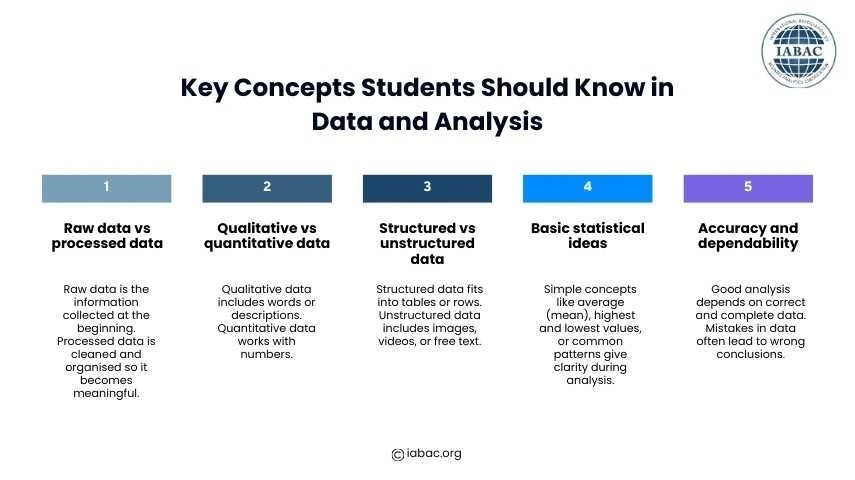
1. Raw data vs processed data
Raw data is the information collected at the beginning. Processed data is cleaned and organised so it becomes meaningful.
2. Qualitative vs quantitative data
Qualitative data includes words or descriptions. Quantitative data works with numbers.
3. Structured vs unstructured data
Structured data fits into tables or rows. Unstructured data includes images, videos, or free text.
4. Basic statistical ideas
Simple concepts like average (mean), highest and lowest values, or common patterns give clarity during analysis.
5. Accuracy and dependability
Good analysis depends on correct and complete data. Mistakes in data often lead to wrong conclusions.
These basics help students see the full picture when working with Data and Analysis.
Beginner Tools Students Can Use for Data and Analysis
Students don’t need powerful platforms to start learning. Simple tools can build strong habits.
Helpful beginner tools
- Google Sheets for organising numbers and making charts
- Microsoft Excel for basic analysis and tables
- Built-in tools like bar charts, pie charts, and trend lines
- Simple survey forms for collecting data for projects
These tools help students understand how Data and Analysis work without feeling confused.
Practical Ways Students Can Apply Data and Analysis Every Day
Simple methods help students apply what they learn.
For studies
- Monitor revision hours against marks
- Write down mistakes made in tests
- Compare concentration levels at different times of the day
- Pick out topics that need consistent practice
For daily life
- Calculate sleep hours
- Check screen time weekly
- Plan routines based on working patterns
- Note habits that improve or reduce focus
These steps make Data and Analysis a regular part of decision-making.
Real Student Examples Using Data and Analysis
Here are sample situations students may experience:
- Class project: Collect opinions from classmates using a survey, group the responses, and analyse the most common views.
- Study growth: Measure marks for all subjects for a term and compare them to your study hours.
- Hobby-based analysis: Track exercise, reading, or gaming hours to understand habits.
These examples show that Data and Analysis are not limited to textbooks; they support everyday thinking.
How Data and Analysis Support Future Careers
Students usually want to know how this topic relates to jobs. Almost every field uses data to plan growth or measure progress. Early learning gives students an advantage.
Career areas that depend on Data and Analysis
- Business and management
- Banking and finance
- Healthcare
- Software and IT
- Digital content
- Research
- Education
Beginner-friendly roles connected to Data and Analysis
- Data Analyst (junior level)
- Business Analyst
- Marketing Analyst
- Research Assistant
- Data Technician
Understanding Data and Analysis prepares students for internships, projects, and early job roles.
Responsible Use of Data
Students should learn to use information correctly and respectfully.
Basic principles
- Avoid sharing private information
- Use data only for the right purpose
- Check if the data is correct
- Do not arrive at conclusions too quickly
- Make sure sources are trustworthy
Learning responsible behaviour early helps students handle future tasks professionally.
Learn Data and Analysis
Here is a path students can follow to build skills:
Step-by-step instructions
- Understand basic terms
- Learn types of data
- Practise collecting small data sets
- Organise them in tables
- Look into patterns or changes
- Use simple charts
- Summarise what you learnt
- Try again with a new topic
Repeating these steps improves your understanding of Data and Analysis over time.
Mini Glossary for Students
- Dataset: A group of related information
- Variable: A factor that can change
- Trend: A pattern seen over time
- Outlier: A value that looks different from the rest
- Correlation: A link between two values
- Sample size: Number of data points collected
This glossary makes it easier to understand the terms used in Data and Analysis.
Where Students Go Wrong, and How to Avoid It
Common mistakes
- Using assumptions instead of information
- Ignoring missing or incorrect data
- Jumping to conclusions
- Getting to complex tools too fast
- Not checking out work
How to avoid them
- Start with small datasets
- Check values twice
- Use simple tools first
- Take time to study patterns
- Practice with different examples
These habits help students create skills with confidence.
Common Questions Students Ask About Data and Analysis
Do I need strong maths skills?
You only need basic numbers and simple averages to start off.
Is it hard to get started?
No. Simple tables and charts are enough for first practice.
How can I improve?
Practise with school assignments, personal habits, or small surveys.
How IABAC Helps Students Build Skills in Data and Analysis
IABAC offers structured certification programmes that help students build skills step by step. Data Analytics Certification programmes introduce learners to real analysis tasks, helping them apply concepts more confidently. Students gain both knowledge and a recognised qualification that supports future studies, internships, and career choices.
Data and Analysis help students understand information clearly, improve decisions, and grow academically. With practical examples and regular practice, any student can learn these skills with ease. Strong beginnings today support smoother progress in higher studies and career paths later on.
If you want to build strong skills and prepare for future opportunities, start your journey with IABAC today.