
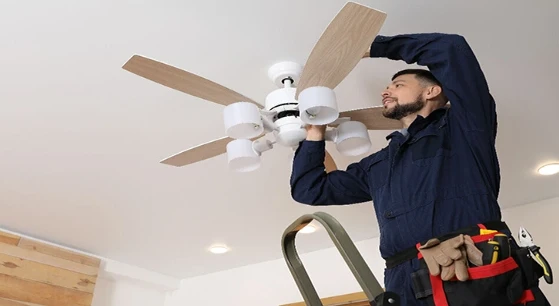
Loose wiring, unstable mounting, or poor installation can turn a simple ceiling fan into a safety risk. Many homeowners try to install a fan without knowing the hidden dangers. Electrical mistakes may lead to shocks, fire hazards, or damage to the ceiling. The risk grows when proper tools or support are missing. Understanding safety steps before starting makes a big difference. Knowing these 9 safety tips about ceiling fan installation in Bennington helps protect the home and family. Careful preparation and safe practices ensure better performance, long-lasting use, and peace of mind.
1. Turn Off the Power First
Safety must come first during ceiling fan installation. The main breaker should be turned off before starting any work. A wall switch is not enough to cut off the electricity. During Ceiling Fan Installation power must be fully disconnected from the circuit box. A voltage tester helps confirm no current is present. This step reduces the risk of electric shock. Working with live wires can cause serious injury. Proper power control protects both the installer and the home. Careful preparation makes the process safer. Taking a few minutes to check the power can prevent accidents. Electrical safety is the first and most important step.
2. Use the Right Electrical Box
A regular light box may not support a ceiling fan. Fans are heavier and create movement. A fan-rated electrical box is designed to hold weight safely. For safe fan Installation the box must attach firmly to the ceiling joists. Strong support prevents wobbling and falling. Installing the correct box protects people below. Loose mounting may damage the ceiling. A secure base improves long-term performance. Checking the box strength before installation is very important. Safe mounting reduces repair costs later. A proper electrical box keeps the fan stable and secure during daily use.
3. Follow Manufacturer Instructions
Each fan model comes with specific instructions. Reading the manual helps avoid mistakes. Instructions explain wiring steps clearly. Mounting details also vary by model. Clear guidance improves safety and stability. Proper installation ensures smooth operation. Following directions protects warranty coverage. Correct assembly prevents loose parts. Careful reading saves time and prevents confusion. Manufacturer advice supports safe and reliable results. This step builds confidence during installation.
4. Secure All Wiring Connections
Loose wires can create fire hazards. Wires must connect tightly with wire connectors. Colour coding helps match the correct wires. Electrical tape adds extra protection. Proper wiring is critical to prevent sparks and overheating. Neat wiring also improves airflow inside the housing. Poor connections may cause flickering or fan failure. Careful attention reduces risk. Safe wiring supports strong performance. Double-checking connections adds security. Electrical safety protects the entire home. Strong connections keep the fan working properly.
5. Ensure Proper Blade Balance
Unbalanced blades cause shaking and noise. Wobbling can loosen screws over time. Balanced blades improve smooth movement. Many fan kits include balancing tools. Careful balance checks during Ceiling Fan Installation in Bennington, NE, prevent long-term damage. Equal spacing between blades is important. Secure screws hold blades firmly. Checking the balance after installation prevents ceiling stress. Stable blades increase fan life. Quiet operation improves comfort. Proper balance supports safe daily use. Smooth spinning reflects quality installation.
6. Maintain Safe Ceiling Height
Ceiling height affects safety and comfort. Fans should hang at least seven feet above the floor. Low placement increases injury risk. High ceilings may need longer down rods. The correct height is important for Ceiling Fan Installation in Bennington, NE, to improve airflow circulation. A safe distance protects people walking below. Proper placement improves cooling efficiency. Height adjustment supports room comfort. Measuring before installation prevents mistakes. Safe height keeps blades away from furniture. Correct positioning ensures better performance and safety.
7. Use a Sturdy Ladder
A strong ladder provides safe access to the ceiling. The ladder should stand on flat ground. Rubber feet improve stability. Climbing carefully reduces fall risk. Safe support is essential during Ceiling Fan Installation in Bennington, NE, to avoid injury. Tools should stay within easy reach. Sudden movements may cause imbalance. Proper footing ensures steady installation work. Asking for assistance adds extra safety. Stable support improves confidence. A secure ladder is essential for ceiling projects.
8. Check Weight Capacity
Ceiling fans vary in weight. The ceiling structure must support the load. Heavy fans need strong mounting support. Checking weight limits prevents ceiling damage. Secure anchoring protects against falling. Overloading may cause cracks. Safe weight support improves durability. Confirming capacity avoids future repair costs. Proper structure keeps the fan steady. Strong support enhances safety for everyone inside the room.
9. Perform Final Safety Testing
Testing ensures safe operation after installation. Power can be restored once the wiring is secured. The fan should run smoothly at all speeds. Listen for unusual sounds. Check light functions if included. Observe blade movement carefully. Stable operation confirms proper setup. Final inspection reduces risk. Safe testing ensures peace of mind. This step completes installation with confidence. Careful review supports long-term safety.
Frequently Asked Questions
Does it require switching off the breaker?
Yes, the breaker should be turned off since it will avoid electric shock and possible harm. The closing off of the power also makes it possible to do the wiring work safely.
Is it possible to have a ceiling fan in a regular light box?
No, a typical light box is not made or built to hold any ceiling fan due to its weight or motion. There is a need for a fan-rated box, which mounts the fan.
Why does a ceiling fan wobble?
A ceiling fan tends to wobble when the blades are not tightened, not balanced, or not aligned. Correcting the balance and tightening the connections aid in the smooth running of the fan.
What is the maximum height of a ceiling fan?
The ceiling fan must be at least 7 feet above the floor to ensure adequate clearance. This height reduces the possible risk of accidental contact and injury.
Is a professional setting more secure?
Pros: Yes, professional installation is safer since the errors of electrical, structural, and mounting are minimised. A professional would make sure that the fan is properly installed to last long.
Conclusion:
Choosing Handy Home Improvement brings comfort, quality, and dependable results to every home project. Skilled professionals focus on strong materials and careful installation to ensure lasting performance. Clear communication helps homeowners understand each step with confidence.
Proper improvements enhance safety, energy efficiency, and overall appearance. Attention to detail reduces future repair costs and adds long-term value. Honest service and reliable workmanship create trust and satisfaction. Investing in expert home improvement supports better living spaces and peace of mind for years to come.