Unfolding the Climate Crisis: A Glimpse Through Groundbreaking Research
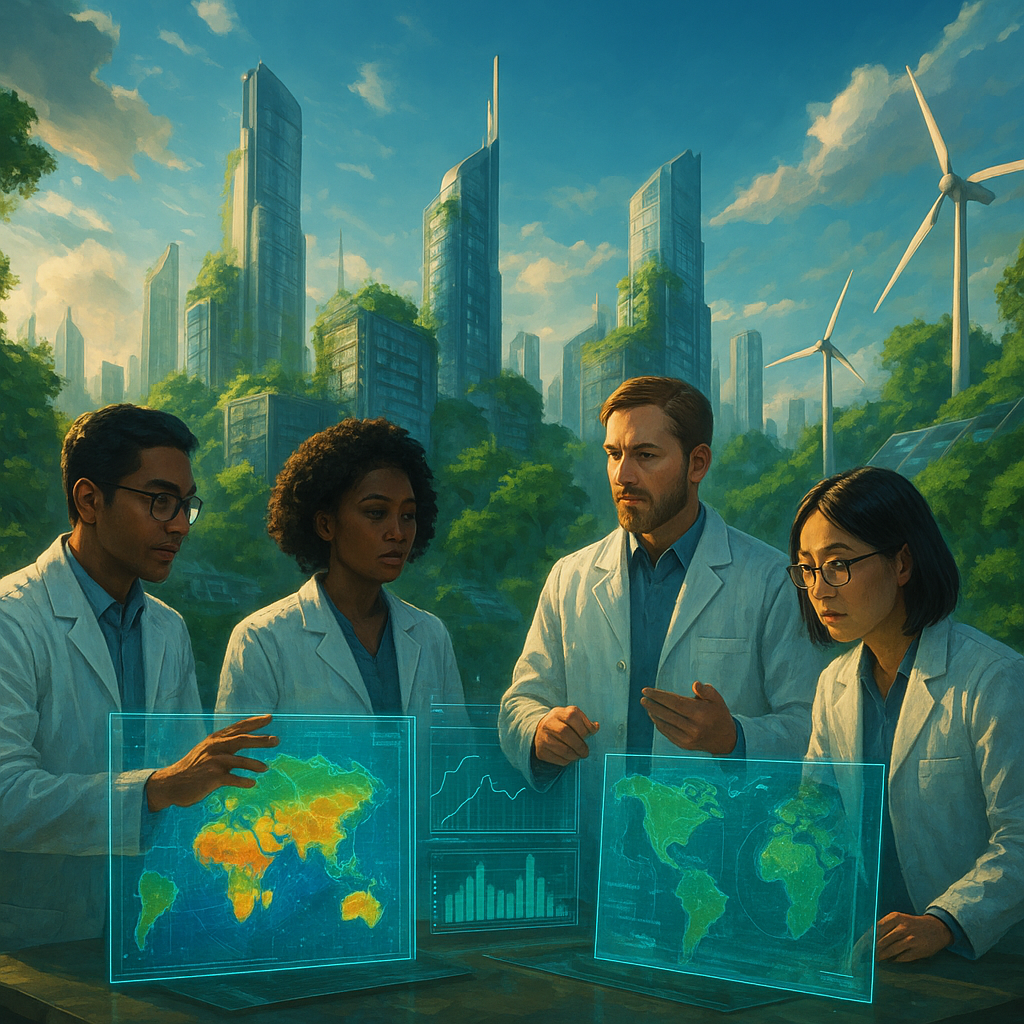
In the summer of 2026, the urgency of understanding Earth's changing climate has never been more palpable. From melting polar ice caps to unprecedented heatwaves scorching urban centers worldwide, climate science continues to reveal the intricate dynamics driving these phenomena. At the forefront, nine pivotal research projects stand out, each illuminating crucial facets of climate change and its cascading effects. These studies not only deepen our comprehension of climate mechanisms but also guide policy-making and global mitigation efforts.
One striking example is the recently published data from the Polar Ocean Observing Network, which documents accelerated ice shelf thinning in Antarctica with a 30% increase in melt rates since 2020. This alarming trend underscores the critical tipping points that climate researchers have long warned about. The convergence of such findings draws a comprehensive picture of a planet in flux, demanding a nuanced, multi-disciplinary approach to climate research.
“Our understanding of climate feedback loops has expanded dramatically, revealing vulnerabilities that were previously underestimated,” notes Dr. Helena Forsberg, lead scientist at the Global Climate Observatory.
Tracing the Roots: How Climate Research Evolved to Today’s Critical Insights
The foundation of contemporary climate science was laid throughout the 20th century, with milestones such as the identification of greenhouse gases' role in atmospheric warming and the development of early climate models. Yet, it is only in recent decades that rapid advances in satellite technology, computational power, and global data sharing have propelled the field into a new era.
The Intergovernmental Panel on Climate Change (IPCC) reports, particularly the comprehensive Sixth Assessment Report released in 2025, have synthesized global research efforts, emphasizing the need for urgent emissions reductions and adaptation strategies. This backdrop contextualizes the nine top climate studies, which embody the cutting edge of how science confronts the complexity of Earth's systems.
Moreover, interdisciplinary collaborations have become the norm, merging atmospheric science, oceanography, ecology, and socioeconomics to tackle climate challenges holistically. This evolution is chronicled in detailed reviews such as Unveiling Climate Research: New Data, Global Insights, and Future Challenges, which explores the trajectory of climate science and its expanding global footprint.
Dissecting the Nine Pillars: Core Findings and Scientific Breakthroughs
The nine landmark climate research projects cover a spectrum of critical domains. Their collective findings are reshaping our understanding of climate dynamics, impacts, and mitigation potential:
- Antarctic Ice Sheet Dynamics: Utilizing autonomous underwater drones, researchers have mapped sub-ice shelf melting, revealing vulnerabilities in the West Antarctic Ice Sheet that could contribute up to 15 cm of sea-level rise by 2050.
- Tropical Forest Carbon Fluxes: Satellite-based LIDAR measurements combined with ground sampling have revised carbon sequestration estimates upward by 12%, highlighting the role of tropical forests as carbon sinks but also their fragility under deforestation pressures.
- Atmospheric Methane Monitoring: New sensor arrays deployed across methane hotspots in Siberia and the Arctic tundra have detected episodic releases linked to permafrost thaw, signaling potent feedback loops accelerating warming.
- Ocean Acidification Impact on Marine Life: Longitudinal studies on coral reefs in the Coral Triangle demonstrate a 40% reduction in calcification rates over the past decade, foreshadowing ecosystem collapses.
- Urban Heat Island Effect Mapping: High-resolution thermal imaging in megacities like Mumbai and Lagos uncovers heat islands intensifying local temperatures by up to 7°C, disproportionately affecting vulnerable populations.
- Climate-Induced Migration Patterns: Integrating climate models with socioeconomic data reveals potential displacement of 200 million people by 2040 due to drought and sea-level rise.
- Renewable Energy Integration and Grid Stability: Simulations of large-scale solar and wind deployment show promising pathways to decarbonize energy systems while maintaining grid reliability.
- Extreme Weather Attribution Science: Advanced statistical methods now allow attribution of individual events, such as 2025's European heatwave, to human-induced climate change with over 90% confidence.
- Soil Carbon Sequestration Technologies: Field trials of biochar amendments and regenerative agriculture practices demonstrate potential to lock away up to 2 gigatons of CO2 annually by 2030.
These projects collectively underscore the interconnectedness of Earth's climate components and the necessity for integrated research approaches.
“The scale and precision of these studies mark a turning point in our ability to forecast and manage climate risks,” affirms Professor Miguel Santos, environmental policy advisor.
2026 Developments: What’s New in Climate Science This Year?
In 2026, climate research has been turbocharged by enhanced global cooperation and cutting-edge technology. The deployment of the Climate Observation Satellite-3 (COS-3), launched in late 2025, has provided unprecedented continuous global monitoring of greenhouse gas concentrations with tenfold improved resolution. This technological leap allows scientists to pinpoint emission sources and sinks with unparalleled accuracy.
Additionally, the integration of AI-driven climate models has accelerated scenario analyses. The latest models incorporate real-time data streams, improving predictive capabilities for phenomena such as monsoon variability and polar vortex disruptions.
Notably, 2026 has seen significant progress in translating scientific findings into actionable policy frameworks. The Global Climate Adaptation Coalition, established in early 2025, released its first comprehensive report on adaptive infrastructure investments, heavily informed by the aforementioned nine studies.
Furthermore, there has been a surge in citizen science initiatives leveraging smartphone sensor networks to gather hyperlocal climate data, democratizing research participation and enhancing data granularity.
Future Outlook: Navigating Climate Science into the Next Decade
Looking ahead, these nine research pillars provide a roadmap for climate science's priorities. The emphasis will be on refining predictive models, expanding monitoring networks, and integrating human dimensions more deeply into climate assessments.
Key challenges remain, including bridging data gaps in under-monitored regions such as the deep oceans and remote rainforests. The evolving climate landscape demands adaptive research methodologies that can respond swiftly to emerging trends.
Policy makers and stakeholders must leverage these scientific insights to inform resilient development pathways. This includes scaling carbon capture innovations, bolstering ecosystem restoration, and investing in climate-resilient infrastructure.
A well-documented resource for researchers and practitioners alike is How Cutting-Edge Climate Research Is Reshaping Our Planet’s Future, which highlights practical strategies derived from these scientific advances.
Real-World Impacts: How These Studies Are Influencing Global Climate Action
The ramifications of this body of research extend beyond academic circles, shaping international climate negotiations and national policy agendas. For instance, updated sea-level rise projections have prompted coastal megacities like New York and Jakarta to accelerate their adaptation plans, including seawall constructions and managed retreat strategies.
On the mitigation front, methane monitoring breakthroughs have spurred regulatory tightening on fossil fuel extraction and agriculture sectors, targeting one of the most potent greenhouse gases.
Moreover, the identification of urban heat islands has informed urban planners to incorporate green infrastructure and reflective materials, directly improving public health outcomes.
These applied outcomes demonstrate the crucial interface between science and governance, highlighting the role of evidence-based decision-making in climate resilience.
- Accelerated investment in renewable energy infrastructure inspired by grid stability research
- Enhanced global monitoring protocols for greenhouse gases following COS-3 data
- Community-driven climate adaptation programs informed by migration projections
- Policy shifts targeting soil carbon sequestration incentives
- International collaboration strengthened through shared climate risk assessments
Together, these initiatives embody the transformative potential of targeted climate research to safeguard planetary health.