A startup can have a great product idea, a strong founding team, and even early users, yet still struggle because the app feels slow, confusing, or unfinished. That’s a frustrating place to be, especially when every development decision affects your runway.
For New York startups, choosing the right approach to App Development in New York isn't just about getting an app into the App Store. You need to think about product-market fit, development speed, user experience, scalability, and what happens after launch.
So, what should you actually prioritize in 2026?
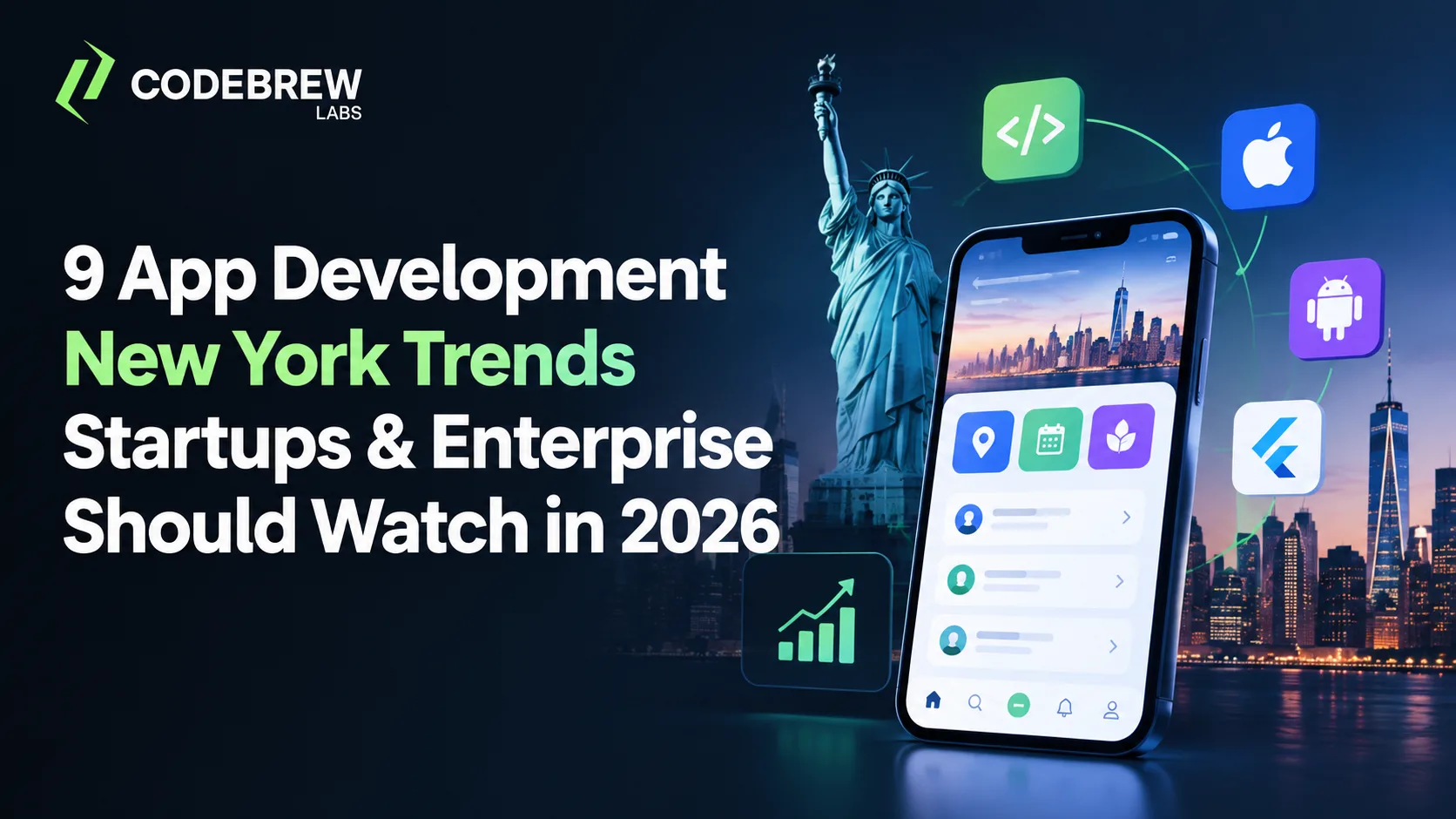
This guide breaks down nine app development services worth watching, from custom builds and MVPs to backend development, QA, and ongoing support. If you're planning your first app or improving an existing product, these are the areas that deserve your attention.
1. Custom Mobile App Development
Custom mobile app development means building an application around your specific product, users, workflows, and business goals rather than trying to force your idea into a ready-made template.
That matters when your app is more than a simple customer portal. Think about a food delivery startup managing orders, drivers, restaurants, payments, and customer notifications. A generic solution might get you started, but it can become restrictive surprisingly quickly.
For startups, custom development also gives you more control over how the product evolves. You can build the core features first and add more as users provide feedback.
The common mistake? Trying to build everything at once.
Your first version doesn't need every feature you can imagine. A focused build is usually easier to test, improve, and fund than an oversized application nobody has validated yet.
2. iOS App Development
iOS remains a major consideration for startups targeting users who primarily rely on Apple devices. Good iOS development isn't simply about making screens that look right on an iPhone. It involves understanding Apple's design conventions, device capabilities, permissions, notifications, and App Store requirements.
For a New York fintech startup, for example, the first release might focus on account management, transaction history, biometric login, and alerts rather than attempting to recreate every banking feature.
That's where prioritization helps.
A strong iOS app should feel natural to the person using it. Awkward navigation or unnecessary steps can hurt retention even when the underlying technology works perfectly.
One practical tip: involve developers in product discussions early. Don't finalize every screen with design alone and then hand it over for implementation. Technical limitations and opportunities are much easier to address before development begins.
3. Android App Development
Android gives startups access to a broad range of users and devices, but that variety creates its own development challenges. Screen sizes, operating system versions, hardware capabilities, and manufacturer differences all need to be considered.
If your startup plans to serve a large audience, Android shouldn't be treated as an afterthought.
For example, imagine a local services startup whose customers use everything from newer flagship phones to affordable Android devices. An app that works beautifully on one expensive phone may perform poorly elsewhere if testing is limited.
Good Android development means designing for real-world conditions, including slower devices and inconsistent network connections.
A common mistake is testing only on the development team's phones. Ask your development partner how they'll test across different Android devices before you commit. That's a small conversation that can prevent a lot of unpleasant surprises after launch.
4. Cross-Platform App Development
Building separate native apps for iOS and Android can increase development time and cost. Cross-platform frameworks such as Flutter and React Native offer another route: much of the application can be developed from a shared codebase.
For early-stage companies, that's attractive.
You can potentially launch on both platforms without maintaining two completely separate development projects. It can also make future updates easier when the underlying functionality is similar.
But cross-platform isn't automatically the right answer for every product. Apps that depend heavily on advanced device features, complex animations, or platform-specific capabilities may benefit from native development.
The trick is to choose based on your product, not what's currently popular.
If you're comparing iOS and Android app development, ask which features actually need native implementation and which can comfortably share code. That answer should influence your technology choice more than a developer's personal preference.
5. UI/UX Design
Users don't care how elegant your codebase is if they can't figure out how to use the app.
UI/UX design covers the visible interface as well as the journey users take through it. Good design makes common actions obvious, reduces unnecessary steps, and helps people understand what happens next.
For a startup, this can have a direct effect on whether someone sticks around after downloading the app.
Consider a fintech founder building a personal finance app. If adding a bank account requires six confusing screens, users may abandon the process before they ever see the product's real value.
Design should therefore happen alongside product planning and development, not just at the end.
One honest opinion: don't confuse attractive design with useful design. Fancy animations won't rescue an app with poor navigation.
Test prototypes with actual target users. Even a handful of conversations can reveal confusing flows before you've spent heavily on development.
6. MVP Development
An MVP, or minimum viable product, is the smallest useful version of your application that allows you to test your idea with real users.
It's particularly valuable for startups because assumptions are expensive.
Suppose you're building a food delivery platform. Your initial product might need customer ordering, restaurant listings, payment processing, order tracking, and basic notifications. You probably don't need loyalty tiers, advanced recommendations, multiple subscription plans, and twenty different filters on day one.
Startup app development works better when the first release has a clear purpose.
The biggest mistake is interpreting "minimum" as "cheap and careless." Your MVP still needs reliable technology, sensible UX, security, and enough polish to give users a fair experience.
Build less, but build the important parts properly.
Then use feedback, usage patterns, and customer conversations to decide what deserves investment next.
7. App Maintenance and Support
Launching your app isn't the finish line. It's when the real feedback starts.
Users will find issues you didn't expect. Operating systems will change. Third-party services may update their APIs. Your business will also introduce new requirements as it grows.
Ongoing maintenance keeps the application compatible, secure, and functional as those changes happen.
For startups, this matters because technical debt can accumulate quickly. A rushed first version might work for a few thousand users but become difficult to maintain as traffic and features increase.
Ask potential app developers in New York what happens after launch. Is support included for a defined period? How are urgent bugs handled? Who monitors crashes and performance?
Don't choose a partner based only on the initial development quote.
A slightly cheaper build can become expensive if every future update requires starting from scratch.
8. App Testing and QA
Quality assurance, or QA, is the process of checking whether your application actually works as expected before and after release.
That includes testing features, devices, screen sizes, user flows, performance, and common failure scenarios.
Skipping QA is the fastest way to lose early users.
Imagine a ride-booking app where the payment succeeds but the booking confirmation doesn't appear. Or a healthcare app that logs a user out every time they switch screens. These aren't minor annoyances when you're trying to establish trust.
Good QA should cover more than obvious bugs. Test poor network connections, interrupted payments, unusual user behavior, permissions, notifications, and older devices where relevant.
Your mobile app development company in New York should be able to explain its testing process in plain English. If the answer is simply "we test before launch," ask for more detail.
You want a process, not a promise.
9. Backend and API Development
The mobile app is what users see, but the backend is where much of the important work happens. It manages data, authentication, payments, business rules, integrations, and communication between your app and other systems.
An API, simply put, is a way for different software systems to communicate with each other.
For example, a marketplace app may need to connect customers, sellers, payment providers, inventory systems, maps, and notifications. The mobile interface is only one piece of that puzzle.
Startups should think about backend architecture early, even if the initial product is small. You don't need to over-engineer everything, but you should avoid building a foundation that becomes difficult to scale.
Ask how user data is protected, how integrations are handled, how backups work, and what happens when usage grows.
Your future self will thank you for asking those questions before launch.
Why Code Brew Labs Is the Best App Developer in New York
Choosing an app development partner isn't only about finding people who can write code. You need a team that can understand your product idea, challenge weak assumptions, and help turn a rough concept into something people will actually use. That's where Code Brew Labs can fit well for New York startups and growing businesses.
Code Brew Labs brings experience across mobile app development, AI, cloud, backend engineering, UI/UX, and product development. Its teams work across iOS, Android, Flutter, and React Native, giving startups flexibility when deciding how to build and scale their products.
The company also takes a broader product approach. From early-stage MVP development and UI/UX design to API development, testing, deployment, and ongoing maintenance, the development process can cover more than just the mobile interface.
For startups experimenting with an idea, that matters. You may begin with a focused MVP and later need features such as AI-powered recommendations, automation, real-time communication, payment integrations, or analytics. Having access to different technical capabilities under one development partner can make that transition easier.
Code Brew Labs also works across areas such as fintech, healthcare, marketplaces, logistics, SaaS, and on-demand applications. That range is useful when your product has requirements beyond standard mobile development.
If you're evaluating App Development in New York, the real question isn't simply who can build your app. It's who can help you make sensible technical and product decisions from the first version through future releases. Code Brew Labs is worth considering when you want that broader product engineering capability rather than a team focused only on writing the initial code.
How to Choose the Right Partner
Choosing a development partner is less about finding the longest service list and more about finding a team that understands what you're actually trying to build.
Start with your product goals. What needs to be launched first? Who are your users? Which platforms matter? What integrations or technical requirements could affect development?
Then look beyond the portfolio.
Ask how the team handles discovery, product decisions, testing, post-launch support, and changes in scope. A capable mobile app development company in New York should be comfortable explaining technical decisions without drowning you in jargon.
It's also worth checking whether the team has experience with products similar to yours. A marketplace, healthcare platform, fintech app, and social product can have very different technical requirements.
And don't ignore communication. A technically strong team that takes days to answer basic questions can make an otherwise good project painful.
Conclusion
The biggest trend in App Development in New York for 2026 isn't one particular framework or feature. It's a stronger focus on building useful products without wasting time and budget on things users don't need.
Custom development, cross-platform tools, thoughtful UX, focused MVPs, reliable backend systems, QA, and ongoing support all have a place depending on your product stage.
If you're preparing your first release or planning the next phase of an existing app, start with the business problem and work backward from there. The right development strategy should make that path clearer, not more complicated.