
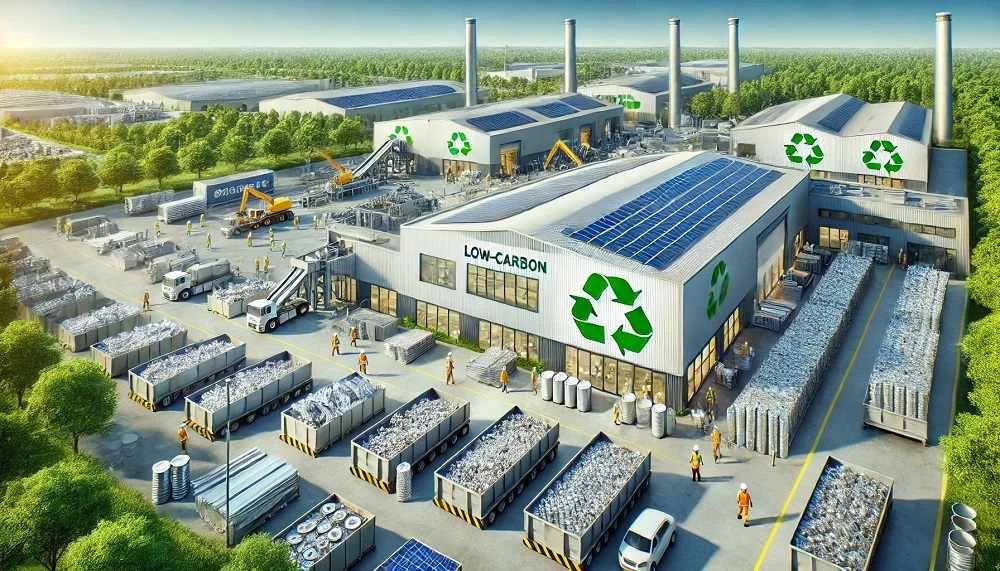
The global push toward net-zero and sustainability is transforming the metals sector, and the aluminum industry is no exception. According to BIS Research, the low-carbon aluminum market is projected to reach US$171.18 billion by 2034, up from US$90.75 billion in 2023, representing a CAGR of approximately 5.97 %.
As manufacturers, OEMs and downstream industries seek greener materials, low-carbon aluminum is gaining traction — driven by demand for sustainable sourcing, regulatory pressure and innovation in production pathways.
1) Rising production cost pressures and economies of scale
One of the foremost challenges in this market is the low-carbon aluminum production cost analysis. Conventional aluminum production is energy-intensive and heavily reliant on fossil-fueled smelting. Applying renewable energy, inert anode technologies, or carbon capture raises costs. But as volumes scale and process efficiencies improve, cost curves are expected to decline — enabling more competitive pricing. For industry stakeholders, understanding cost structure is critical for positioning and investment decisions.
2) Surge in global demand for low-carbon aluminum materials
Demand is being driven by a shift toward sustainable supply chains across sectors. The theme of global demand for low-carbon aluminum materials is emerging strongly — driven by pressure from regulators and consumers to reduce embodied carbon. Industries such as construction, packaging, electronics and notably automotive are increasingly specifying low-carbon grades. As a result, material suppliers and recyclers are realigning their strategies to serve this demand.
3) Automotive industry as a major growth engine
The low-carbon aluminum adoption in the automotive industry is poised to become a significant driver. Lightweighting remains key for fuel efficiency and EV performance, and pairing that with lower-emissions material adds a new dimension. OEMs are evaluating how sourcing low-carbon aluminum can align with their own decarbonization roadmaps and sustainable mobility goals. This creates opportunities for aluminum producers, alloy processors and supply-chain integrators.
4) Procurement trends evolve toward sustainability priorities
The procurement landscape is changing. With procurement teams prioritizing certifications, traceability and supplier emissions data, low-carbon aluminum procurement trends 2025 reflect increasingly stringent criteria. Buyers are demanding lower-carbon content, engaging in long-term contracts and paying premiums for verified low-carbon metal. Suppliers who can demonstrate credible decarbonized production will gain competitive advantage.
Request A Detailed Sample of Low-Carbon Aluminum Market - A Global and Regional Analysis: Focus on Application, Product, and Regional Analysis - Analysis and Forecast, 2024-2034
5) Decarbonization roadmap integrating green tech and recycling
Manufacturers are developing a clear low-carbon aluminum decarbonization roadmap spanning renewable-powered smelting, inert anode deployment, enhanced recycling and circular economy models. These roadmaps link to policy levers (such as carbon border adjustment mechanisms), investment flows and industrial partnerships. Companies that align their strategy now will be better placed to capture the transition-era opportunity.
6) Regional dynamics shaping growth
While the market is global, regional growth rates vary. For example, the Asia-Pacific region is forecast to expand significantly, reflecting its role as both large consumer and producer of aluminum.
Meanwhile, Europe is also projecting strong gains (from ~US$29.86 billion in 2024 to ~US$52.79 billion by 2034, CAGR ~5.86 %).
Regional regulatory frameworks, energy mix, recycling infrastructure and OEM demand all influence growth.
7) Challenges remain but innovation is unlocking value
Despite the optimism, there are hurdles: higher upfront investment, variable recycling rates in different geographies, price premiums for low-carbon material and the need for broader supply-chain transparency.
But innovation is working to mitigate these – from new production technologies to strategic collaborations between aluminum producers and end-users.
Click Here to Download the ToC
Conclusion
The low-carbon aluminum market is moving beyond niche and entering a phase of scalable, sustainable growth. As predicted by BIS Research, reaching ~US$171 billion by 2034 signals maturity in both demand and supply-side readiness. For stakeholders in advanced materials, chemicals & fuels — from alloy makers, recyclers, OEMs, to procurement professionals — understanding the cost to build and scale low-carbon aluminum, staying ahead of procurement trends in 2025, and aligning with decarbonization roadmaps will be critical. The companies that position themselves now in this evolving landscape will be best placed to capture both environmental and economic returns.