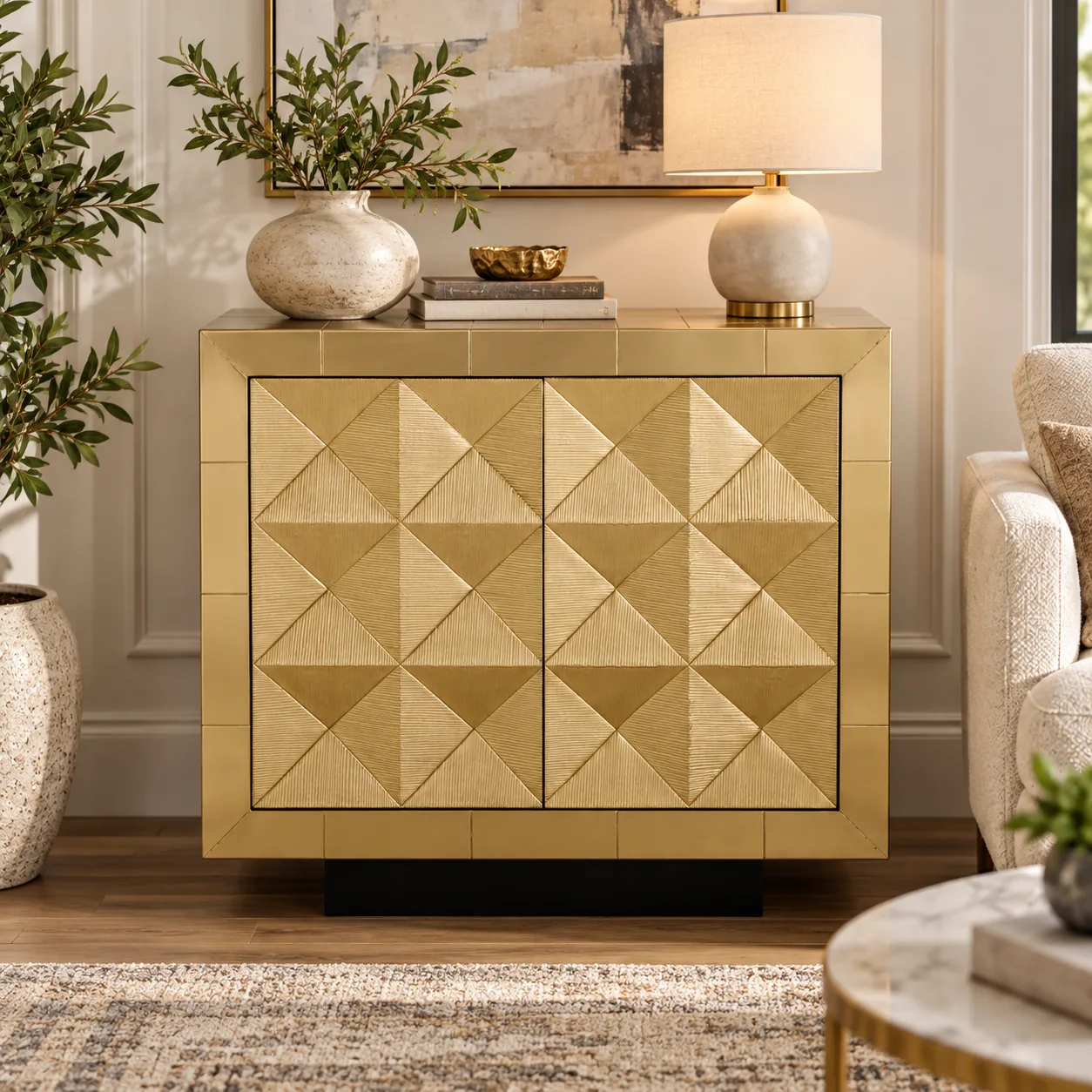
A handcrafted brass cabinet is a significant purchase. It is a piece of furniture, a work of art, and often a long-term investment all at once. But because brass cabinet furniture comes in a wide range of qualities and prices, it pays to know what to look for before you commit. Whether you are shopping online or visiting a showroom, these seven checks will help you choose a piece that is genuinely worth owning.
1. Solid Brass or Brass-Plated?
This is the most important question to ask. Solid brass is a true alloy of copper and zinc throughout the piece, while plated or “brass-finish” items have only a thin coating over a cheaper base metal such as iron or steel. Plating can peel, flake, or wear through, revealing a dull metal underneath.
There are simple ways to tell the difference. Solid brass is noticeably heavier. A magnet will not stick to it (though some solid brass pieces use iron fittings, so test several areas). You can also scratch an inconspicuous spot gently: solid brass stays golden beneath the surface, while plating reveals a different color. When buying online, ask the seller directly to confirm the material and the thickness of the brass sheet used.
2. Is It Truly Handcrafted?
The term “handcrafted” is used loosely, so look for evidence. Authentic luxury handicrafts show the marks of human skill: slight variations in engraving depth, subtle differences between matching panels, and finishing that is refined but not perfectly uniform. Machine-made pieces tend to look flawlessly identical and often feel lifeless by comparison.
Ask the seller which techniques were used, such as sand casting, hand hammering, repoussé, engraving, or inlay work. Reputable makers are proud of their process and happy to explain it. Photos or videos of the workshop and artisans are a good sign. If a seller is vague about how and where the cabinet was made, treat that as a warning.
3. Quality of Construction
Look closely at how the cabinet is put together. Many of the best designs pair brass panels with a seasoned hardwood frame for strength and stability. Check that the joints are tight, the seams are clean, and the edges are smooth rather than sharp or rough.
Doors should hang evenly and close without gaps or sticking. Shelves should sit level and feel sturdy. If you are buying in person, give the cabinet a gentle push. It should feel solid and balanced, with no wobbling or rattling. Online, ask for close-up photos of the corners, hinges, and back panel, since these areas reveal a great deal about overall quality.
4. Finish and Surface Detailing
The finish affects both appearance and upkeep. A high-polish finish looks glamorous but shows fingerprints and needs more frequent cleaning. An antique or matte finish feels understated and hides wear better. A lacquered surface resists tarnish, while an unlacquered one will develop a natural patina over time.
Decide which look suits your taste and lifestyle, then examine the surface carefully. Engraved patterns should be crisp and consistent, with clean lines and no rough spots. Embossed or inlaid details should be firmly set. Uneven color, patchy polish, or visible scratches are signs of rushed finishing.
5. Hardware: Hinges, Handles, and Locks
Small components make a big difference to daily use. Hinges should be strong and smooth, ideally made from brass or another quality metal. Handles should feel secure and comfortable in the hand, and if the cabinet has locks, test that they turn properly and the keys fit well.
Poor hardware is one of the most common weak points in cheaper cabinets, and it can ruin an otherwise beautiful piece. If a cabinet will see regular use, such as a bar or dining storage unit, durable hardware is essential.
6. Size, Weight, and Practical Fit
Beauty means little if the cabinet does not suit your space. Measure the area carefully, including doorways, hallways, and staircases the piece must pass through. Remember that brass furniture is heavy, so confirm your floor can support it and that you have help available for delivery and placement.
Think about function too. Do you need closed storage for glassware and linens, open shelves for display, or a mix of both? Check the interior dimensions and shelf spacing against what you plan to store. A brass cabinet should be as practical as it is beautiful.
7. Provenance, Pricing, and After-Sales Support
Finally, consider the story and the seller behind the piece. Genuine luxury handicrafts come with provenance: information about the artisans, the region, and the techniques involved. A reputable seller can tell you who made the cabinet and how.
Pricing should reflect the effort involved. Solid brass, hand engraving, and hardwood construction all carry real costs, so a price that seems too good to be true usually is. At the same time, a high price alone does not guarantee quality, so compare several sellers and read genuine customer reviews.
Also ask about packaging, shipping, insurance, and return policies. Brass is heavy and can be damaged in transit, so careful packing matters. A seller who offers clear warranty terms and responsive support shows confidence in their product.
Final Thoughts
A well-made brass cabinet can last for generations, growing more beautiful with age. By checking the material, craftsmanship, construction, finish, hardware, fit, and the seller’s credibility, you protect yourself from disappointment and ensure your purchase is a genuine example of Luxury Handicrafts rather than a mass-produced imitation.
Take your time, ask questions, and choose a piece that you will be proud to display for years to come. The right brass cabinet will reward your care with lasting beauty, practical value, and a touch of timeless elegance.