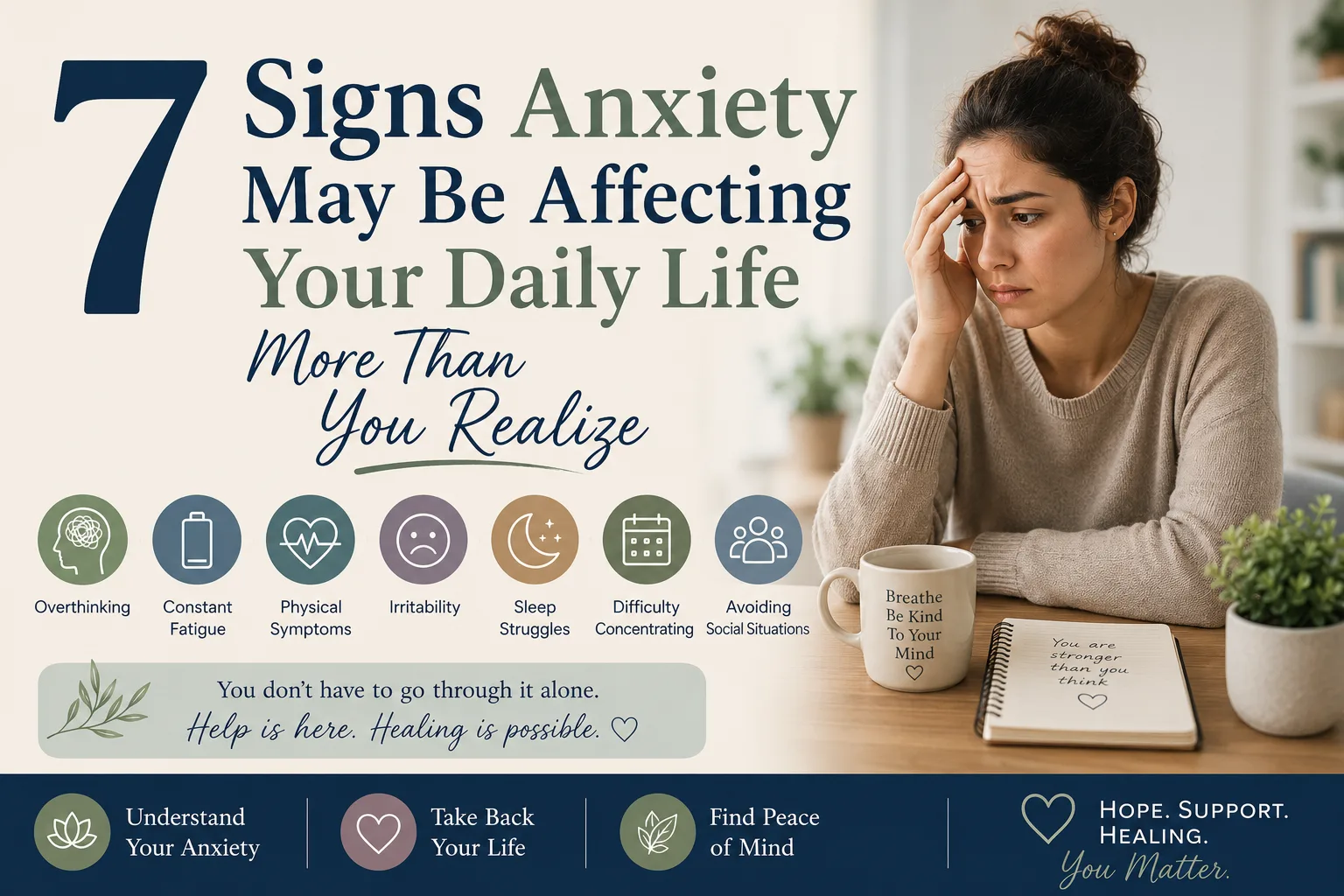
Anxiety is one of the most common mental health challenges affecting adults and teenagers today. While occasional stress is a normal part of life, persistent anxiety can slowly begin interfering with emotional well-being, relationships, sleep, concentration, and overall quality of life.
Many people fail to recognize anxiety symptoms because they often develop gradually. Constant worrying, emotional exhaustion, irritability, or physical tension may start feeling “normal” over time. As a result, individuals continue struggling silently without realizing how deeply anxiety is affecting their daily lives.
Learning to recognize the signs of anxiety in adults and teens is important because early support and treatment can make a significant difference in long-term mental wellness. Anxiety is highly treatable, and understanding the symptoms is often the first step toward improving emotional health.
1. Constant Overthinking and Excessive Worry
One of the most common signs of anxiety is persistent overthinking. People experiencing anxiety often replay conversations repeatedly, imagine worst-case scenarios, or worry excessively about situations that may never happen.
Even simple decisions can begin feeling mentally exhausting. Individuals may constantly question themselves, fear making mistakes, or feel overwhelmed by responsibilities that once seemed manageable.
Adults commonly experience anxiety related to work stress, finances, relationships, or health concerns. Teenagers may struggle with academic pressure, social expectations, or fear of failure.
Overthinking can gradually consume mental energy and make it difficult to relax, even during calm moments.
2. Sleep Problems and Restlessness
Anxiety frequently affects sleep patterns. Many individuals struggle to fall asleep because their minds remain active late into the night.
Common sleep-related anxiety symptoms include:
- Racing thoughts before bed
- Difficulty staying asleep
- Restlessness at night
- Waking up emotionally exhausted
- Feeling tired throughout the day
When the nervous system stays in a constant state of stress, the body has difficulty fully relaxing. Poor sleep can then worsen emotional tension, concentration issues, and irritability.
Many people seeking anxiety therapy San Antonio services report sleep disturbances as one of the earliest symptoms they noticed before realizing anxiety was becoming a larger issue.
3. Physical Symptoms Without a Clear Cause
Anxiety does not only affect emotions. It can also create physical symptoms throughout the body.
Some common physical signs of anxiety include:
- Muscle tension
- Headaches
- Chest tightness
- Rapid heartbeat
- Dizziness
- Digestive discomfort
- Sweating
- Shortness of breath
These symptoms occur because anxiety activates the body’s stress response system, often referred to as the “fight-or-flight” response.
In some cases, individuals seek medical treatment for physical discomfort before recognizing that chronic stress and anxiety may be contributing to the problem.
Teenagers especially may struggle to explain emotional distress and instead complain about headaches, fatigue, or stomach pain.
4. Difficulty Concentrating
Anxiety can make concentration extremely difficult. When the mind constantly jumps between worries and stressful thoughts, focusing on tasks becomes more challenging.
People experiencing anxiety may notice:
- Forgetfulness
- Mental exhaustion
- Difficulty completing tasks
- Reduced productivity
- Trouble making decisions
Adults may struggle at work, while teenagers often experience academic difficulties because anxiety consumes so much mental energy.
Many individuals describe this feeling as “brain fog,” where the mind feels overwhelmed and emotionally drained throughout the day.
5. Avoiding Stressful Situations
Avoidance is another common but overlooked symptom of anxiety. People often begin avoiding situations that trigger emotional discomfort or fear.
This may include avoiding:
- Social gatherings
- Public speaking
- Phone calls
- Crowded places
- School or work events
- Difficult conversations
While avoidance may temporarily reduce stress, it usually strengthens anxiety over time. The more someone avoids stressful situations, the more intimidating those situations often become emotionally.
Some individuals also begin withdrawing socially because interaction with others feels mentally exhausting.
6. Increased Irritability and Emotional Exhaustion
Anxiety does not always appear as panic or fear. In many cases, it appears as emotional irritability, frustration, or feeling constantly overwhelmed.
When the body and mind remain under prolonged stress, emotional regulation becomes more difficult. Small challenges may suddenly feel overwhelming, and patience may decrease significantly.
Adults experiencing chronic anxiety may become emotionally drained or short-tempered, while teenagers may appear unusually withdrawn, reactive, or sensitive without understanding why.
Over time, this emotional exhaustion can begin affecting relationships, communication, and overall quality of life.
7. Anxiety Starts Affecting Daily Life
The clearest sign that anxiety may require professional support is when symptoms begin interfering with daily functioning.
This may include:
- Difficulty maintaining relationships
- Problems at work or school
- Loss of motivation
- Emotional burnout
- Isolation from others
- Constant fear or worry
Occasional stress is normal, but persistent anxiety that disrupts daily routines should not be ignored.
For individuals searching for an anxiety psychiatrist near me San Antonio, recognizing these symptoms early may help them seek support before anxiety becomes more disruptive over time.
When to Seek Professional Help
Professional mental health support can help individuals better understand their symptoms and develop healthier coping strategies. Treatment options often include:
- Therapy and counseling
- Stress management techniques
- Lifestyle adjustments
- Medication management when appropriate
Learning to recognize the signs of anxiety in adults and teens is an important step toward improving emotional wellness and building healthier daily habits.
Frequently Asked Questions
What are the most common signs of anxiety?
Common anxiety symptoms include excessive worrying, trouble sleeping, emotional irritability, muscle tension, difficulty concentrating, overthinking, and physical symptoms such as headaches or chest tightness.
Can anxiety cause physical symptoms?
Yes. Anxiety can contribute to headaches, dizziness, rapid heartbeat, chest tightness, stomach discomfort, muscle tension, and fatigue.
When should someone seek professional help for anxiety?
Professional support may help when anxiety begins affecting sleep, relationships, work, school performance, or overall emotional well-being.
Can teenagers experience anxiety differently from adults?
Yes. Teenagers may experience anxiety through academic stress, social pressure, emotional withdrawal, irritability, or physical symptoms like headaches and stomach discomfort.
Final Thoughts
Anxiety often develops gradually, which is why many people fail to recognize how much it affects their emotional health, physical well-being, and daily routines. Understanding the signs of anxiety in adults and teens can help individuals identify symptoms earlier and seek support before stress becomes overwhelming.
For individuals exploring anxiety therapy San Antonio services or searching for an anxiety psychiatrist near me San Antonio, professional mental health support can provide personalized treatment, coping strategies, and long-term emotional guidance.
Learn more about psychiatric and mental health services at
Generations Family Psychiatry