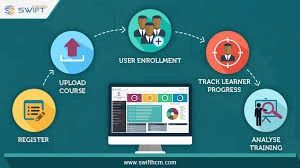
Modern organizations are rapidly transforming the way they train employees, partners, and customers. A cloud based learning management system has become a powerful solution that enables businesses to deliver scalable, flexible, and accessible learning experiences. Unlike traditional training systems that require heavy infrastructure and manual updates, cloud platforms allow organizations to manage training content, track learner progress, and deploy courses globally with ease. As companies adopt digital learning strategies, choosing the right LMS with the right features becomes critical for improving learning outcomes, increasing employee engagement, and supporting long-term organizational growth.
Why Are Organizations Moving Toward Cloud-Based Learning Platforms?
Many organizations are shifting from traditional training tools to cloud LMS platforms because of the flexibility and efficiency they provide. A cloud-powered environment eliminates the need for complex installations and allows teams to access learning resources from anywhere.
Cloud-based systems also support modern corporate training programs, remote workforce learning, and continuous professional development. Businesses can easily scale their training infrastructure as the workforce grows, while administrators can manage content and users from a centralized dashboard.
Additionally, cloud learning environments integrate seamlessly with eLearning authoring tools, HR systems, and analytics platforms, creating a unified learning ecosystem that improves training management and performance tracking.
What Makes Course Management Easier in a Cloud LMS?
One of the most valuable features of a modern LMS is efficient course management. Organizations need the ability to organize, update, and distribute training materials without technical complexity.
A strong cloud-based platform allows training teams to upload various learning formats such as videos, interactive modules, assessments, and documents. Courses can be structured into learning paths, making it easier for learners to progress through structured training programs.
Automated course updates are another advantage. Instead of manually updating training materials across multiple systems, administrators can update content in the cloud and instantly distribute the latest version to learners worldwide.
How Does Mobile Learning Support Today’s Workforce?
The modern workforce is increasingly mobile, making mobile learning support a critical feature for any LMS. Employees expect to access training on smartphones, tablets, and laptops without technical barriers.
A responsive cloud LMS ensures that learning content adapts seamlessly to different screen sizes. This enables professionals to complete training modules during travel, remote work, or flexible work schedules.
Mobile compatibility also supports microlearning strategies, allowing learners to consume short training modules that fit into their daily workflow. This approach improves retention and encourages continuous learning.
Why Are Analytics and Reporting Important in an LMS?
Data-driven learning strategies are becoming essential in corporate training environments. A well-designed LMS should include advanced analytics and reporting tools that help organizations measure learning effectiveness.
Administrators can track learner progress, course completion rates, assessment performance, and engagement metrics. These insights help training managers identify skill gaps, improve course design, and align learning programs with business objectives.
For organizations implementing employee training programs, analytics also help demonstrate the impact of training on productivity and performance.
How Does Integration Improve Learning Ecosystems?
A modern learning platform should integrate smoothly with other digital tools used by organizations. Integration capabilities allow an LMS to connect with HR software, collaboration platforms, and eLearning authoring tools.
This creates a connected learning environment where user data, course progress, and performance metrics can flow between systems. For example, employee onboarding programs can automatically assign training modules when a new hire is added to an HR platform.
Integration also simplifies course publishing for content created in tools like Articulate Storyline or other eLearning authoring solutions, ensuring that training content can be deployed quickly.
What Role Does Personalization Play in Learner Engagement?
One of the most powerful advantages of modern learning platforms is personalized learning experiences. Every learner has different skills, goals, and training requirements, so a one-size-fits-all training model is no longer effective.
A robust LMS allows administrators to create personalized learning paths based on roles, departments, or individual performance data. Learners can receive recommended courses tailored to their career development needs.
Personalized learning improves engagement because employees feel that training content is relevant to their responsibilities and professional growth.
Why Is Security and Data Protection Critical for LMS Platforms?
As organizations store sensitive training data, user information, and course materials in digital platforms, security and compliance become essential considerations.
A reliable cloud-based learning platform should offer secure data storage, encryption protocols, and role-based access control. These features ensure that only authorized users can access sensitive information.
Organizations operating in regulated industries must also ensure that their learning systems comply with international standards and privacy regulations. Strong security features protect both organizational data and learner information.
How Can Scalability Support Long-Term Training Growth?
As businesses grow, their training needs expand as well. A key advantage of modern learning platforms is scalability, allowing organizations to support thousands of learners without infrastructure limitations.
A scalable LMS can accommodate new users, departments, and training programs without requiring major system upgrades. This flexibility makes it easier for organizations to expand training initiatives such as leadership development, compliance training, and partner education programs.
Scalability also ensures that global teams can access consistent learning experiences regardless of location.
The Future of Digital Learning Platforms
Digital transformation is reshaping the way organizations deliver training and develop workforce skills. The demand for flexible, scalable, and data-driven learning solutions continues to grow as businesses adopt modern learning strategies.
A cloud based learning management system enables organizations to manage training efficiently, support remote learning, and provide engaging learning experiences. With features such as mobile accessibility, analytics, integration capabilities, personalized learning paths, and strong security frameworks, cloud-based platforms are becoming the backbone of modern corporate training ecosystems.
Companies seeking to implement effective digital learning strategies often collaborate with experienced eLearning providers such as Swift elearning services, which specialize in building scalable training solutions and learning platforms that align with business goals.
By focusing on the right features and adopting a strategic approach to learning technology, organizations can create impactful training programs that support workforce development and long-term success.