
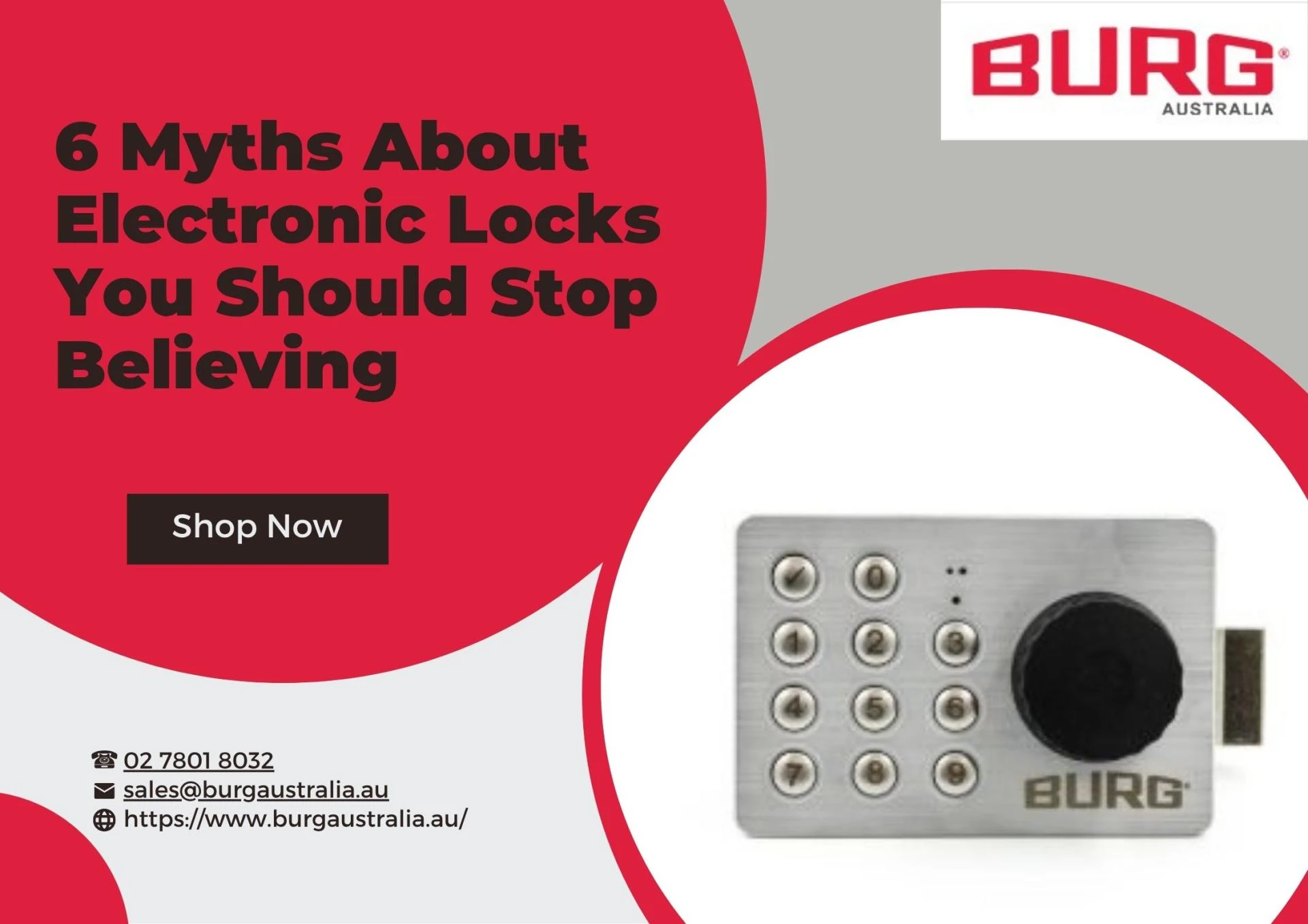
Think You Know Electronic Locks? Think Again
Electronic locks are now used in homes, businesses, and rental properties across Australia. But despite their growing popularity, there are still a few common myths that stop people from making the switch.
Some of these beliefs were true a decade ago, but not anymore. Let’s take a look at six myths that deserve to be retired—and why they no longer hold up today.
1. “They Stop Working When the Power Goes Out”
This myth often comes from confusion between hardwired and battery-powered systems. Most modern options don’t rely on your home’s electricity at all. Instead, they use long-lasting batteries that continue working even during blackouts.
Many models give you a warning when battery life is low, offering plenty of time to replace them before any issues occur. Some even include backup power inputs or USB ports for emergency charging. With proper use, getting locked out due to a power failure is extremely rare.
2. “They’re Easy to Hack”
Hacking worries are understandable, but the reality is that modern locks use strong encryption and limited code attempts to block unauthorised access. You’re more likely to have a key stolen or copied than to have a lock hacked.
By using a solid PIN or passcode and avoiding simple combinations like “1234” or your birthdate, you add a layer of digital security that’s hard to beat. Some models also support multi-factor access, such as combining a code and a card, adding further protection.
3. “Only Tech Experts Can Use Them”
This may have been true in the early days, but times have changed. Today’s locks are designed for easy use. Most models have clear instructions and user-friendly options like keypads, cards, or fingerprint access.
Even setting up new codes is a quick process that doesn’t need tech skills or special tools. Many users manage settings through simple mobile apps that offer clear step-by-step guidance. You don’t need to be tech-savvy to benefit from digital convenience.
4. “Traditional Locks Are More Reliable”
People often think that old-style locks are safer because they’ve been around longer. But they also come with risks—keys can be lost, copied, or the lock itself picked.
Electronic models come with added features like auto-lock timers, tamper alerts, and access tracking. These options give you more control over who enters and when. You can even set access windows or remove codes instantly without needing to rekey the whole door.
5. “You’ll Get Locked Out If You Forget the Code”
Forgetfulness happens, but that doesn’t mean you’ll be stuck outside. Most systems have backup options like a mechanical key, mobile app, or RFID access.
Some even allow you to set up multiple codes, so a trusted friend or family member can help if you forget yours. There’s also the option of remote unlocking with certain smart models, giving you more flexibility no matter where you are.
6. “All Electronic Locks Are the Same”
There’s a big range of options out there. Some models are perfect for home use, while others suit short-term rentals, shared offices, or commercial doors. Features also vary, like remote access, touchscreens, or keycard entry.
Choosing the right one depends on your needs, not a one-size-fits-all approach. Think about how often access needs to change, whether you need mobile control, or if shared access is a daily need. With so many variations available, there’s likely a model made just for your setup.
Don’t Let Old Beliefs Keep You from Better Security
Electronic locks are safer, smarter, and easier to use than ever before. Many of the worries people have are based on older systems or just plain misinformation.
If you’re ready to explore more secure and flexible options, BURG offers a trusted range of products built for everyday Australian conditions.
There’s no need to hold on to outdated ideas. Take control of your entry points with a solution that fits modern life. It’s time to move past the myths—and choose a lock that works for you.