
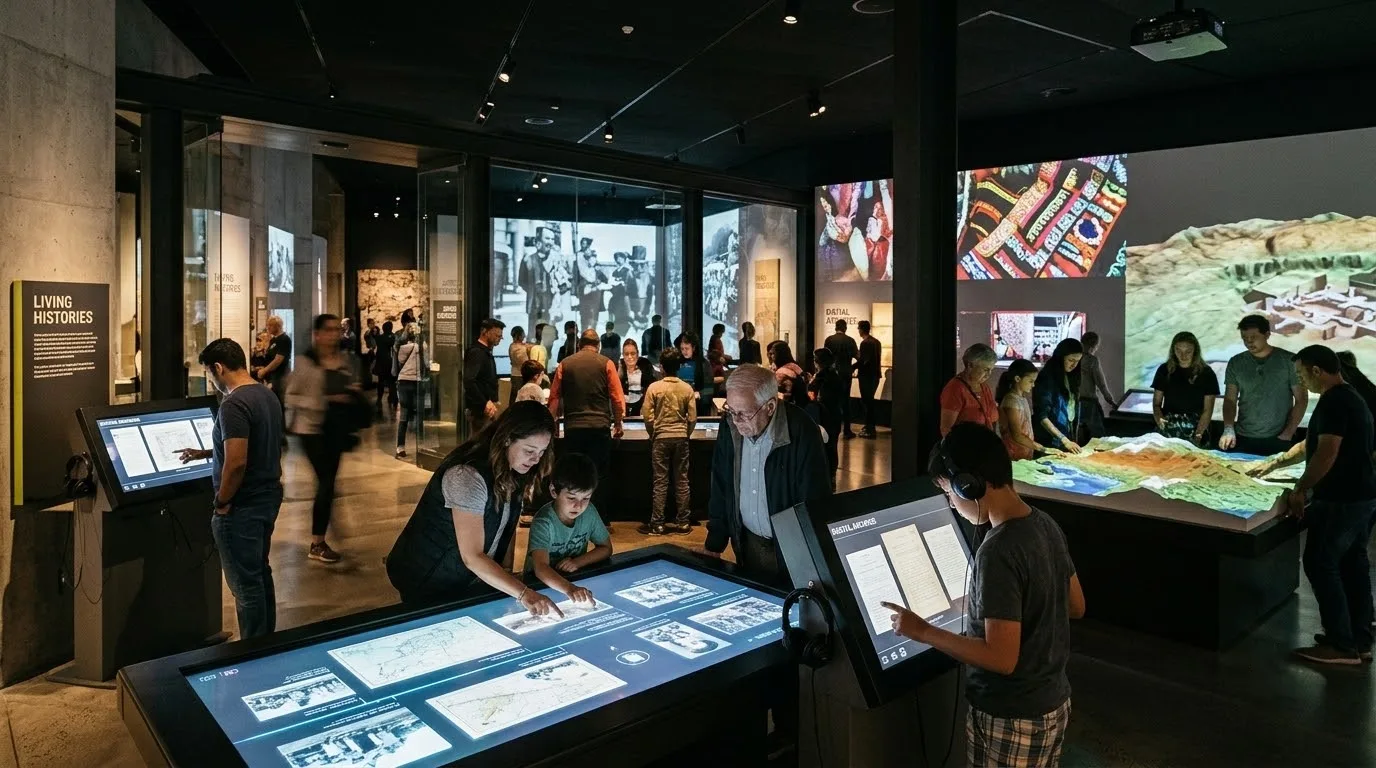
Most corporate exhibitions and retail pop-up installations struggle to hold an attendee's attention for more than ninety seconds. Traditional trade show booths, passive rollup banners, and printed brochures no longer trigger genuine audience curiosity or organic social sharing. Forward-thinking marketing leaders now invest in strategic immersive event activation design to convert passive foot traffic into invested participants who retain the core brand message long after leaving the venue floor.
Transitioning from static graphic walls to responsive, sensory-rich environments demands a disciplined balance of spatial planning, creative storytelling, and robust interactive technology. When executed with precision, physical brand activations command higher dwell times, deepen emotional resonance, and generate measurable commercial returns.
Why Conventional Event Displays Fail Modern Audiences
Exhibition halls and branded retail environments present intense sensory competition. Visitors navigate aisles surrounded by bright lights, competing sound, and dozens of concurrent pitches, causing cognitive overload. Under these conditions, the human brain filters out static promotional messaging almost instantly.
The Psychology of Participation Over Passive Viewing
Human recall operates through sensory interaction rather than visual observation alone. When an attendee watches a recorded corporate video running on a television screen, information retention decays rapidly within twenty-four hours.
Conversely, when visitors influence a visual environment through their physical movement, touch responsive projections, or manipulate real-time digital simulations, psychological ownership shifts immediately. Active participation transforms a casual passerby from an external spectator into a co-creator of the brand experience.
Frictionless Lead Capture Through Value Exchange
Traditional lead generation at events relies heavily on intrusive badge scans or paper sign-up sheets. These methods disrupt the visitor journey and create transactional friction that repels potential clients.
Modern activations resolve this issue by introducing intuitive value exchanges. When an installation rewards attendees with personalized generative digital art, customized performance metrics, or high-definition augmented reality video clips, participants willingly share their details. Data collection becomes a natural byproduct of an engaging experience rather than an awkward obstacle.
Three Foundational Pillars of Modern Activation Design
Building a memorable experiential installation requires far more than placing touchscreens across a booth. Meaningful impact depends on three interconnected design principles that guide the user journey.
1. Spatial Storytelling and Environmental Cues
Every successful installation follows a deliberate spatial narrative featuring an entrance hook, an engagement core, and a clear resolution. The perimeter of the activation must present an immediate visual magnet that attracts attendees away from busy walkways.
Once inside the zone, lighting transitions, localized directional audio, and tactile surfaces establish an ambient shift that isolates the visitor from external floor noise. Engaging multiple sensory pathways anchors memory retention far more effectively than isolated visual cues.
2. Motion Sensing and Touchless Interaction
Modern audiences appreciate frictionless, hygienic, and novel physical interactions. Spatial computing sensors, optical cameras, and depth-tracking hardware turn walls, floors, and physical product displays into interactive surfaces without requiring physical contact.
For instance, an attendee walking toward a display wall can trigger responsive particle animations that reveal product architecture step by step. These natural gesture mechanics encourage curiosity and invite organic exploration without requiring instructional manuals or staff interventions.
3. Real-Time Dynamic Personalization
Static messaging treats every visitor identically, diluting relevance. Responsive software architectures allow installations to tailor content dynamically based on user choices or demographic inputs.
Whether an installation configures a customized product prototype in 3D or visualizes an attendee's industry challenges on a projection canvas, real-time personalization creates an authentic emotional connection. Visitors leave with insights specifically tailored to their professional or personal context.
Measuring Return on Experience and Commercial Impact
Marketing directors face increasing pressure to justify event expenditures with concrete business metrics. Modern experiential frameworks address this challenge by capturing granular behavioral analytics alongside direct sales opportunities.
Tracking Dwell Time and Organic Amplification
Dwell time represents the most reliable indicator of brand engagement during live events. Automated anonymous spatial sensors can track average session durations and identify high-performing interactive zones without infringing on personal privacy.
In addition, captivating physical environments naturally stimulate organic social sharing. When an installation generates visually stunning or personalized outputs, attendees enthusiastically capture and distribute photos or videos across LinkedIn, Instagram, and X. This user-generated momentum extends the reach of a localized booth to thousands of qualified remote professionals.
Post-Event Attribution and Nurturing Sequences
An experiential activation should never conclude when an attendee walks away from the booth. Modern setups connect physical event touchpoints directly to automated customer relationship management systems.
Sending immediate digital keepsakes with embedded tracking links allows marketing teams to monitor follow-up engagement. Segmenting attendees based on the depth of their physical interactions enables sales teams to prioritize outreach to genuinely qualified prospects.
A Practical Execution Blueprint for Marketing Teams
Deploying a reliable, high-performing brand activation requires structured project management and rigorous technical preparation before event doors open.
- Isolate One Core Message: Avoid diluting the experience by attempting to showcase an entire product catalog. Anchor the installation around one compelling problem or capability that guests can understand in under thirty seconds.
- Streamline the Onboarding Flow: If an attendee requires a staff member to explain how to initiate an interaction, the user interface requires immediate redesign. Visual cues and intuitive affordances should make participation effortless.
- Plan for High Foot Traffic Surges: Develop scalable interaction modes. During peak exhibit hours, implement shorter interaction loops to prevent long queues that cause frustrated visitors to abandon the booth.
- Implement Offline Redundancy: Exhibition hall Wi-Fi networks are notoriously unstable. Ensure all essential visual engines, gesture tracking software, and interactive assets run reliably on local servers without depending on continuous cloud connections.
Building Lasting Brand Resonance Beyond the Booth
Physical brand activations represent the bridge between digital marketing campaigns and genuine human relationships. As corporate events continue to evolve, organizations that invest in thoughtful spatial design, intuitive motion tracking, and frictionless data capture will command attendee attention and achieve lasting commercial growth.
For teams planning comprehensive structural environments, review how modern event fabrication creates the foundation for memorable gatherings to complement your digital interactive strategy.