In today’s fast-paced digital workplace, organizations are constantly looking for smarter ways to improve efficiency while ensuring compliance with labor policies and internal regulations. HRMS systems play a critical role in helping businesses automate HR operations, streamline employee management, and boost workforce performance. For a professional eLearning audience, these systems also support better training administration, compliance tracking, and employee development. At Swift eLearning Services, this aligns with the growing need for integrated workplace learning and HR automation.
As businesses scale, managing payroll, attendance, onboarding, and compliance manually can become complex and time-consuming. This is where HRMS solutions create measurable impact.
1. How Do HRMS Systems Automate Daily HR Tasks?
One of the most valuable benefits of an HRMS is automation.
Routine tasks such as:
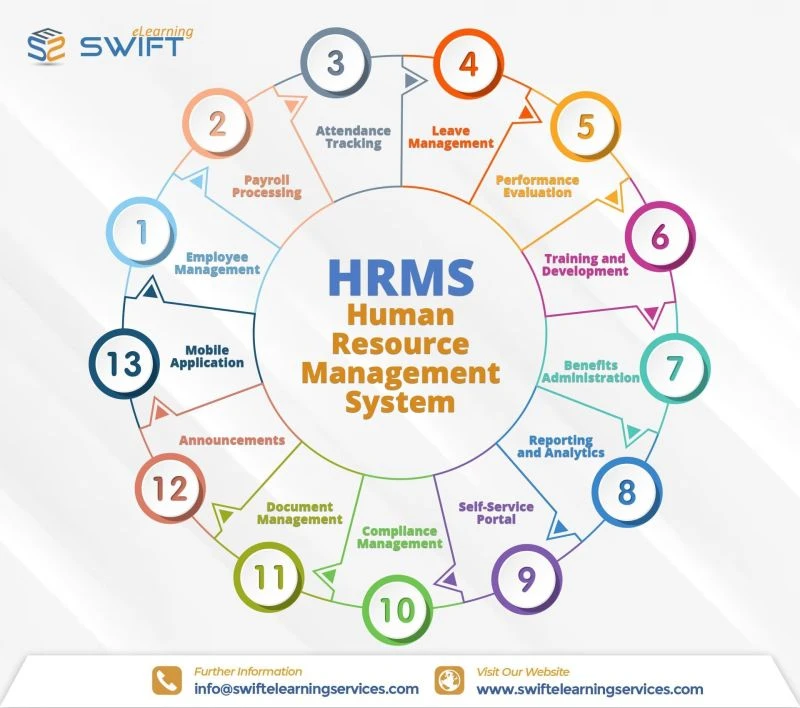
- attendance tracking
- payroll processing
- leave approvals
- employee record management
- onboarding workflows
can be automated through a centralized dashboard.
This significantly reduces manual work and minimizes human errors. Instead of spending hours on spreadsheets and repetitive approvals, HR teams can focus on strategic areas such as employee engagement, workforce planning, and training development.
For eLearning teams, this means more time can be allocated to:
- onboarding programs
- compliance training
- skill development initiatives
- performance learning modules
Automation directly improves productivity across departments.
2. Can HRMS Systems Improve Employee Performance?
Yes, modern HRMS platforms are designed to enhance workforce performance through data-driven insights.
These systems often include:
- performance tracking
- goal management
- appraisal workflows
- KPI dashboards
- productivity reports
Managers can monitor employee progress in real time and align goals with business objectives.
Why does this matter?
When employees have clear expectations, deadlines, and measurable goals, accountability naturally improves.
For professional eLearning environments, this becomes even more valuable. Performance insights can be used to identify skill gaps and recommend targeted training modules.
This helps organizations improve:
- employee productivity
- learning outcomes
- engagement levels
- retention rates
It creates a stronger connection between performance and continuous learning.
3. Why Are HRMS Systems Important for Compliance Management?
Compliance remains one of the most important concerns for modern organizations.
Businesses must maintain compliance with:
- labor laws
- payroll regulations
- attendance policies
- leave rules
- employee documentation standards
- workplace compliance training
An HRMS system simplifies this process by maintaining centralized records and automated audit trails.
Every attendance log, payroll update, leave request, and employee record is stored systematically, making reporting and audits easier.
Curiosity-driven question:
How does this help learning and development teams?
For eLearning professionals, compliance is closely tied to mandatory employee training.
HRMS systems can help track:
- policy training completion
- certification renewals
- compliance deadlines
- role-based mandatory learning
This reduces organizational risk and improves regulatory readiness.
4. How Do HRMS Systems Improve Employee Experience?
Employee experience has a direct impact on workforce productivity.
Modern HRMS platforms provide self-service portals where employees can independently manage essential HR tasks.
This includes:
- viewing payslips
- applying for leave
- updating profile details
- checking attendance
- accessing policy documents
- tracking learning progress
This transparency improves trust and reduces dependency on HR teams for basic tasks.
Why is this important?
When employees can access information instantly, workplace delays and frustration decrease.
For learning-focused organizations, this can also include access to:
- onboarding courses
- training calendars
- certification status
- learning progress dashboards
A better employee experience leads to stronger engagement and improved productivity.
5. How Do HRMS Systems Support Smarter Workforce Planning?
Strategic workforce planning is another major advantage of HRMS systems.
These platforms provide real-time analytics on:
- attendance trends
- leave patterns
- productivity reports
- employee performance
- attrition risks
- training completion
This helps leadership teams make informed decisions.
For example:
- Which departments need more training?
- Where are productivity gaps?
- Which teams face compliance risks?
- What skills need development?
For eLearning teams, these insights help build targeted learning pathways and improve workforce capability planning.
This supports long-term business growth.
Final Thoughts
HRMS systems are essential for organizations that want to improve workforce productivity and maintain compliance without increasing administrative burden.
By automating HR workflows, improving employee accountability, strengthening compliance management, enhancing employee experience, and supporting data-driven planning, these systems become a strategic business asset.
For a professional eLearning audience, the real value lies in combining HR automation with learning and development goals.
Swift eLearning Services helps organizations align workforce technology with smarter training ecosystems, ensuring better productivity, stronger compliance, and long-term employee growth.