Retail environment is undergoing a lot of change and none of it is better experienced than in the supermarket franchises worldwide. The idea of the grocery store in India has in India, in particular, gone beyond the old mom and pop style into a highly automated, technology-oriented shopping experience. The BigDeal Supermart and its BigDeal Supermart Franchise model, is an outstanding example of the way innovation is transforming the grocery store business and the modern chain franchise outlet.
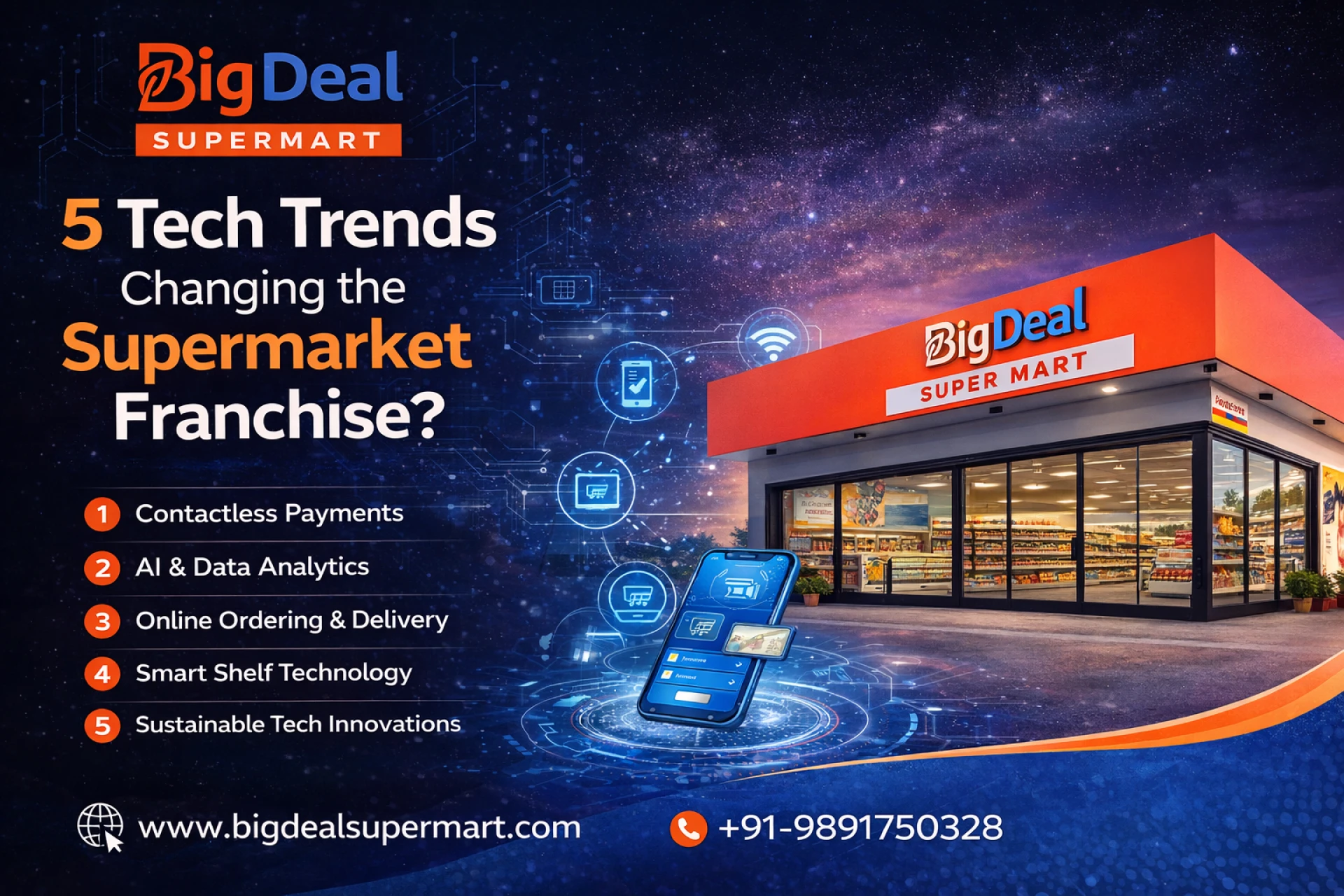
With the changing customer demands and increasing pace of competition, franchise owners of the supermarket outlets are adopting new and enhanced technologies to build smarter, faster and efficient stores. In this blog, we cover three primary technological trends which are reshaping the supermarket franchise landscape - towards stores that are more lucrative, user friendly, and attractive to the modern tech-savvy shopper.
1. Artificial Intelligence-Powered Inventory
The use of artificial intelligence (AI) in inventory management is one of the largest game changers in the category of supermarket franchise. Gone are the times when inventory was manually or using simple spreadsheets. Today, the systems are based on machine learning algorithms and are being used and analyzed to provide trends of demand and automatize stock replenishment based on the available sales data.
In the case of BigDeal Supermart Franchise operators, it would imply never having to sell out of hot sellers such as milk, dal, or fresh produce as well as having much less overstock on slow movers. Even seasonal demand, such as holiday food increases, can be predicted using AI, which is vital to the grocery store business profitability.
Waste minimization is also possible with the assistance of AI, which analyzes expiry dates and may offer markdowns or promotions to products with expiry dates close to their best-before date. This is a huge competitive advantage to supermarkets in India where inventory turnover can either lead to or break margins.
2. Contactless and Mobile Payments
The customers are now demanding more of a new kind of experience - and the supermarkets are following them and providing contactless payment methods that make the checkout process smooth. It consists of both NFC payments such as Google Pay and Apple Pay, scanning QR codes, UPI support, and even self-checkout kiosks where customers scan and pay with their mobile phones.
In the case of BigDeal Supermart, the combination of these alternatives has provided the organization with increased customer satisfaction and less checkout line, which often was a significant source of frustration in the old grocery stores. Furthermore, mobile wallets and online payments are creating more convenience to the shoppers who are more inclined towards no cash interaction.
Applicable to the scenario of the Indian grocery store, non-contact payment systems have driven faster adoption of technology and better security offered during a point of purchase. Franchise stores with different payment methods are not only future-proof they also grow their customer base with tech-savvy millennials and urban professionals.
Also Read: Is ₹20 Lakh Supermarket Franchise Worth It? Expert Verdict 2026
3. Smart Shelves and In-Store Sensors
Intelligent shelves, RFID tags, and Internet of Things are being introduced to the reality of any supermarket franchise. These shelves monitor the state of products when they are low, provide real-time information to inventory, and even alert about price changes or lost products.
In the case of a retail supermarket franchise store such as the BigDeal Supermart, this involves removal of manual stock checking and making the most popular stock always found on shop shelf. It also gives store personnel the capability to devote less time to routine audits and devote more time to customers.
Dynamic pricing using electronic price tags may also be presented on smart shelves; a capability that enables supermarkets to vary prices in real-time depending on demand, expiry dates or promotion activities.
Grocery store business proprietors in India have always found efficient product management challenging because of the diverse product types and unpredictable demand trends: thus, the trend is particularly promising.
4. Data Analytics and Customer Personalization
Retail is now the new currency of data. Franchised supermarkets are using big data analytics to predict customer behavior, personalize marketing activities, and segment product assortments.
As an illustration, BigDeal Supermart relies on purchase history to deliver targeted offers and discounts to the members of the loyalty program. Rather than generic flyers and coupons, customers are given personalized offers in accordance with their shopping behavior - increasing interest and returns.
This is particularly effective in the Indian grocery retail setting. Regional, festival, or household-size preferences may dominate the choices of shoppers, and analytics can assist supermarkets to keep the right items in stock, and maximize promotions to any segment.
Smarter placement of products in the store is also supported by data. Through the heat map of shopper movement, the franchises can then place high-margin or high frequency purchased products strategically to give them more visibility and boost sales.
5. E-Commerce Integration and Omni-Channel Retailing
With the emergence of e-commerce, consumerism demands have radically shifted, even in the case of the traditional supermarkets. The new Indian shoppers in modern grocery store are focused on flexibility: they can purchase groceries either in-store, order online and have household delivery, or get them curbside.
BigDeal Supermart, a Supermarket franchise, has utilized this opportunity and incorporated omni-channel retailing in its business model. Groceries can be ordered online through mobile applications or websites, with real-time inventory tracking, and options to get delivered or pickup in stores. There are also outlets with subscription of everyday necessities such as rice, flour, or milk.
Due to this integration, franchise owners have access to new sources of income and have enhanced customer loyalty. It also renders small retail franchise outlet operators competitive against large national chains because technology reduces barriers to scale and reach to customers.
Ecommerce integrations are frequently connected to the underlying technology, such as inventory management and automated warehouses, that guarantee a smooth fulfillment and quicker turnaround on orders which is essential since customers will demand speed and convenience.
Why These Trends are Important to Franchise Owners
Supermarket franchises are no longer allowed to be optional about technology — they must have it. This is why the industry is becoming transformed with these trends:
1. Increased Operational Efficiency: Automation lowers human labor, human error, and human labor expenses.
2. Greater Customer Satisfaction: Faster checkout, personalized offers, and multi-channel alternatives keep customers loyal.
3. Cost Reduction and Increased Profitability: Pricing and inventory management based on data ensures improved margins.
4. Competitive Advantage: Franchise outlets adapted to innovative technology will be in a better position to play compete with big box stores and online giants.
5. Future-Proofing: Technology makes things agile and scalable as customer habits keep changing.
Check out this: GST/FSSAI Compliant: Complete Supermarket Franchise Launch Roadmap
Conclusion
The digital revolution of the franchise supermarket industry is being forced by artificial intelligence, automation, smart tech, data-driven decisions, and omni-channel retailing. To the operators within India, particularly when it comes to operators working with the BigDeal Supermart Franchise, as well as similar models, embracing these technologies does more than merely keeping up with the times, it is about essential survival in an even more competitive market place.
Franchise owners can be able to deploy these trends into daily operations to increase efficiency, better customer experience, and guarantee profitability in the contemporary grocery store business. You need to know that whether you are planning to open a new grocery store in India or you are upgrading an existing retail franchise outlet, these marriage-brought innovations are drawing the blueprint of success in the future.