
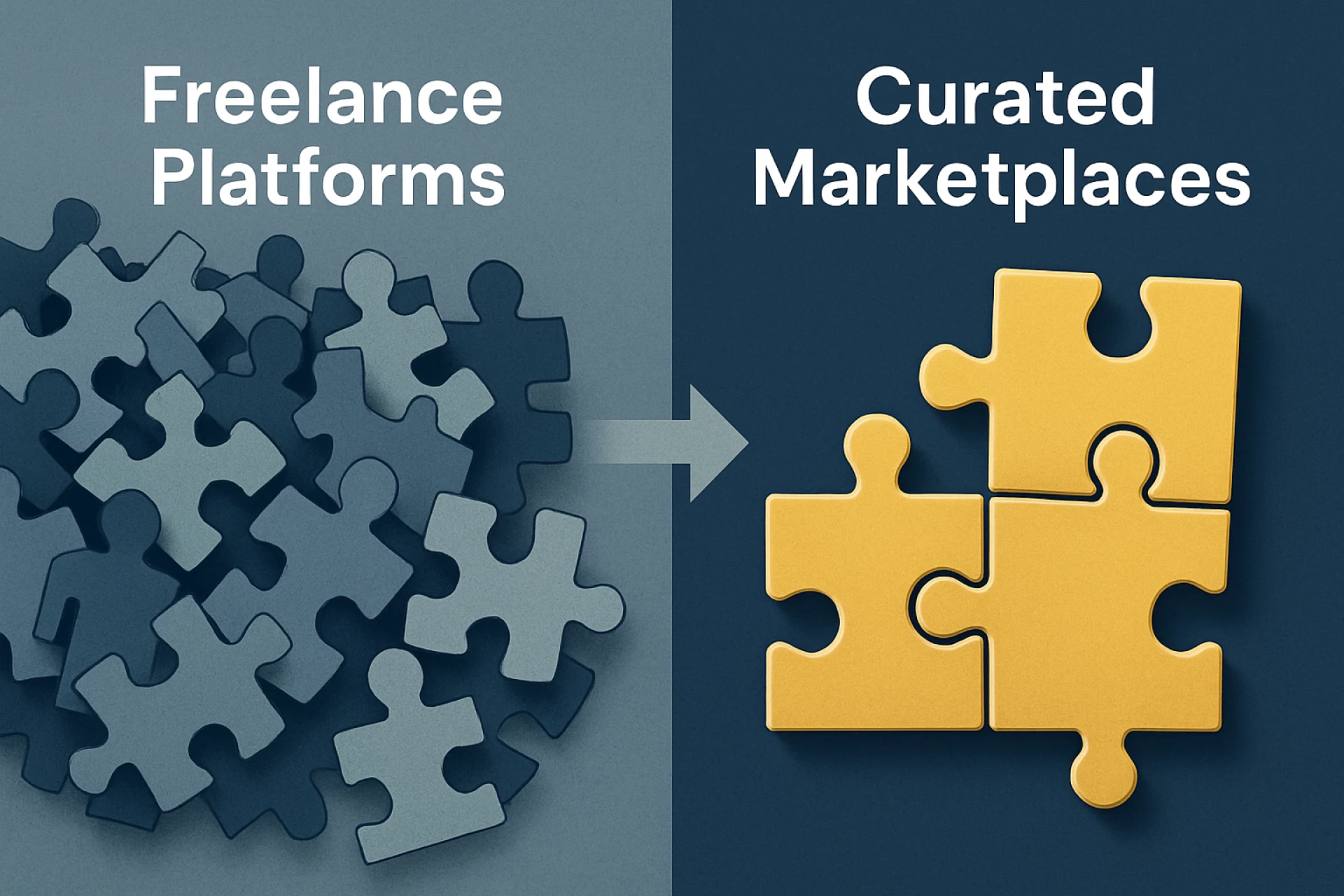
Finding the right external talent has never been more challenging or more important. While traditional freelance platforms offer access to millions of service providers worldwide, the sheer volume of options often creates more problems than it solves. Businesses waste countless hours sifting through proposals, vetting credentials, and managing inconsistent quality.
This is where curated marketplaces are changing the game. Unlike open platforms where anyone can join, curated marketplaces carefully select and verify service providers before they ever appear in search results. For companies considering outsourcing from India or other global talent hubs, this distinction can mean the difference between project success and costly failure.
Here are five reasons why curated marketplaces are becoming the preferred choice for businesses serious about quality.
1. Rigorous Vetting Eliminates Guesswork
Traditional freelance platforms operate on volume. The more freelancers they have, the more jobs they can fill. But this open-door policy means you're responsible for separating skilled professionals from inexperienced newcomers.
Curated marketplaces take a fundamentally different approach. Every service provider undergoes thorough evaluation before being listed including portfolio reviews, skill assessments, and background checks on past client relationships. When you browse providers, you're seeing only those who have already proven their capabilities.
For businesses exploring outsourcing services from India, this vetting is invaluable. India produces over 1.5 million engineering graduates annually, creating an enormous talent pool. But quality varies dramatically. Curated marketplaces do the hard work of identifying top performers, so you don't have to.
2. Quality-First Culture Delivers Better Results
Price wars on traditional platforms push freelancers to underbid each other, often at the expense of quality. When providers compete primarily on cost, clients frequently end up with subpar work that requires expensive revisions or complete redoing.
Curated marketplaces foster a different dynamic. Because membership is selective, providers compete on expertise, reliability, and value rather than rock-bottom pricing. This creates a quality-first culture where maintaining high standards is essential for continued participation.
When searching for a top outsourcing firm India has to offer, curated platforms ensure you're evaluating providers who have already demonstrated consistent excellence not just those willing to work cheapest.
3. Intelligent Matching Connects You with the Right Partner
Posting a job on a traditional platform typically triggers an avalanche of generic proposals. Many applicants haven't even read your requirements they're mass-applying to anything remotely related to their skills. You're left spending hours identifying who actually understands your project.
Curated marketplaces prioritize fit over volume. Many employ dedicated matching specialists who understand both client needs and provider capabilities. This human-guided approach considers factors that algorithms miss: industry experience, communication style, project complexity, and cultural alignment.
This intelligent matching proves especially valuable for technical projects. If you need software development companies specialists for a complex development project, curated platforms connect you with teams that have relevant technology stack experience and domain expertise not just developers who listed matching keywords.
4. Ongoing Support Ensures Successful Collaboration
On traditional platforms, support largely ends once you've hired someone. If communication breaks down or deliverables miss the mark, you're navigating dispute resolution on your own. This hands-off approach leaves clients vulnerable, especially when working across borders and time zones.
Curated marketplaces stay invested throughout your engagement. Their reputation depends on successful outcomes, so they provide ongoing support, facilitate communication, and intervene proactively when issues arise. This continued involvement creates accountability that traditional platforms lack.
When partnering with an IT outsourcing company teams provide through curated marketplaces, this support layer helps bridge geographical and cultural gaps. You have a dedicated point of contact who understands both sides and can help resolve challenges before they derail your project.
5. Relationships Replace Transactions
Freelance platforms are built for transactions. Find a provider, complete a project, move on. This works for simple one-off tasks, but it's poorly suited for businesses seeking strategic partners who understand their brand, systems, and long-term goals.
Curated marketplaces are designed around relationships. The providers they feature are typically established agencies and experienced professionals seeking meaningful, ongoing partnerships not freelancers chasing the next gig. This alignment creates opportunities for deeper collaboration and compounding value over time.
Outsourcing delivers the greatest returns when it evolves from isolated projects into strategic partnerships. Curated marketplaces facilitate exactly this progression, connecting you with providers who are invested in growing alongside your business.
The Bottom Line
The true cost of outsourcing extends far beyond hourly rates. Failed projects, revision cycles, miscommunication, and missed deadlines all carry real price tags that rarely appear in initial quotes. When you factor in these hidden costs, the value proposition of curated marketplaces becomes clear.
Traditional freelance platforms still have their place for quick, straightforward tasks where budget is the primary concern. But for projects where quality, reliability, and strategic fit matter, curated marketplaces offer a smarter path forward.
By pre-vetting providers, fostering quality-focused cultures, enabling intelligent matching, providing ongoing support, and facilitating long-term partnerships, curated marketplaces address the core frustrations businesses face with traditional platforms.
The question isn't whether you can afford to use a curated marketplace. It's whether you can afford not to.