
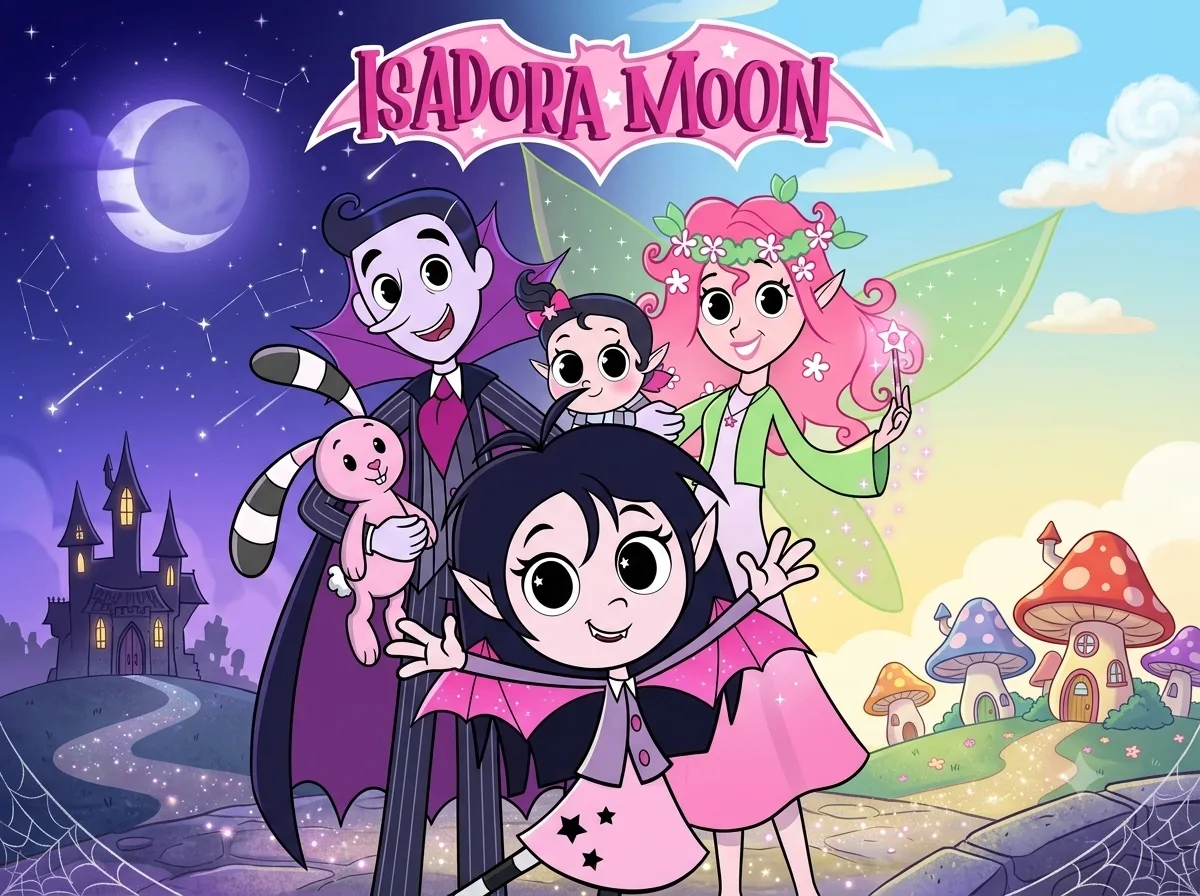
Children learn valuable life skills through stories that spark their imagination and encourage positive behavior. Characters who demonstrate kindness, confidence, and resilience often leave a lasting impression, helping young viewers navigate everyday experiences with greater understanding. Educational entertainment can be a meaningful way for families to introduce important values while keeping children engaged.
One show that beautifully blends fantasy with heartfelt lessons is Isadora Moon. Through magical adventures and relatable experiences, young viewers discover the importance of embracing individuality, treating others with kindness, and approaching life's challenges with confidence. These timeless lessons help children build strong character both at home and in school.
1. Be Proud of Who You Are
Every child is unique, and learning to appreciate those differences builds confidence from an early age. The main character is half fairy and half vampire, showing children that they don't have to fit into one category to belong.
Rather than hiding what makes her different, she embraces every part of herself with confidence and joy.
Takeaway: Your uniqueness is your superpower.
2. Kindness Makes Every Day Better
Small acts of kindness can make a big difference. Throughout her adventures, the young heroine treats friends, family, and even strangers with compassion and understanding.
Children who regularly see positive examples of empathy are more likely to develop caring relationships in their own lives.
Takeaway: A kind heart is the greatest magic of all.
3. It's Okay to Be Different
Children sometimes feel pressure to fit in with others, but true confidence comes from accepting who they are. Stories that celebrate individuality remind young viewers that differences should be appreciated rather than hidden.
Parents looking for educational programming that also supports Spanish learning for kids can pair engaging television shows with language-rich activities, creating enjoyable opportunities for both emotional and cognitive development.
Takeaway: You belong just by being yourself.
4. Face New Adventures with Courage
Trying something new can feel intimidating, whether it's making friends, starting school, or learning a new hobby. Courage isn't about never feeling afraid—it's about taking the next step despite uncertainty.
Each new experience helps children develop resilience, curiosity, and problem-solving skills that will benefit them throughout life.
Takeaway: Every adventure helps you grow.
5. Friends Make the Journey Magical
Positive friendships teach children valuable social skills such as cooperation, trust, communication, and respect. Friends encourage one another during difficult moments and celebrate successes together.
Stories that emphasize teamwork help young viewers understand the importance of listening, sharing, and supporting others while building meaningful relationships.
Takeaway: Great friends make every adventure more fun.
Why Positive Stories Matter for Child Development
Educational entertainment can reinforce lessons children learn at home and in the classroom. Meaningful stories help young viewers:
- Build self-confidence
- Develop empathy and kindness
- Strengthen problem-solving skills
- Improve emotional resilience
- Encourage creativity and imagination
- Learn the value of friendship and teamwork
When these themes are presented through engaging storytelling, children are more likely to remember and apply them in everyday situations.
Frequently Asked Questions
What can children learn from Isadora Moon?
Children can learn valuable lessons about self-confidence, kindness, courage, friendship, and embracing what makes them unique.
Why are positive role models important in children's shows?
Positive characters help children develop empathy, resilience, confidence, and healthy social skills through relatable situations and meaningful storytelling.
Can educational television support early learning?
Yes. Age-appropriate educational programming can strengthen communication, emotional development, creativity, and problem-solving while keeping children engaged.
How can parents reinforce these life lessons?
Parents can discuss the story after each episode, encourage open conversations about emotions, and help children apply the lessons to everyday experiences.
Conclusion
Children benefit from stories that encourage them to embrace their individuality, treat others with kindness, and face new experiences with confidence. By highlighting values such as empathy, courage, and friendship, shows like these offer meaningful lessons that extend beyond entertainment and support healthy emotional growth.