The engineering world is evolving faster than ever. New technologies emerge every few months, automation reshapes industries, and businesses now expect engineers to do more than just technical work. Whether you’re fresh out of college, mid-career, or a senior engineer looking to stay ahead, 2026 will demand a new set of must-have skills.
So, what should engineers focus on learning today to stay future-ready?
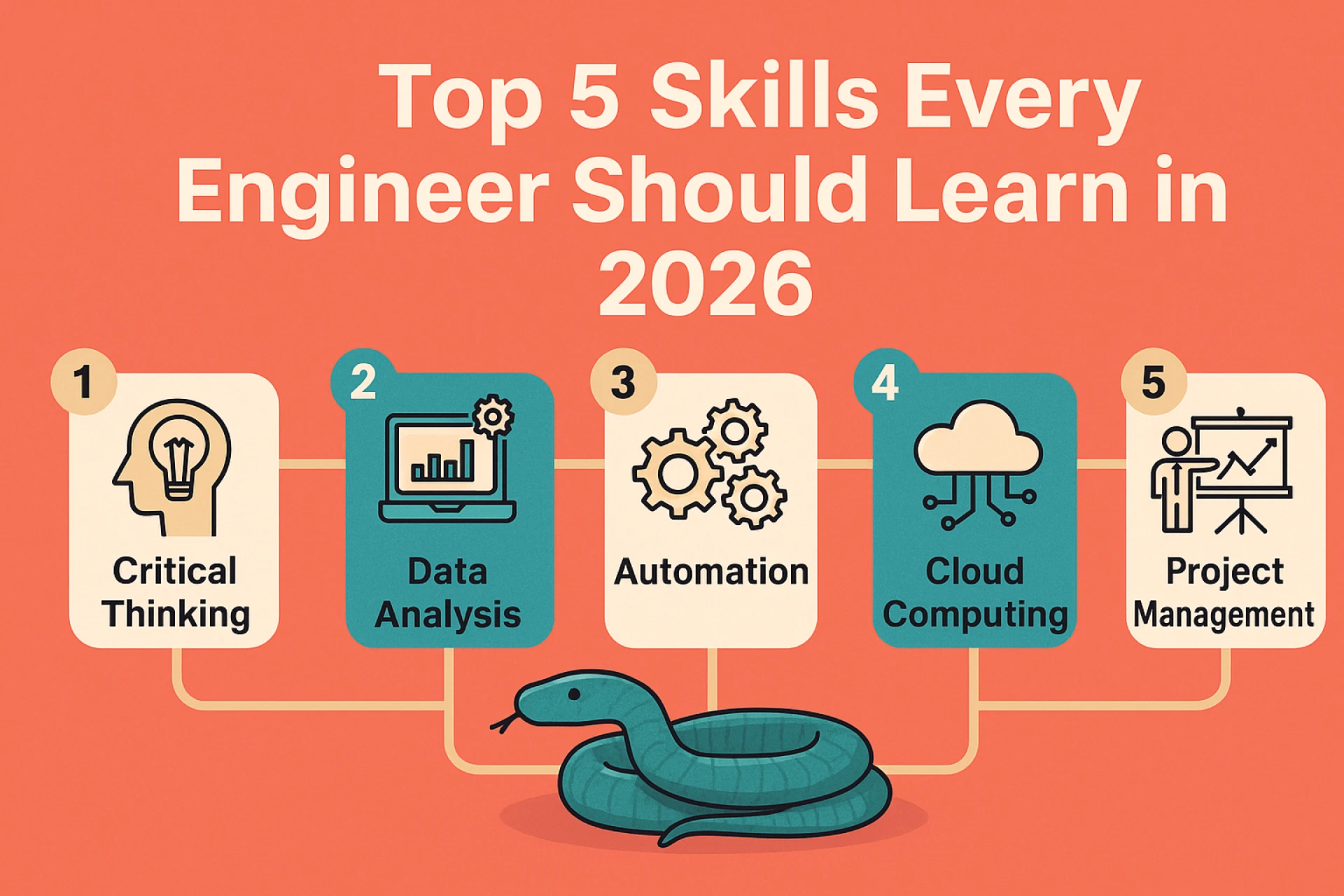
Here are the top five skills that will define engineering success in 2026 — explained in a simple, friendly way so you can understand exactly why they matter and how they’ll shape your career.
1. AI & Machine Learning Literacy
AI isn’t just for data scientists anymore. By 2026, engineers across all domains — mechanical, civil, electrical, software, chemical — will be expected to understand the fundamentals of AI and how it applies to real-world engineering problems.
Why It Matters
- AI-powered tools are becoming standard in product design, simulation, prototyping, testing, and predictive maintenance.
- Even hardware and non-tech industries are integrating AI for efficiency and innovation.
- Engineers with AI literacy will be able to automate repetitive tasks, enhance decision-making, and build smarter solutions.
What You Should Learn
- Basics of machine learning (supervised, unsupervised learning, neural networks)
- How AI tools integrate with engineering software (e.g., CAD + AI, digital twins)
- Data handling and analysis concepts
- Prompt engineering and AI collaboration tools
Real-World Example
Imagine being a civil engineer who can use AI to predict structural failures before they occur. Or a mechanical engineer optimizing designs with AI-powered simulations. That’s where the industry is heading — and fast.
2. Systems Thinking & Cross-Functional Knowledge
Engineers often focus deeply on their own domain, but companies now want professionals who can connect the dots across systems. Systems thinking is the ability to see how different components interact within a bigger ecosystem.
Why It Matters
- Modern products — from EVs to IoT devices — combine hardware, software, data, and user experience.
- Engineering projects today require multi-disciplinary collaboration (software + electrical + mechanical + business).
- Engineers with systems thinking can troubleshoot better, innovate faster, and lead complex projects.
What You Should Learn
- How different engineering disciplines overlap
- How to design and improve processes holistically
- Understanding product lifecycle (design → development → testing → deployment → maintenance)
- Basics of project management and workflow optimization
Simple Example
Think of a smart home thermostat. It’s not just hardware; it involves embedded systems, cloud connectivity, UX design, and data algorithms. A systems-thinking engineer understands this end-to-end picture and works smarter because of it.
3. Advanced Data Skills (Not Just Basic Excel)
Data is everywhere, and engineers who know how to interpret it will easily outshine those who don’t. In 2026, being “data familiar” won’t be enough — engineers will need to be data fluent.
Why It Matters
- Engineering decisions are driven more by data than intuition now.
- Companies expect engineers to extract insights, not just generate reports.
- Data analytics helps improve performance, reduce costs, and optimize systems.
What You Should Learn
- Python for data analysis
- Data visualization tools
- SQL basics
- Understanding dashboards and metrics
- Statistical thinking for real-world analysis
Real-World Insight
Imagine being able to predict machine failures using sensor data, optimize chemical formulations using pattern analysis, or analyze user behavior in a software system. That’s the kind of competitive edge data skills bring.
4. Digital Tool Mastery & Automation Skills
In 2026, engineers who rely only on manual methods will fall behind. Digital tools are transforming engineering workflows, from automation scripts to simulation software to digital twins.
Why It Matters
- Automation accelerates workflows and reduces human error.
- Digital tools help teams collaborate, model systems, and run simulations effortlessly.
- Companies prefer engineers who can build, automate, and optimize digital workflows.
Tools Engineers Should Explore
(Varies by field, but here are universal ones)
For All Engineers
- Cloud platforms
- Version control (Git)
- Basic scripting (Python, Bash)
For Mechanical/Civil/Electrical Engineers
- CAD automation
- Simulation and modeling software
- IoT platforms and embedded tools
For Software Engineers
- CI/CD pipelines
- Containerization (Docker)
- Infrastructure-as-code
Example
A mechanical engineer who writes a Python script to automate repetitive CAD tasks can save weeks of work. A software engineer who automates testing pipelines can reduce deployment time drastically. Automation multiplies your value.
5. Strong Communication & Collaboration Skills
This might sound soft compared to AI or data, but in 2026, communication will be a superpower for engineers. The most successful engineers won’t just be the smartest — they’ll be the ones who can explain, simplify, discuss, present, and collaborate.
Why It Matters
- Engineering teams are increasingly global and remote.
- Clear communication reduces delays, confusion, and costly mistakes.
- Engineers often collaborate with non-technical teams like marketing, operations, finance, and customer support.
What You Should Learn
- Writing clear technical documentation
- Presenting ideas confidently
- Explaining complex topics in simple terms
- Active listening and team collaboration
- Cross-departmental communication
Example
An engineer who can explain complex project risks clearly to management will always be more trusted — and more likely to get leadership roles.
If there’s one “meta skill” every engineer will need in 2026, it's the ability to adapt quickly. Technology changes rapidly, and industries transform overnight. Staying relevant requires continuous learning.
How to Stay Adaptable
- Keep experimenting with new tools and frameworks
- Practice learning from failures
- Stay updated with industry trends
- Build a habit of taking short courses or reading technical blogs
Adaptability turns uncertainty into opportunity — and engineers who embrace it will thrive in the ever-changing future.
Engineering in 2026 won’t just be about formulas, codes, or machines. It will be about combining AI, data, systems thinking, digital tools, and communication to build smarter, faster, and more sustainable solutions.
If you start developing these skills now, you’ll not only stay competitive — you’ll become the kind of engineer companies actively chase.
The best part? None of these skills require going back to school. With the right mindset and consistent learning, any engineer can master them.
The future is bright for those willing to grow — and 2026 is your chance to stand out.