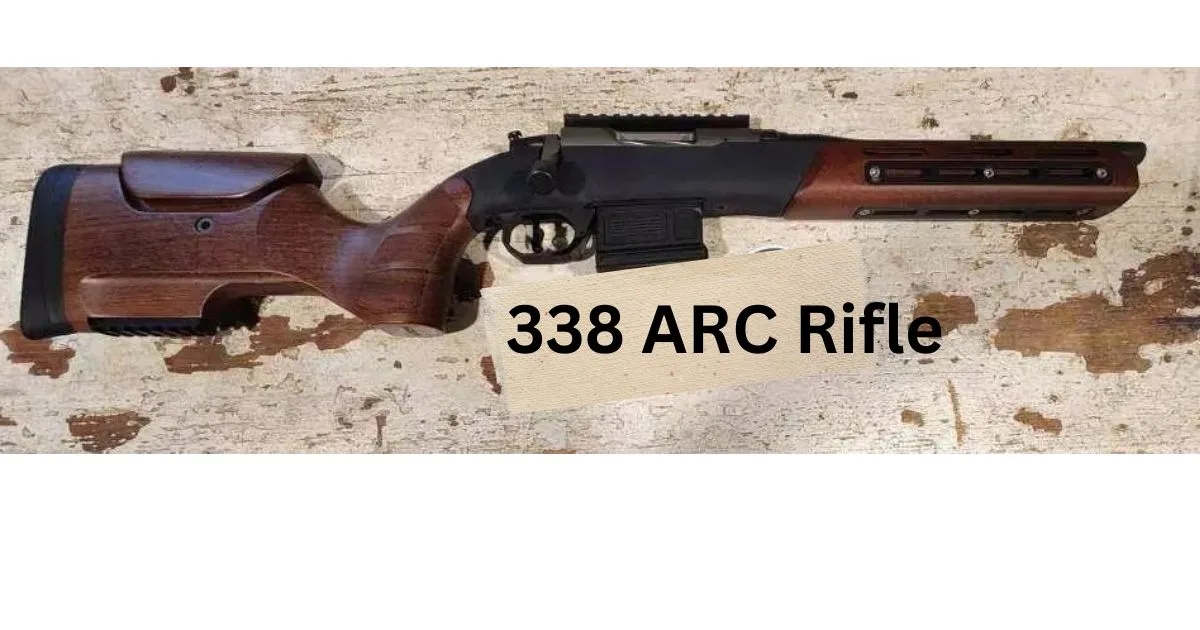
The AR-15 platform has evolved past its original 5.56 NATO boundaries. Modern shooters no longer want to compromise between high velocity and heavy terminal impact. Hornady recognized this demand and introduced the Advanced Rifle Cartridge (ARC) lineup, completely shifting how we look at micro-action semi-automatics.
By utilizing the wider case architecture of the 6.5 Grendel as a structural foundation, the ARC series maximizes the physical interior dimensions of a standard AR-15 magazine box. However, the family has expanded into two completely different performance profiles: the blisteringly fast 22 ARC and the massive, heavy-hitting 338 ARC.
If you are planning your next upper receiver build or purchasing a complete firearm, understanding the ballistic differences between a 338 ARC Rifle and a 22 ARC Rifle is crucial. Let’s dive into the metrics, case engineering, and real-world applications of these two powerhouse options.
Technical Specifications: Same Blueprint, Different Intent
While both options utilize a shared parent case to cycle flawlessly inside standard dimensions, the physical projectiles they send downrange are worlds apart.
Metric Specification22 ARC338 ARCParent Case Family6.5 Grendel6.5 GrendelBullet Diameter0.224 inches0.338 inchesStandard Twist Rate1:7" (Tightly wound for high-BC heavy .224s)1:8" (Optimized for heavy Sub-X projectiles)Chamber Pressure (SAAMI)52,000 psi52,000 psi (Supersonic) / 30,000 psi (Subsonic)Primary Mission ProfileLong-range varmints, PRS gas-gun competitionSuppressed big-game hunting, tactical barriersThe 22 ARC: Redefining Small-Bore Velocity
The 22 ARC takes the highly accessible .224 caliber bullet family and injects it with a massive dose of velocity. It effectively replicates the performance of legendary bolt-action rounds like the 22-250 Remington but houses it within a highly modular, low-recoil semi-automatic frame.
When running a modern 22 ARC Rifle, shooters can launch aerodynamic, high-Ballistic Coefficient (BC) bullets—such as the 62-grain ELD-VT—at speeds crossing 3,300 feet per second (fps).
Because it relies on a fast 1:7-inch twist barrel, it stabilizes heavy 80-to-88-grain match bullets incredibly well. This translation means flat trajectories, minimal wind drift at extended ranges, and an incredibly soft recoil impulse. It has quickly become a favorite for Precision Rifle Series (PRS) gas-gun competitors and long-range varmint hunters tracking targets past the 500-yard mark.
The 338 ARC: The Hard-Hitting Subsonic Hammer
On the other end of the spectrum sits the heavyweight champion of the small-frame AR world. The 338 ARC was explicitly engineered to address a highly specific military and consumer requirement: create a big-bore, highly consistent subsonic cartridge that delivers massive terminal energy without the cycling headaches and bulk of an AR-10 platform.
While a 338 ARC Rifle can comfortably push supersonic 175-grain bullets at roughly 2,075 fps, it truly shines when running suppressed in its subsonic configuration. Using a massive 307-grain Sub-X bullet traveling at a quiet 1,050 fps, it hits with roughly 1.5 times the kinetic energy of a standard 300 Blackout subsonic round.
By necking up the short, fat Grendel case, engineers created a tightly controlled powder combustion environment. This low case capacity means incredibly low velocity spreads (Standard Deviation) and exceptional accuracy out to 200 yards. For thick-woods hog hunting, whitetail deer tracking, or short-barreled home defense builds, its energy transfer is unparalleled in an AR-15 chassis.
Component Note: Both platforms require standard Type 2 6.5 Grendel bolt faces and specialized Grendel-pattern magazines (like DuraMag or AR-Stoner options) to ensure proper cartridge stacking and completely reliable feeding.
Which ARC Wins Your Upper Receiver?
Choosing between these two specialized cartridges depends heavily on your environment and target size:
- Build a 22 ARC if: You prioritize long-distance shooting, absolute laser-flat trajectories, varmint or predator control, and want virtually zero shoulder recoil so you can track your bullet impact through your optic.
- Build a 338 ARC if: Your primary focus is hunting medium-to-large game (pigs, deer, black bear) inside 200 yards, you run a suppressor full-time, and you want the absolute maximum kinetic energy possible out of a compact, maneuverable carbine.
Ready to Elevate Your Rifle Build?
If your operational needs require massive close-to-mid-range kinetic energy, a whisper-quiet suppressed signature, and unmatched mechanical feeding reliability, stepping into the big-bore world is the definitive move.
To ensure your firearm cycles with absolute precision, discover our premium line of high-performance parts and assemblies by visiting our dedicated 338 ARC product showcase. Outfitting your setup with perfectly matched barrels and components is the key to unlocking the raw ballistic potential of this advanced cartridge evolution.
Frequently Asked Questions (FAQs)
Can I convert my standard 5.56 AR-15 to 338 ARC or 22 ARC?
Yes. Because both cartridges utilize the standard AR-15 receiver set size, converting your existing rifle is incredibly simple. You only need to swap out the barrel, change the bolt head to a 6.5 Grendel Type 2 bolt, and utilize Grendel-pattern magazines. Your existing upper, lower, handguard, and trigger assembly remain the same.
What kind of suppressor do I need for a 338 ARC Rifle?
Because the subsonic variant operates at a conservative 30,000 PSI, you do not necessarily need a giant, heavy rifle silencer. Many heavy-duty 9mm suppressors or universal .45 caliber cans that are explicitly rated for subsonic 300 Blackout will handle the 338 ARC beautifully. Always verify the physical pressure ratings with your silencer manufacturer before firing.
338 ARC, 22 ARC, 338 ARC Rifle, 22 ARC Rifle, Hornady ARC, AR-15 upgrades, subsonic hunting, long range shooting