
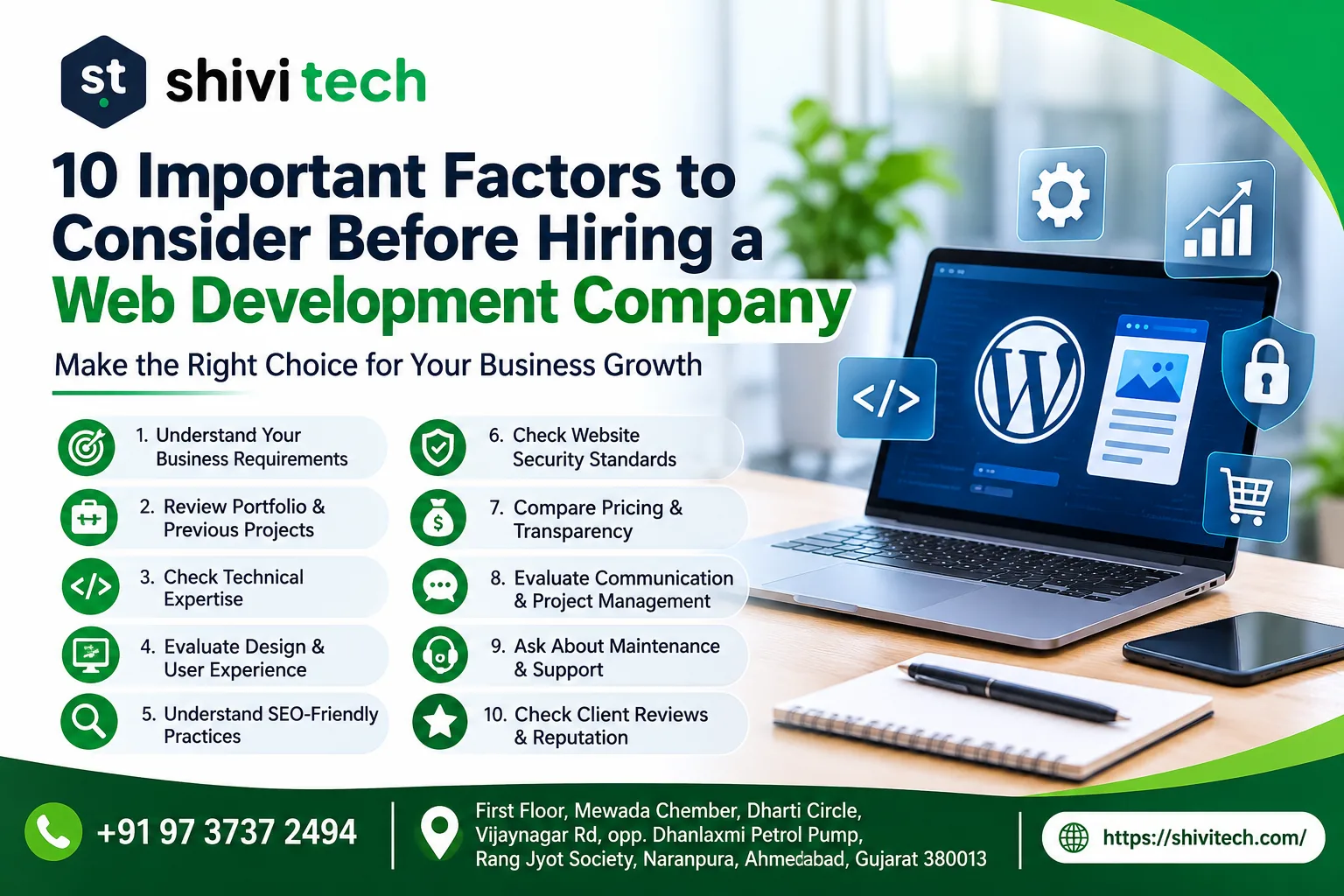
Your website is often the first place a customer meets your business. It shapes trust, brings in enquiries and, for many companies, drives sales around the clock. That is why choosing the right development partner is one of the most important decisions you will make online. Whether you are a startup or an established brand searching for the best web development company in India, a careful evaluation now can save you months of rework, wasted budget and lost leads later.
This guide walks through ten practical factors to check before you sign a contract.
1. Understand Your Business Requirements
Before you speak to any agency, get clear on what you need. Write down your website goals (generate leads, sell products, book appointments, or build brand credibility), your target audience, and the features you require, such as a blog, payment gateway, customer login or CRM integration.
For example, a local clinic may need an appointment booking system and a Google Maps listing, while a retailer needs product filters, a cart and inventory sync. A clear brief helps any web development company in India give you an accurate quote and a realistic timeline.
2. Review the Company's Portfolio and Previous Projects
A portfolio shows what a company can actually deliver. Open the live websites, not just screenshots. Check how fast they load, how they look on a phone, and whether the navigation feels natural.
Look for projects similar to yours in size, industry or functionality. A team that has built a booking platform before will understand your challenges faster than one that has only made brochure sites. Variety also matters: it shows the team can adapt to different business needs.
3. Check Technical Expertise and Development Skills
A good website development company should be comfortable with several approaches rather than forcing every client into one solution. Ask about their experience with:
- WordPress website development: ideal for blogs, business sites and content-heavy pages that your team wants to update easily.
- Custom website development: best when you need unique features, complex workflows or tailored integrations.
- eCommerce website development: including product management, secure checkout, payment gateways and order tracking.
- Content management systems: so you can edit pages without calling a developer every time.
Ask which technologies they recommend for your project and why. A trustworthy team explains the trade-offs in plain language.
4. Evaluate Website Design and User Experience
Great website design and development goes beyond attractive visuals. Visitors should find what they need in a few clicks and feel confident taking the next step.
Check that the company prioritises:
- Responsive web design, so your site works smoothly on mobiles, tablets and desktops. Most traffic in India now comes from smartphones.
- Clear navigation and a logical page structure.
- Accessibility, including readable fonts, good colour contrast and descriptive image text.
- Conversion-focused layouts, with visible calls to action, short forms and trust signals such as testimonials.
5. Understand SEO-Friendly Development Practices
A beautiful website that nobody can find has limited value. Search-friendly development should be built in from the start, not added later. Ask whether the company follows these basics:
- A clean site structure and logical internal linking
- Fast page speed through optimised images and lightweight code
- Mobile-first optimisation
- Clean, readable URLs
- Editable title tags, meta descriptions and header tags
- XML sitemap, robots.txt and basic schema markup
These technical SEO fundamentals make it easier for search engines to crawl your site and for your content to rank.
6. Check Website Security Standards
Security protects both your business and your customers. Ask how the company handles:
- SSL certificates (HTTPS) on every page
- Secure coding practices that guard against common attacks
- Regular updates to the CMS, plugins and themes
- Scheduled backups and a clear recovery plan
- Firewalls, login protection and malware monitoring
This is especially important for eCommerce and lead-generation sites, where customer data is involved.
7. Compare Pricing and Project Transparency
The cheapest quote is rarely the best value. Instead, look for transparency. A professional proposal should clearly list the project scope, deliverables, number of revisions, milestones and timelines.
Ask what is included and what costs extra, such as hosting, premium plugins, content writing or post-launch changes. Vague pricing is a warning sign, because hidden costs usually appear halfway through the project. Compare at least three quotes, but weigh experience and clarity alongside price.
8. Evaluate Communication and Project Management
Many web projects fail because of poor communication, not poor code. Before you commit, find out:
- Who your single point of contact will be
- How often you will receive progress updates
- Which tools they use for tasks and feedback
- How milestones and approvals are handled
Prompt, clear replies during the sales stage are usually a good indicator of how the team will behave during the project.
9. Ask About Maintenance and Technical Support
A website needs care after launch. Software updates, security patches, performance checks and occasional fixes are all part of keeping it healthy.
Ask whether the company offers maintenance plans, how quickly they respond to issues, and whether support covers troubleshooting, backups and performance monitoring. Also confirm that you will receive full access to your website files, domain and admin accounts, so you are never locked in.
10. Check Client Reviews and Reputation
Real feedback tells you what a brochure cannot. Read testimonials, case studies and reviews on independent platforms such as Google, Clutch or GoodFirms. Look for comments about deadlines, communication and how problems were handled.
If possible, ask the company for references and speak to a past client directly. A reputable agency will be happy to share them.
Why Choosing the Right Web Development Partner Matters
The right partner does more than build pages. They help you create a fast, secure and search-friendly website that supports your marketing, builds credibility and grows with your business. The wrong choice can mean slow performance, poor rankings, security gaps and costly rebuilds.
By checking skills, design quality, SEO practices, security, pricing and support, you move from guessing to making an informed decision. Providers of professional website development services that are open about their process and results tend to build longer, more successful relationships with their clients.
Conclusion
Finding the best web development company in India is not about picking the loudest advertisement or the lowest price. It is about matching your business goals with a team that has the right experience, communicates clearly and supports you long after launch. Start by defining your requirements, shortlist a few companies, review their work and ask detailed questions using the ten factors above.
If you are ready to take the next step, the team at Shivi Tech can help you plan and build a website that fits your goals, whether you need a business website, an online store or a custom solution. Visit shivitech.com to learn more and start the conversation.