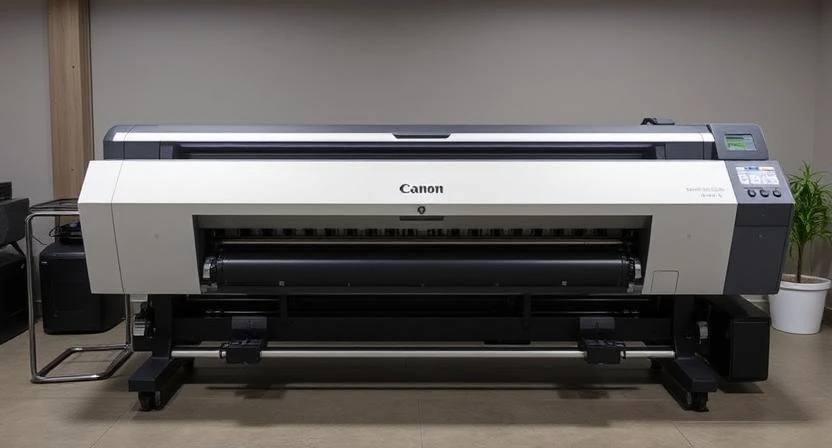
Selecting the right large format printer is a crucial decision for any business or professional who relies on high-quality wide-format prints. The market offers many options, each with unique features tailored for specific applications such as technical drawings, photographic prints, or advertising materials. Understanding the differences between models can help you choose a printer that balances performance, cost, and output quality. It is important to consider your business requirements and production volume to maximize efficiency and return on investment.
Canon large format printers stand out for their range of offerings designed to address diverse needs. Whether you prioritize speed, color accuracy, or media flexibility, Canon has models that meet those demands. This article provides a detailed comparison of popular Canon large format printers to help you identify the best fit for your business. From entry-level to professional-grade, Canon’s lineup combines cutting-edge technology with reliable performance to elevate your printing capabilities.
Entry-Level Models: TM Series
Canon’s TM series caters to small offices and firms that need a compact, affordable printer with solid performance. Models like the TM-200 and TM-300 support print widths up to 24 inches, ideal for CAD drawings, posters, and general large-format prints. These printers feature a five-color pigment ink system optimized for sharp lines and water resistance, which is perfect for technical documents and signage.
The TM series offers user-friendly controls, wireless connectivity, and compatibility with CAD software. Speed is moderate, usually 3–4 A1 prints per minute, suitable for low to moderate volume environments. While lacking some advanced color options, these printers provide reliable, cost-effective wide-format printing for startups or small businesses.
Mid-Range Models: TX Series
The TX series is designed for medium to high-volume printing environments, such as engineering offices or marketing agencies. These printers support wider media sizes, typically up to 44 inches, and include models like the TX-3000 and TX-4000. Canon’s 5-color Lucia TD pigment ink offers enhanced black density and line precision, ideal for GIS maps and technical applications.
The TX series provides improved print speeds and higher resolution, up to 2400 dpi. Dual-roll support on some models increases productivity by allowing continuous printing or switching media types without downtime. This series balances performance with affordability, making it suitable for businesses scaling their print operations.
Professional Models: PRO Series
Canon’s PRO series targets creative professionals such as photographers, fine artists, and advertising firms requiring superior color fidelity and wide color gamut. The PRO-2100, PRO-4100, and PRO-6000 models support media widths from 24 to 60 inches and use 12-color Lucia Pro pigment ink technology. This allows for vibrant, fade-resistant prints with smooth tonal transitions and deep blacks.
These printers are optimized for gallery-quality output and include features like borderless printing, advanced color calibration tools, and compatibility with fine art media. Print speeds vary but are designed to maintain quality even at higher throughput. The PRO series is best suited for businesses demanding top-tier print quality and professional-grade results.
Ink Technology Comparison
The choice of ink system impacts print durability, color range, and maintenance. The TM and TX series use Lucia and Lucia TD pigment inks, which excel in water resistance and precise line reproduction. The PRO series’ Lucia Pro inks provide the widest color gamut and superior fade resistance, critical for archival prints.
Pigment-based inks across all Canon large format printers offer longevity and resistance to environmental factors, making them reliable for indoor and outdoor use. However, the additional ink colors in the PRO series allow for more nuanced color reproduction and smoother gradients.
Media Handling and Flexibility
Canon large format printers support a variety of media types, including plain paper, glossy and matte photo paper, vinyl, canvas, and backlit film. Entry-level models generally support single-roll feeding, while mid-range and professional models offer dual-roll options and automatic sheet cutting.
The PRO series includes enhanced media feed accuracy and sensors for thickness and type detection, reducing media waste and print errors. This versatility allows businesses to expand service offerings without purchasing additional equipment.
Software and Workflow Integration
Canon printers come with proprietary software such as PosterArtist for easy poster creation and Direct Print & Share for cloud printing. PRO models often support integration with RIP software and advanced color management tools, improving workflow efficiency and print consistency.
All models support common file formats and printing protocols, including wireless and Ethernet connectivity, enabling seamless integration with design and CAD applications.
Cost of Ownership Considerations
Entry-level TM series printers have lower upfront costs and ink expenses, making them accessible for small businesses. The TX series requires a higher investment but offers faster speeds and greater media flexibility. PRO series printers represent the highest initial cost but provide superior print quality and durability.
Maintenance and consumables costs vary by model, with larger ink tanks and efficient usage in higher-end models potentially lowering long-term expenses. Businesses should evaluate print volume, quality demands, and budget to determine the most economical option.
Conclusion: Choosing the Right Canon Large Format Printer
Canon’s diverse lineup of large format printers ensures there is a model tailored to every business need, from budget-conscious startups to professional creative studios. The TM series offers affordable and reliable printing for technical documents, the TX series balances speed and media versatility for growing businesses, and the PRO series delivers unmatched quality for high-end photographic and artistic work. By understanding the strengths and features of each series, businesses can make informed decisions that align with their production goals and budget constraints. Investing in the right Canon large format printer can enhance output quality, streamline workflows, and ultimately support business growth.