


Jaisalmer is a city that feels less like a modern destination and more like a living, breathing museum carved directly from the earth. Known globally as the Golden City, it owes its name to the distinct yellow Jurassic sandstone used in nearly every structure, from the humble homes in the narrow alleyways to the magnificent fort that crowns the skyline. For anyone planning a visit, partnering with a reliable Jaisalmer tour operator ensures that you don't just see the monuments, but actually experience the heritage and desert culture that define this corner of Rajasthan. As the sun begins to dip toward the horizon, the entire city undergoes a transformation, glowing with an intensity that justifies every bit of its golden reputation.
The Architectural Marvel of the Golden Fort
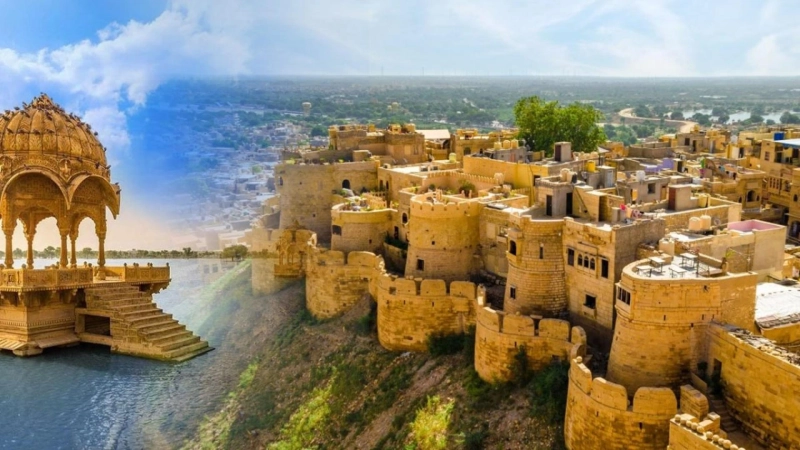
Unlike many other forts in India that serve as stagnant monuments, Sonar Quila, or the Golden Fort, is a living citadel. Approximately one-fourth of the old city’s population still resides within its walls. This continuity of life provides a unique level of expertise and authenticity to the local culture. The fort is a labyrinth of narrow winding lanes, hidden temples, and bustling markets. The intricate carvings on the sandstone walls are a testament to the craftsmanship of the Silawat Brahmins and Jain stonemasons who built this desert stronghold. Walking through the fort’s massive gates, you feel the weight of history in the cool shade of the stone corridors.
Discovering the Elegance of Jaisalmer Haveli
The wealth of the medieval silk route is best reflected in the grand havelis of Jaisalmer. Patwon Ki Haveli, Salim Singh Ki Haveli, and Nathmal Ki Haveli are the three pillars of urban Jaisalmer architecture. These merchant mansions are famous for their "jalis" or latticed stone screens, which allowed women of the household to look outside without being seen, while also providing a natural cooling system against the Thar Desert's heat. A comprehensive Jaisalmer sightseeing tour will typically spend significant time here, as these buildings represent the pinnacle of sandstone artistry. Each balcony and pillar tells a story of trade, prosperity, and the artistic rivalry between the architects of the time.
The Mystique of Gadisar Lake
While Jaisalmer is defined by its arid landscape, Gadisar Lake offers a serene contrast. Built in the 14th century, it was once the only source of water for the entire city. Today, it is surrounded by small temples and shrines that seem to float on the water during the monsoon season. Entering through the Tilon-Ki-Pol, a magnificent yellow sandstone gateway, visitors can take a boat ride to appreciate the city’s skyline from a different perspective. The lake is particularly beautiful at dawn when the first rays of light hit the golden stone, reflecting a perfect mirror image on the still water.
Sam Sand Dunes: The Heart of the Thar
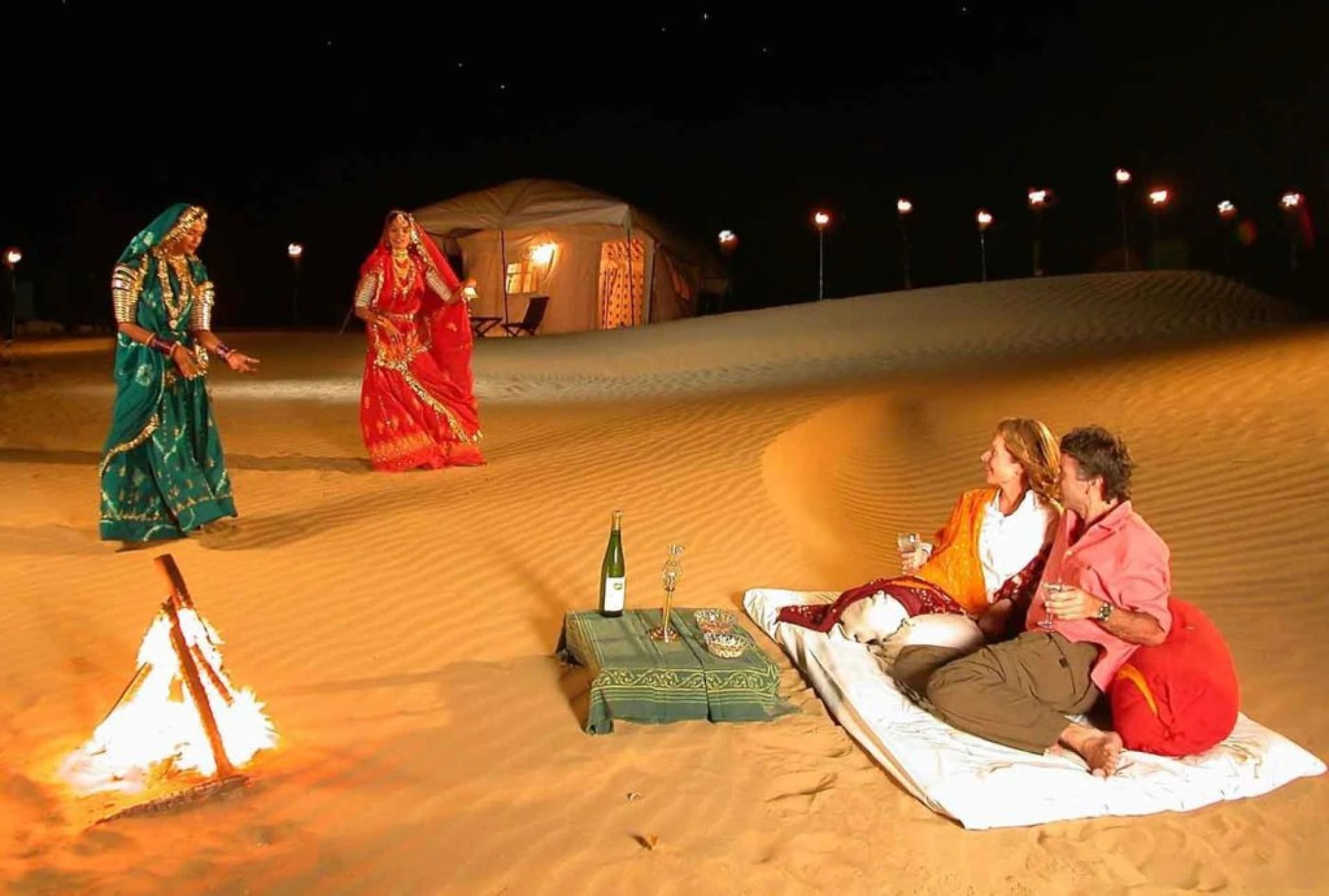
No journey to the Golden City is complete without venturing into the rolling dunes of the Thar Desert. The Sam Sand Dunes, located about 45 kilometers from the main city, offer the quintessential desert experience. Here, the landscape shifts constantly with the wind, creating ripples in the sand that look like waves of gold. Most travelers prefer to book a Cab service in Jaisalmer to reach the dunes comfortably before sunset. The experience of a camel safari or a rugged jeep excursion over the dunes provides a firsthand look at the vastness of the Rajasthan desert. As evening approaches, the dunes become a theater for one of the most spectacular sunsets in India, where the sky turns shades of violet, orange, and deep red.
Cultural Immersion and Desert Life
Beyond the stone and sand, Jaisalmer is defined by its people. The Manganiyar musicians, with their soulful folk songs, and the vibrant Kalbelia dancers bring the desert to life under the starlit sky. Staying in a desert camp allows for a deeper connection with this heritage. Trustworthiness in travel comes from choosing operators who respect local traditions and support the community. Experiencing a traditional Rajasthani Thali—featuring Ker Sangri and Gatte ki Sabzi—while sitting by a campfire is a sensory experience that stays with you long after the trip ends.
The Science Behind the Glow
The reason Jaisalmer glows so intensely compared to other stone cities is the specific mineral composition of the yellow sandstone. This stone is soft enough to be intricately carved but durable enough to withstand centuries of desert winds. When the sun hits the stone at an angle, the iron oxide within the sandstone reacts with the light, creating a warm, honey-colored brilliance. This isn't just a visual trick; it is a geological phenomenon that has dictated the city's identity for nearly a millennium.
Practical Tips for the Modern Traveler
To truly appreciate the Golden City, timing is everything. The winter months from October to March offer the most pleasant weather for exploring the fort and the dunes. During the day, the sun can be bright, so carrying polarized sunglasses will help you see the intricate details of the carvings without the glare of the stone. Choosing a local guide who knows the secret viewpoints within the fort can make the difference between a standard vacation and a journey into the heart of Rajasthan’s history. Jaisalmer is a place where time slows down, allowing every traveler to find their own rhythm amidst the golden sands and ancient stones.