


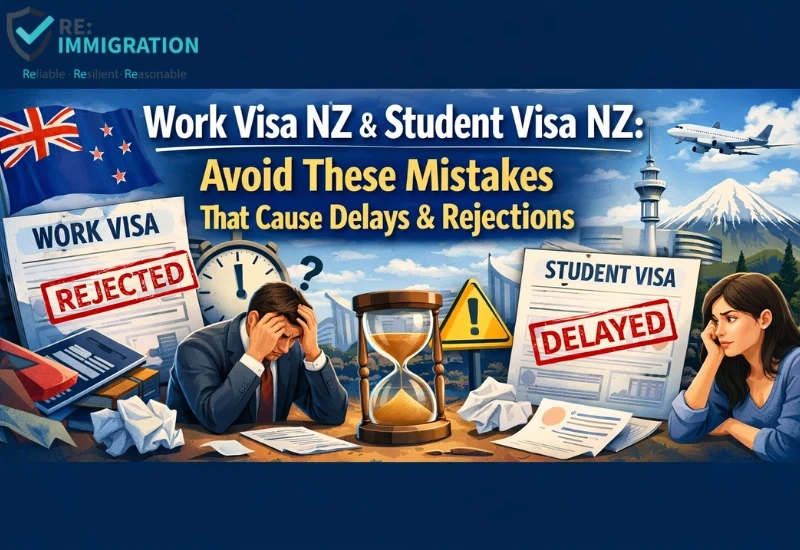
Applying for a work visa NZ or student visa NZ can be a life-changing opportunity, but even small mistakes can lead to frustrating delays—or worse, outright rejection. Every year, thousands of applicants face refusals not because they are ineligible, but because they misunderstand the New Zealand immigration process or fail to meet documentation standards.
At Re Immigration, we have assisted hundreds of applicants with successful New Zealand visa outcomes. Based on real case experience and updated Immigration New Zealand (INZ) requirements for 2026, this guide highlights the most common mistakes applicants make and explains how to avoid them to improve approval chances.
Why Work Visa NZ & Student Visa NZ Applications Get Rejected
New Zealand has one of the most transparent immigration systems in the world, but it is also strict, evidence-based, and detail-oriented. Immigration officers assess each application based on:
- Genuineness of the applicant
- Accuracy and completeness of documents
- Financial stability
- Compliance with visa conditions
- Clear intention to work or study temporarily
Failure to meet any of these can trigger delays, further verification, or refusal.
Mistake #1: Submitting Incomplete or Incorrect Documents
This is the number one reason for delays in both work visa NZ and student visa NZ applications.
Common document errors include:
- Missing employer accreditation details (for work visa NZ)
- Incorrect offer of employment format
- Unverified educational documents
- Inconsistent personal details across forms
- Outdated bank statements
Even a single missing page can push your application into “further assessment,” significantly increasing processing time.
How to avoid it:
Ensure all documents are current, clear, and aligned with INZ checklists. At Re Immigration, we conduct a full pre-submission document audit to eliminate errors before lodgement.
Mistake #2: Weak or Generic Statement of Purpose (SOP)
For a student visa NZ, your Statement of Purpose is critical. For a work visa NZ, your employment explanation and career history serve a similar role.
Immigration officers look for logic, clarity, and genuine intent.
Red flags include:
- Copy-pasted SOPs
- Unclear study or career progression
- No explanation of why New Zealand was chosen
- Lack of connection between past experience and future plans
How to avoid it:
Your SOP must be personalised, well-structured, and realistic, clearly explaining how your education or employment in New Zealand fits into your long-term career goals.
Mistake #3: Financial Evidence That Does Not Meet INZ Standards
Many applicants believe showing a large balance is enough—but source and consistency of funds matter more than the amount.
For student visa NZ, Immigration New Zealand checks:
- Tuition fee payment proof
- Living cost funds
- Genuineness of financial sponsors
For work visa NZ, officers assess:
- Salary compliance with visa requirements
- Employer’s ability to pay wages
- Applicant’s financial stability
How to avoid it:
Provide transparent, well-documented financial records with explanations for large deposits or sudden transactions.
Mistake #4: Applying for the Wrong Work Visa NZ Category
New Zealand offers multiple work visa types, including:
- Accredited Employer Work Visa (AEWV)
- Post Study Work Visa
- Essential Skills pathways
- Sector-based work visas
Applying under the wrong category can lead to automatic refusal.
How to avoid it:
A professional eligibility assessment ensures you apply under the correct work visa NZ pathway, saving time, money, and stress.
Mistake #5: Employer Compliance Issues (For Work Visa NZ)
Even if you qualify, your employer must also meet Immigration New Zealand requirements.
Common employer-related issues:
- Employer not accredited
- Job role not matching ANZSCO standards
- Salary below median wage threshold
- Incomplete Job Check approval
How to avoid it:
Always verify employer accreditation and job approval before lodging your work visa NZ application. Re Immigration works directly with employers to ensure compliance.
Mistake #6: Ignoring Health and Character Requirements
Medical and police certificates are mandatory for most student visa NZ and work visa NZ applications.
Mistakes include:
- Using expired medical certificates
- Submitting certificates from non-approved clinics
- Not declaring past visa refusals or health conditions
How to avoid it:
Be honest and proactive. Non-disclosure is treated more seriously than the issue itself.
Mistake #7: Poor Timing and Late Applications
Many applicants underestimate processing timelines, especially during peak intake periods.
Late applications can result in:
- Missed course start dates
- Employment start delays
- Loss of job offers
- Visa expiry issues
How to avoid it:
Apply well in advance and factor in potential delays. Professional planning helps align timelines with visa validity.
Mistake #8: Relying on Outdated or Online Misinformation
Immigration policies change frequently. What worked in 2024 may no longer apply in 2026.
Common sources of misinformation:
- Social media groups
- Unverified YouTube videos
- Friends’ past experiences
How to avoid it:
Always rely on updated immigration advice from licensed professionals who follow current INZ policy updates.
How Re Immigration Helps You Avoid Visa Rejection
At Re Immigration, we follow a strategy-driven, compliance-first approach aligned with EEAT standards:
- ✔ Personalised eligibility assessment
- ✔ Accurate visa category selection
- ✔ Document verification and SOP drafting
- ✔ Employer and course compliance checks
- ✔ Transparent guidance from start to finish
Our experience with work visa NZ and student visa NZ applications allows us to anticipate potential issues before they arise.
Final Thoughts: Preparation Is the Key to Approval
Most work visa NZ and student visa NZ rejections are avoidable. With the right guidance, correct documentation, and a clear application strategy, your chances of success increase significantly. If you want a smooth, delay-free visa process, professional support is not an expense—it’s an investment in your future.