Wind power projects represent a significant long-term investment for businesses, independent power producers (IPPs), and industrial energy consumers. While wind energy offers predictable returns and sustainability benefits, wind turbine installation is a complex, multi-stage process where even small mistakes can lead to major cost overruns, schedule delays, and reduced asset performance. Understanding common installation errors—and how professional execution prevents them—is critical to project success.
Experienced wind energy contractors and wind EPC contractors play a key role in minimizing these risks through structured planning, technical expertise, and disciplined execution.
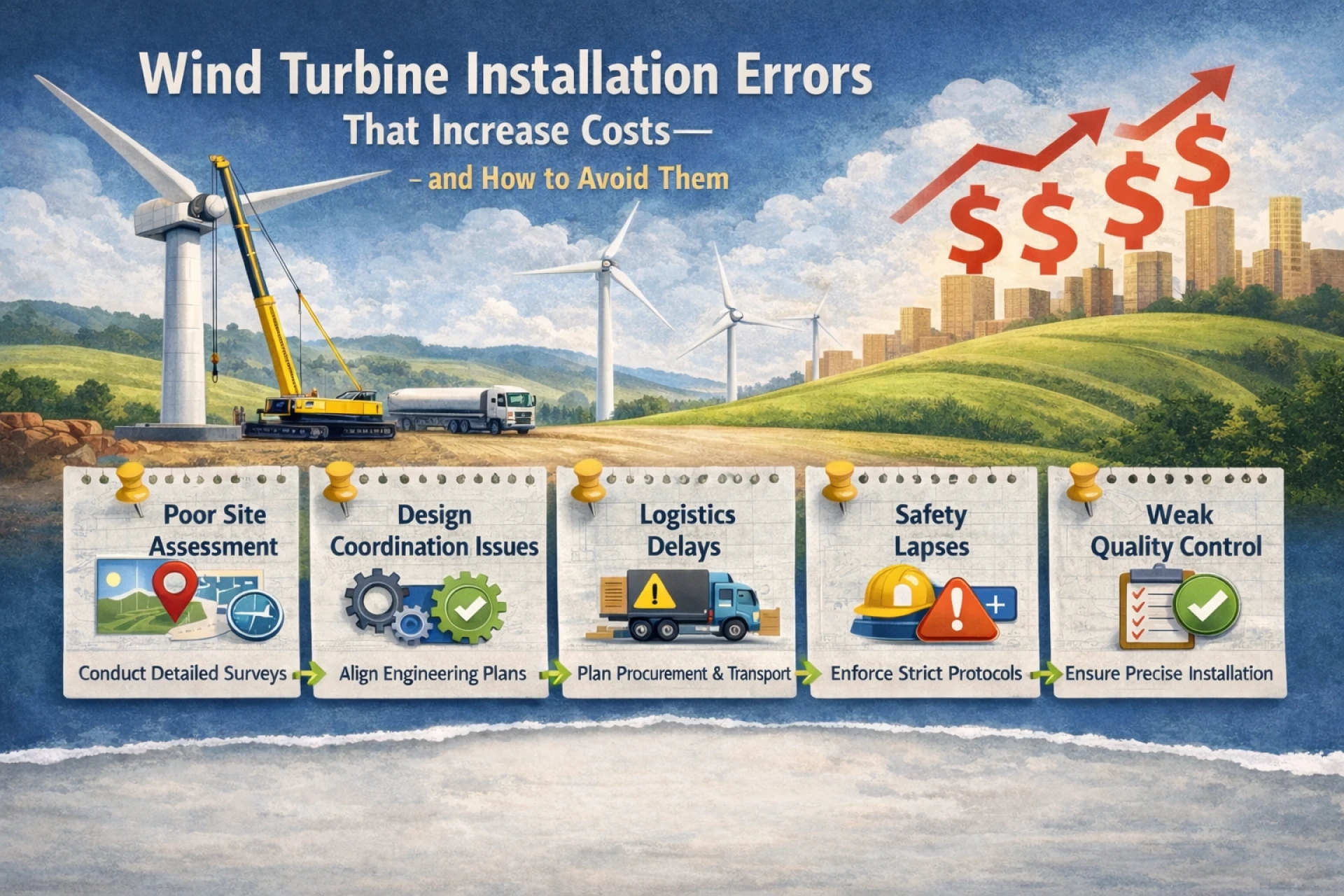
1. Inadequate Site Assessment and Wind Resource Analysis
One of the most expensive mistakes in wind turbine installation is poor site evaluation. Inaccurate wind data, incorrect terrain analysis, or insufficient geotechnical investigation can result in suboptimal turbine placement, weak foundations, and lower-than-expected energy generation.
When wind resource assessment is rushed or incomplete, project owners may face reduced plant load factors (PLFs), foundation redesigns, or even turbine relocation—all of which increase costs.
How to avoid it:
Professional wind energy contractors conduct detailed wind measurements, topographical surveys, soil testing, and environmental studies before finalizing turbine locations. At TerraVolt, early-stage technical diligence ensures that turbine layout and foundation design are optimized for long-term performance and structural stability.
2. Design Coordination Failures Across Engineering Disciplines
Large wind projects involve civil, mechanical, and electrical engineering working in parallel. Poor coordination between these disciplines is a common cause of rework and execution delays. Examples include foundation designs that do not align with turbine specifications or electrical layouts that complicate grid evacuation.
Such mismatches lead to construction stoppages, material wastage, and contract disputes.
How to avoid it:
Experienced wind EPC contractors adopt an integrated engineering approach. Micro-siting, foundation engineering, electrical design, and grid planning are coordinated under a single execution framework. TerraVolt’s EPC-driven model minimizes interface risks and ensures that design intent translates smoothly into on-site execution.
3. Weak Procurement and Logistics Planning
Wind turbine components—such as towers, nacelles, and blades—are oversized, high-value, and logistically challenging to transport. Poor supplier selection, delayed manufacturing, or inadequate route planning can disrupt installation schedules and increase demurrage and crane standby costs.
Logistics delays are among the most common cost escalators in wind turbine installation projects.
How to avoid it:
Professional wind energy contractors mitigate procurement risks by working with certified manufacturers and approved vendors. Detailed logistics planning, route surveys, and delivery sequencing ensure components arrive on time and in the correct order. TerraVolt emphasizes synchronized procurement and construction planning to protect project timelines.
4. Safety Lapses During Construction and Erection
Wind turbine installation involves heavy lifting operations, work at extreme heights, and complex crane movements. Safety incidents not only endanger personnel but also result in shutdowns, investigations, and insurance claims—directly increasing project costs.
Untrained crews and non-standard installation practices significantly raise these risks.
How to avoid it:
Leading wind EPC contractors implement strict safety protocols, trained erection teams, and standardized installation procedures. Detailed lift plans, crane optimization studies, and on-site supervision reduce both safety incidents and execution delays. TerraVolt prioritizes safety-driven execution to protect people, assets, and schedules.
5. Poor Quality Control and Installation Precision
Incorrect torque application, misalignment of components, or substandard electrical connections can compromise turbine performance from day one. These issues often surface later as higher maintenance costs, lower availability, and premature component failures.
Such hidden errors quietly erode the project’s return on investment.
How to avoid it:
Quality-focused wind energy contractors follow manufacturer specifications strictly and conduct rigorous inspections at every installation stage. Precision during foundation works, mechanical erection, and electrical commissioning ensures long-term operational reliability. TerraVolt emphasizes quality assurance as a core element of cost control and asset longevity.
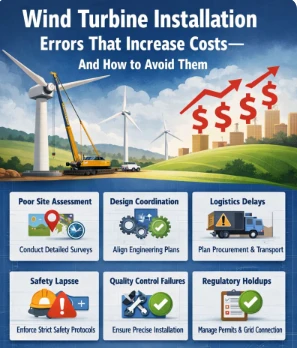
6. Delays in Regulatory Approvals and Grid Integration
Regulatory approvals and grid connectivity often become unexpected bottlenecks. Incomplete documentation, late coordination with utilities, or failure to meet grid compliance standards can delay commissioning and revenue generation.
Each day of delay translates into lost power sales and increased financing costs.
How to avoid it:
Experienced wind EPC contractors manage approvals, grid compliance testing, and utility coordination proactively. Early engagement with authorities and utilities helps avoid last-minute surprises. TerraVolt integrates regulatory planning into project schedules to ensure timely commissioning and power evacuation.
Conclusion
Cost overruns in wind power projects are rarely caused by a single issue—they result from a combination of planning gaps, coordination failures, and execution errors. By partnering with experienced wind energy contractors and wind EPC contractors, businesses can significantly reduce these risks.
At TerraVolt, wind turbine installation is approached as a disciplined, end-to-end process focused on precision, safety, and long-term performance. Through structured planning, integrated EPC execution, and quality-driven installation practices, TerraVolt helps project owners avoid costly mistakes and build reliable, high-performing wind assets with confidence.