



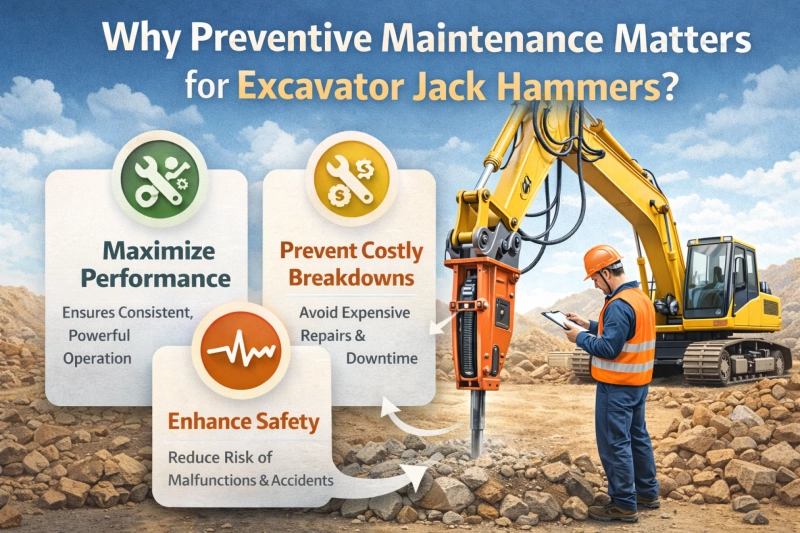
Choosing the right tools for your heavy machinery determines how fast you finish a job and how much profit stays in your pocket. When you operate an excavator jack hammer, you are putting your machine through some of the most punishing conditions on a construction site. These tools deal with constant vibration, extreme heat, and thick clouds of abrasive dust every single minute.
If you do not have a solid plan to maintain this equipment, you are basically waiting for a breakdown. Smart operators have moved away from the old "fix it when it breaks" mindset. Instead, you need a proactive strategy to keep your gear moving without surprise stops.
Keeping Your Hardware Healthy for the Long Haul
The internal components of an excavator jack hammer rely on tight tolerances to deliver maximum power. You have to stay on top of wear part management if you want the tool to last. Bushings and seals might seem like small items, but they play a massive role in preventing internal scoring. If a seal fails and lets dirt in, that grit will act like sandpaper on your expensive internal parts.
By sticking to a consistent care routine, you effectively slow down the natural degradation of the piston and cylinder. It is a simple trade-off. You spend a little time checking parts now so that you do not have to replace the entire unit later.
Beyond the hammer itself, you are also protecting your carrier machine. A poorly maintained attachment can send violent vibrations back into the excavator boom or leak contaminants into your main hydraulic system. You really do not want a hammer problem turning into a total hydraulic failure of the excavator.
Getting the Most Work Out of Your Excavator Jack Hammer
The performance of your excavator jack hammer depends heavily on strike consistency. You need to monitor the nitrogen pressure levels because they decide the impact energy of every blow. If the gas pressure drops, your hammer loses its punch, and you end up spending twice as long on the same piece of rock.
A well-maintained tool also makes your operation more fuel-efficient. When you keep the tool a bit sharp and properly lubricated, you reduce the resistance the engine has to fight against. This reduces your cycle times and lowers diesel costs. Reliability is about spotting the small stuff before it ruins your day.
You should be looking for tiny hydraulic leaks or loose tie rods during every shift. Finding a loose bolt in the morning is a five-minute fix (much better than a site stoppage in the middle of a deadline).
Managing Your Risks and Costs
Financial control in earthmoving comes down to managing the gap between small & large costs. You can choose to pay for scheduled consumables, such as grease and bushings, today. Or you can ignore them and pay for a catastrophic rebuild next month. The price difference is huge.
Safety is the other side of that coin. A neglected excavator jack hammer is a liability on a busy site. If a hydraulic hose bursts because it was rubbing against a bracket, you have a high-pressure fluid hazard and an environmental spill to clean up. Regular checks reduce the risk of structural components failing while your team is working nearby. You want to know that your equipment is structurally sound before you start breaking concrete.
The Technical Maintenance Checklist
You need to follow a strict schedule to keep everything running smoothly.
Lubrication Intervals
You should follow specific greasing standards. Manual greasing requires you to pump grease into the tool every few hours of operation. Even with an automatic system, you still need to check the reservoir regularly to ensure it is actually delivering grease.
Hardware Inspection
Check your bolt tension every single day. The vibration from an excavator jack hammer can back out even the toughest fasteners. You also need to monitor tool shank wear to ensure the bit stays seated correctly.
Gas Pressure Checks
The accumulator needs to be tested regularly. Maintaining the right gas pressure ensures optimal recoil absorption. That can protect the hammer internals while stopping the "blank firing" effect that cracks housings.
The Bottom Line
Preventive maintenance is the only way to keep an excavator jack hammer productive under these conditions. When your excavator jack hammer works reliably, your project stays on schedule. You can avoid any hidden cost of downtime as well as transport for emergency repairs. Note that consistent care ensures the machine does exactly what you need it to do right when you pull the lever.
FAQs
How often should you grease your excavator jack hammer?
You should grease your excavator jack hammer every two hours of actual striking time. If you work in very dusty or hot conditions, you might need to do it more often. Constant lubrication prevents the tool steel from rubbing directly against the bushings, which helps prevent heat build-up.
Why is nitrogen pressure important for hammer performance?
The nitrogen gas acts like a spring that helps the piston strike with maximum force. If your excavator jack hammer has low gas pressure, the hits will feel weak and slow. You must check these levels regularly to ensure you are getting the full impact energy you paid for.
What are the signs of worn bushings in a hammer?
You will notice excessive movement or "play" in the tool bit if your bushings are worn. If you ignore this, the piston can strike the tool at an angle. This causes internal damage to the excavator jack hammer & can eventually lead to a snapped tool bit or a cylinder.
Can a faulty hammer damage your excavator?
Yes, a poorly maintained excavator jack hammer sends heavy vibrations back through the boom and arm. This can crack welds or damage pins and bushings on your machine. If the hammer seals fail, they can also leak debris into your excavator's hydraulic oil, causing expensive pump damage.