



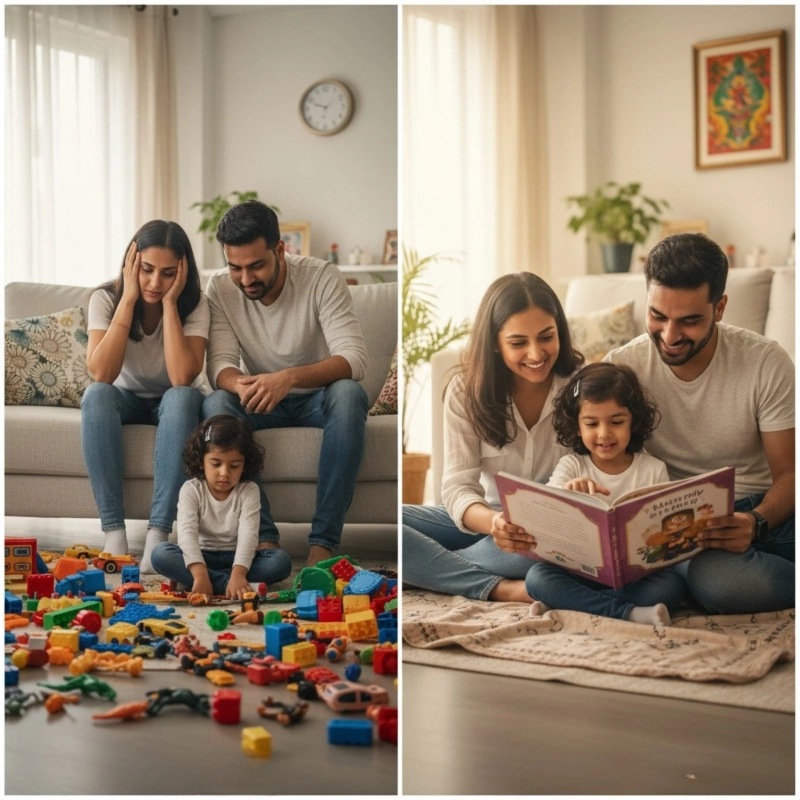
Most parents don’t realize this until it happens.
The cupboard is full.
The toy basket is overflowing.
There are cars without wheels, dolls without hair, puzzles missing pieces.
And yet, when it’s time to buy a gift again, we still ask ourselves:
“What new toy should I get?”
Over time, many parents quietly admit the same thing—
buying too many toys didn’t bring the joy they expected.
The Toy Overload Problem
Toys are exciting at first.
A new box. Bright colors. Immediate happiness.
But that excitement often fades faster than we imagine.
Children move on quickly.
What was “must-have” last month becomes “forgotten” today.
The result?
- Cluttered spaces
- Overstimulated children
- Parents feeling guilty for wasted money
This isn’t because toys are bad.
It’s because too many toys dilute their value.
When Choice Becomes Overwhelm
Children thrive on simplicity.
When there are too many toys, children:
- Jump from one thing to another
- Lose focus quickly
- Struggle to engage deeply
What looks like abundance can quietly turn into overwhelm.
Many parents notice that their child plays longer and more creatively when there are fewer, more meaningful items available.
The Emotional Gap Toys Don’t Fill
Most toys are designed for entertainment, not connection.
They don’t tell a child:
- “You are seen”
- “You matter”
- “This was chosen just for you”
That emotional connection is what parents often realize is missing—especially after years of buying toy after toy.
What Parents Start Looking for Instead
As children grow, parents begin shifting priorities.
Instead of asking “What’s new?”, they start asking:
- “What will my child remember?”
- “What will grow with them?”
- “What adds value beyond a few days?”
This is where thoughtful, personalized gifts begin to replace toys.
The Power of Meaningful Alternatives
Items that combine emotion, learning, and personal connection tend to last longer—both physically and emotionally.
Books, keepsakes, and experiences encourage:
- Deeper engagement
- Repeated use
- Stronger parent-child bonding
One example many parents turn to is personalized storytelling—where a child sees their own name, identity, and journey reflected back at them.
You can explore such options here:
https://zingygifts.com/collections/personalized-story-books
Unlike toys that get outgrown or broken, stories grow with the child.
They become part of bedtime routines, comfort during change, and memories revisited years later.
Fewer Things. Better Choices.
This doesn’t mean children should never receive toys.
It simply means balance matters.
A few well-chosen, meaningful items often bring more joy than shelves full of forgotten ones.
Parents who reflect back often say the same thing:
“I wish I had focused less on quantity and more on meaning.”
A Gentler Way Forward
Buying fewer toys isn’t about saying no to joy.
It’s about choosing joy that lasts.
When gifts reflect a child’s identity, imagination, and emotional world, they stop being “things” and start becoming experiences.
And those are the gifts parents rarely regret.