



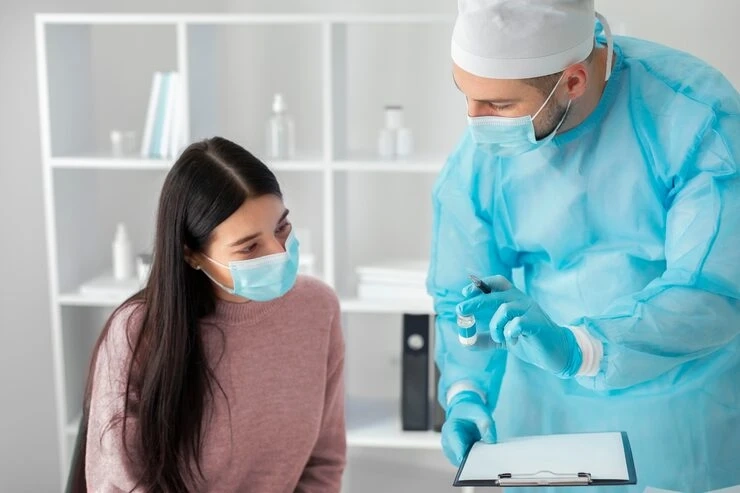
Pap smear testing is essential because it can detect abnormal cervical changes before they turn into cancer. In simple terms, the pap smear test importance lies in catching risk early, supporting timely cervical cancer screening, and improving the early detection of cervical cancer when treatment is usually simpler.
What Is A Pap Smear Test, And What Exactly Does It Check?
A pap-smear, also called a pap-test, is a routine cervical-screening method that checks for abnormal cells on the cervix. During the test, a clinician performs cell-collection using a gentle speculum-exam and collects a sample from the cervix.
The sample may be processed as liquid-based testing after brush-sampling, and the report comes from lab-analysis. Some women also need an HPV-cotest, which checks for high-risk HPV types along with cell changes. In many care plans, an annual-pap may be advised based on clinical history and prior results.
Why Is The Pap Smear Test Essential Even Without Symptoms?
Cervical cancer can remain silent for years. That is why screening matters most in the asymptomatic-stage, when a woman feels normal but changes may already be developing.
This is the practical value of the pap smear test importance:
- It supports early-detection before cancer develops.
- It can identify precancerous-cells that can be treated early.
- It detects changes linked to HPV-infection, including squamous-abnormalities and glandular-changes.
- It strengthens cancer-prevention by acting before disease becomes invasive.
- It is often described as life-saving because it reduces late-stage diagnosis.
Many public health reports associate consistent screening with strong mortality-reduction, and the impact of structured screening is often communicated as 95percent-effective when programmes are followed correctly.
Which Women Are At Higher Risk For Cervical Cancer?
Most cervical cancers are linked to high-risk-HPV. Risk increases when HPV persists over time, which is called persistent-infection, and specific strains such as HPV-16-18 carry higher risk.
Other risk factors include:
- Smoking-tobacco, which can weaken local immune response.
- Immune-suppression, which reduces viral clearance.
- Multiple-partners and early-sexual-activity, which can increase exposure risk.
- Long-term-birth-control, which may modestly shift risk in some cases.
- Being HIV-positive, which increases persistent HPV risk.
- A strong family-history, which should prompt proactive screening discussions.
If you are unsure about your risk profile, a clinician can guide the right screening schedule based on history and age.
What Happens During The Test, And How Should You Prepare?
The procedure is usually a short pelvic-exam and is commonly described as a 10-minute-test from start to finish. Most women report it as no-pain, though mild pressure can occur.
Simple preparation tips include:
- Follow menstrual-avoid guidance, as testing is typically scheduled when you are not bleeding.
- Share any symptoms or pregnancy status before the test.
- Ask when to expect the report, since results-1-2-weeks is a common timeline.
How Do You Understand Pap Smear Results, And What Happens Next?
Results may be reassuring, such as normal-results, or may show minor changes such as an ASCUS-finding. Some reports show low-grade to high-grade changes, often described as LSIL-HSIL.
Important practical points:
- Screening can miss abnormalities, so a false-negative is possible.
- If abnormalities are found, a follow-up-needed plan matters more than panic.
Follow-up steps may include:
- Colposcopy-referral for closer inspection.
- Tissue sampling such as biopsy-confirm when indicated.
- Treatment procedures like LEEP-procedure or cone-biopsy for selected cases, often planned to be fertility-safe when clinically appropriate.
How Often Should Women Get Cervical Cancer Screening?
Most organised screening-programs recommend routine testing for ages-21-65, with intervals commonly described as every-3-5-years depending on age, test type, HPV status, and prior results. Screening schedules should always be personalised based on your report and risk factors.
Vaccination also plays a role. The HPV vaccine is a vaccination-complement to screening, not a replacement, because screening still detects cell changes even in vaccinated individuals.
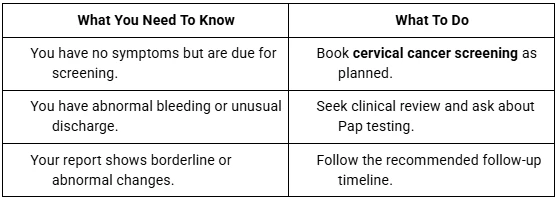
Quick Checklist That Helps Women Decide What To Do Next
Final Words
Pap smear testing remains one of the most practical tools for protecting women’s health because it supports early detection of cervical cancer before it becomes advanced. Many women prefer a structured pathway where testing, interpretation, and follow-up are coordinated, especially when comparing a cancer hospital in Delhi for routine screening or a cancer specialist hospital in India for higher-risk evaluation.
In Delhi NCR, PSRI Hospital supports screening-led care with a clear pathway for testing, follow-up, and referrals when needed. Many patients consider PSRI while evaluating options such as the best cancer hospital in Delhi for coordinated diagnostics and specialist guidance. PSRI Hospital is open 24 hours a day, and you can reach the team at 084848 48417.
FAQs
What Is The Main Pap Smear Test Importance For Women?
It detects early cell changes before they become cancer. That is why screening is linked to long-term prevention.
Does Cervical Cancer Screening Hurt?
Most women feel mild pressure, not pain. The test is quick and usually well tolerated.
Can I Still Need Screening If I Feel Fine?
Yes. Many early changes happen without symptoms, so screening matters most before problems appear.
What Happens If My Result Is Abnormal?
An abnormal result does not always mean cancer. It usually means follow-up testing to confirm and treat early changes if needed.
Can Screening Reduce Cervical Cancer Rates?
Yes. Consistent screening is linked to major population-level reductions, including an 80percent-drop in some settings with strong programmes.