



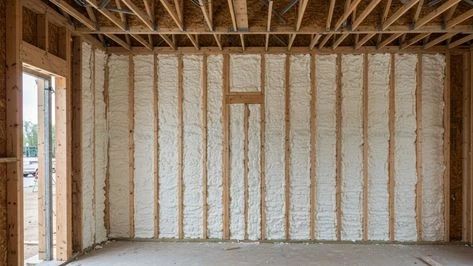
In Temple, Texas, where hot and humid summers demand high-performance homes, open-cell spray foam is quickly becoming a preferred insulation solution for builders and homeowners. Its rising popularity is due to a compelling combination of benefits tailored to the Central Texas climate: it creates an exceptional air seal, offers superior sound dampening, and comes at a more accessible price point than its closed-cell counterpart. This makes it particularly effective for applications like attics and interior walls, where it addresses comfort and energy efficiency in a cost-effective way, presenting a different set of trade-offs compared to its closed-cell counterpart.
While closed-cell foam has its place, open-cell's unique properties are often a perfect match for the specific challenges faced by homes in this region. This article, based on extensive industry experience, will break down why open-cell spray foam in Temple is gaining traction in Temple, detailing its best applications and what homeowners should consider before choosing it for their project.
The Core Strengths of Open-Cell Foam
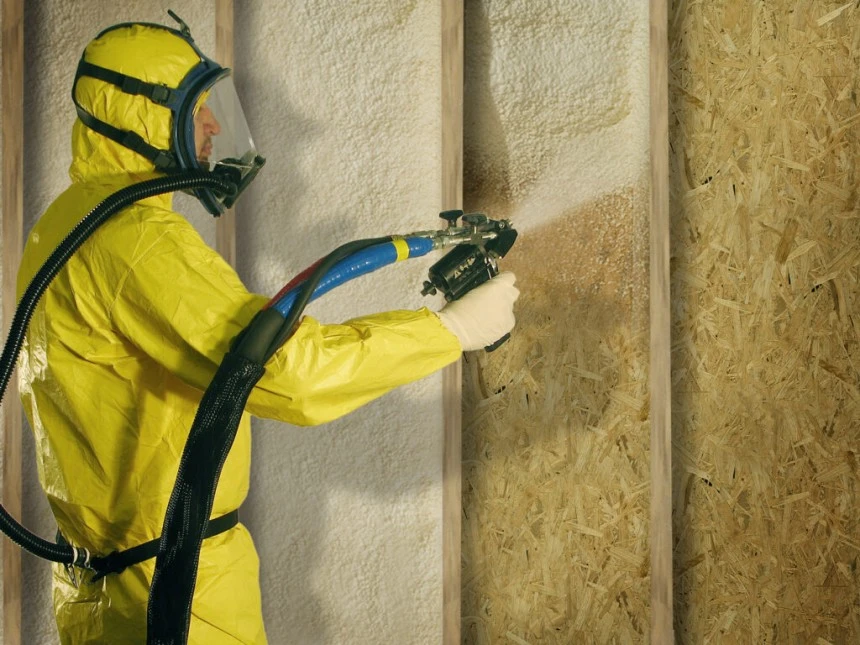
Open-cell spray polyurethane foam (SPF) is a low-density insulation material, weighing about 0.5 pounds per cubic foot. When applied, it expands dramatically, up to 100 times its liquid volume, creating a soft, flexible, and spongy insulation that fills every crack and cavity. This expansion process is key to its effectiveness as an air barrier.
Unlike its rigid counterpart, closed-cell foam, the individual cells of open-cell foam are not fully sealed. This structure gives it some distinct characteristics:
- Excellent Air Barrier: Like all spray foams, it stops air leakage extremely well, which is a major source of energy loss in homes.
- Vapor Permeability: It allows water vapor to pass through it. This can be an advantage in certain situations, as it lets the building assembly dry out if moisture gets in.
- Superior Sound Absorption: The soft, pliable texture is excellent at absorbing airborne sound, making homes quieter.
- Flexibility: It remains flexible after curing, allowing it to shift with a building's natural expansion and contraction without cracking or pulling away from the studs.
Key Advantages for Temple Homes
The climate in Temple, characterized by intense summer heat and high humidity, puts a heavy load on homes and their HVAC systems. Open-cell foam offers specific advantages for managing these conditions.
Creating a Conditioned Attic Space
One of the most popular and effective strategies in Central Texas is to create an unvented, or "conditioned," attic by applying open-cell spray foam directly to the underside of the roof deck. This approach brings the attic and any HVAC equipment located there inside the home's thermal envelope. In a traditional vented attic, temperatures can soar to 150°F or higher in the summer. Forcing an air conditioner and ductwork to operate in that extreme environment is incredibly inefficient. By conditioning the attic, the HVAC system runs in a much milder environment, reducing energy consumption significantly.
- Bonus Tip: The vapor-permeable nature of open-cell foam is a key benefit in this application. If a small roof leak develops, water can pass through the foam and reveal the leak on the ceiling below. With a non-permeable insulation, the water could remain trapped against the roof decking, potentially causing significant rot before it's ever discovered.
A Cost-Effective Path to High Performance
For many homeowners, budget is a major consideration. Open-cell spray foam generally has a lower installed cost than closed-cell foam. This is because it has a higher expansion ratio, meaning less material is needed to fill a given space. This cost difference makes it a very attractive option for large areas like an entire roof deck, allowing homeowners to achieve a superior air seal and a high-performance attic for a smaller initial investment.
A Quieter, More Comfortable Home
Beyond energy savings, open-cell foam greatly improves a home's acoustics. Its ability to absorb sound is a significant quality-of-life benefit. It can drastically reduce noise from outside, such as traffic or neighbors, and is also highly effective when used in interior walls to create quiet zones for bedrooms, nurseries, or home offices.
Best Uses in Temple Homes
While open-cell foam is versatile, it excels in certain applications and is not recommended for others. Understanding where to use it is key to a successful project. Here is a comparison of how it stacks up against closed-cell foam in common applications.

Things to Consider Before Making a Decision
Before committing to open-cell spray foam, it's important to understand its limitations and the requirements for a proper installation.
It Is Not a Moisture Barrier
The fact that open-cell foam is vapor-permeable means it should not be used in any area where it could come into direct contact with water or be exposed to high levels of ground moisture. This makes it unsuitable for basements, crawl space walls, or any application below grade. For those areas, the moisture-blocking properties of closed-cell foam are necessary.
R-Value and Wall Thickness
Open-cell foam has an R-value of around R-3.5 to R-4.5 per inch. This is lower than closed-cell foam, which is typically R-6 to R-7 per inch. In a standard 2x4 wall, you can achieve about R-13 with open-cell foam. In a 2x6 wall, you can get around R-20. For fighting Temple's intense heat, this is often sufficient, but if your project requires a higher R-value in a limited space, closed-cell foam might be the only way to achieve it.

Installation Quality is Everything
The performance of spray foam insulation is entirely dependent on the skill of the installer. The two chemical components must be mixed at the correct temperature and ratio to create a stable, effective foam. A poor installation can result in off-ratio foam that may not insulate properly and could even have a lingering chemical smell.
- Bonus Tip: Always hire a certified and experienced contractor. Ask about their training, check their references, and look for a company that can explain the entire process, including site preparation, safety protocols, and post-installation cleanup.
Questions People Ask About Open-Cell Foam
Can open-cell foam get wet?
Yes, it can absorb and hold water much like a sponge. If it gets wet from a leak, the source of the water must be repaired, and the foam must be allowed to completely dry out. It should never be used in an area at risk of flooding.
Does open-cell foam add any structural strength?
No. Its soft, flexible nature does not add any significant rigidity to a wall or roof assembly. This is a key difference from closed-cell foam, which becomes very hard and can add considerable structural strength.
Is open-cell spray foam a good choice for soundproofing?
Yes, it is one of the best insulation products on the market for reducing airborne sound transmission. Its soft, irregular cell structure is very effective at dissipating sound energy.
Why is it less expensive than closed-cell foam?
The primary reasons are its lower density and the type of blowing agent used. Open-cell foam uses less chemical material to fill the same volume, and it often uses water as the blowing agent, which is less costly than the agents used for closed-cell foam.
Does open-cell foam need to be covered by drywall?
Yes. In almost all residential applications, building codes require that spray foam insulation be separated from living spaces by a 15-minute thermal barrier, which is typically 1/2-inch drywall.
The Right Choice for the Right Application
Ultimately, open-cell spray foam's success in Temple comes down to its targeted strengths. For the right applications, particularly attics, it provides an excellent balance of performance and value. By understanding its strengths and limitations, homeowners can make an informed decision and invest in a solution that will make their homes more comfortable, quiet, and energy-efficient for the long term.
Getting a Professional Opinion
The best way to determine if open-cell spray foam is the right choice for a specific home is to consult with a local insulation expert. A professional can assess the property, discuss goals, and recommend a tailored solution. For homeowners in the Temple area, a company like Spray Foam Tech has the experience to provide a thorough evaluation. They can be reached for a consultation by email at oldworldtx@hotmail.com or by phone at (737) 777-9590 to get project-specific advice.
Reviewer: Maria Lopez reviewed the article and brought 12 years of insulation industry experience to improve the guidance. Practical tips were added, and the content was made clearer and more useful for contractors working in the field every day.