



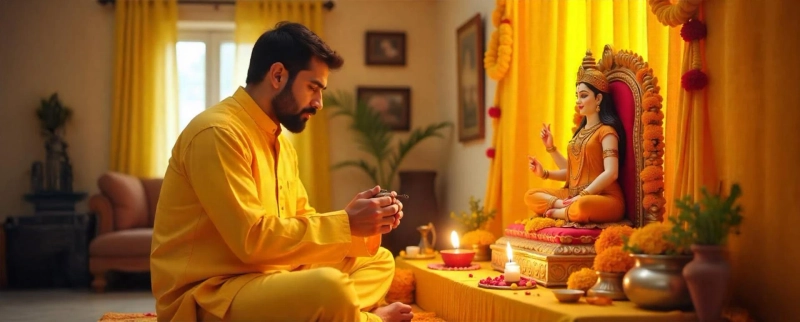
The Significance of Yellow During Vasant Panchami
Vasant Panchami, one of the most colorful and culturally significant festivals in India, is celebrated with great enthusiasm across the country. While the festival itself honors Maa Saraswati, the goddess of knowledge, learning, and arts, it is visually distinguished by the prominent use of the color yellow. From clothing to decorations, food, and flowers, yellow dominates the celebration, creating a vibrant, auspicious atmosphere. The prevalence of this color is not merely aesthetic; it carries deep cultural, spiritual, and symbolic significance that enriches the festival’s meaning.
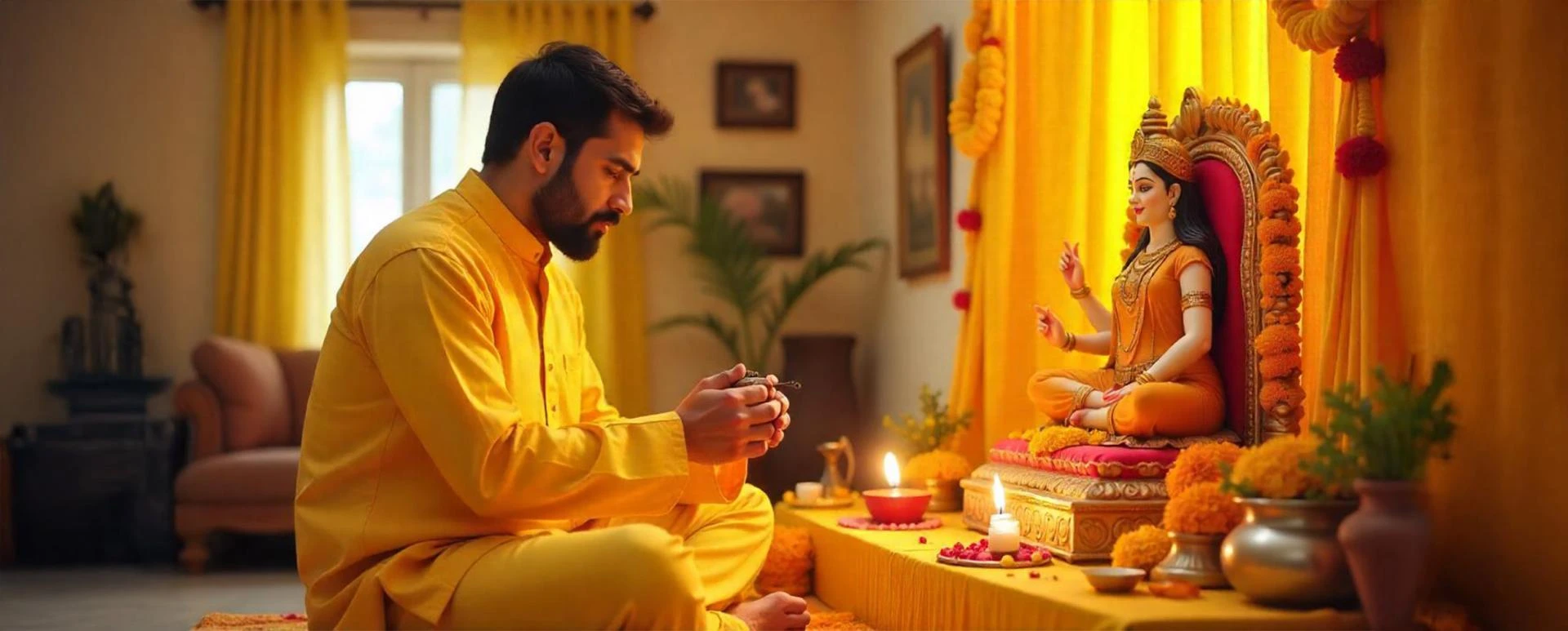
Yellow and the Season of Spring
The term “Vasant” itself means spring, and the festival coincides with the arrival of this bright and rejuvenating season. Spring is associated with renewal, growth, and energy, and yellow is the color that best represents these qualities. In agricultural regions, mustard fields bloom in golden yellow during this time, covering landscapes with a radiant hue. This natural phenomenon inspires the widespread use of yellow during Vasant Panchami, linking human celebration to the rhythms of nature. The color reflects the warmth of the sun, the blossoming of flowers, and the vitality of life returning after the cold winter months.
Symbolism in Hinduism
In Hindu culture, yellow is considered a sacred and auspicious color. It symbolizes knowledge, learning, and mental clarity—all attributes associated with Maa Saraswati. The goddess herself is often depicted wearing a yellow or golden sari, seated on a white lotus, with books and a veena beside her. Yellow represents enlightenment, purity of thought, and wisdom, reflecting the intellectual and spiritual goals that devotees aspire to achieve by worshipping Saraswati. Wearing yellow on Vasant Panchami is believed to invite the goddess’s blessings, enhance one’s learning abilities, and inspire creativity.
Psychological and Emotional Significance
Yellow is a bright and cheerful color that evokes feelings of optimism, happiness, and energy. It stimulates mental activity, encourages communication, and promotes clarity of thought, making it particularly appropriate for a festival devoted to learning and intellectual growth. During Vasant Panchami, the prevalence of yellow—from clothing and decorations to flowers and food—creates an uplifting environment that enhances the celebratory mood. This emotional resonance aligns perfectly with the festival’s themes of renewal, inspiration, and the pursuit of knowledge.
Cultural Traditions
The dominance of yellow during Vasant Panchami is evident in various cultural practices. Devotees dress in yellow attire to symbolize devotion, prosperity, and spiritual awakening. Homes and temples are adorned with yellow flowers, particularly marigolds and mustard blossoms, which are considered sacred and auspicious. Special dishes made from yellow ingredients such as turmeric, saffron, lentils, and rice are prepared as offerings, reinforcing the symbolic significance of the color. Even educational institutions emphasize yellow in decorations and rituals, underscoring the connection between the color and intellectual pursuits.
Yellow and Prosperity
Yellow also signifies wealth, abundance, and prosperity in Indian culture. By incorporating this color into Vasant Panchami celebrations, devotees symbolically invoke blessings for material and spiritual growth. The festival not only celebrates knowledge and wisdom but also acknowledges the importance of prosperity and well-being in human life. The use of yellow, therefore, reflects a holistic understanding of success—one that combines intellectual development with happiness, health, and financial stability.
Connection with Nature and Agriculture
In agrarian societies, Vasant Panchami coincides with the blooming of mustard fields, whose golden yellow flowers signal the arrival of spring and the readiness of land for sowing. This natural symbolism reinforces the use of yellow in celebrations, connecting human rituals with ecological cycles. The color serves as a reminder of the intimate relationship between nature, life, and cultural traditions. By celebrating with yellow, communities honor the earth, the harvest, and the abundance that sustains human life.
Spiritual and Artistic Inspiration
For artists, musicians, and scholars, yellow is not just a color but a source of inspiration. Its vibrancy stimulates creativity, focus, and mental agility. During Vasant Panchami, devotees engaged in learning, art, or music often adorn their spaces with yellow, seeking the blessings of Maa Saraswati to enhance their abilities. The color becomes a visual representation of intellectual and artistic awakening, aligning the external environment with inner aspirations.
Conclusion
The dominance of yellow during Vasant Panchami is deeply rooted in nature, culture, religion, and human psychology. It reflects the arrival of spring, symbolizes knowledge, wisdom, and prosperity, and creates an atmosphere of joy, optimism, and intellectual energy. From the golden mustard fields to the yellow attire, flowers, and food, the festival’s vivid palette serves as a reminder of the interconnectedness of nature, spirituality, and human life. Yellow is not merely a color during Vasant Panchami; it is a symbol of enlightenment, growth, creativity, and hope, making it an essential and meaningful aspect of this beloved festival.
Love Marriage Specialist in Manchester, Pandit R K Sharma provides expert guidance, spiritual remedies, and trusted support to overcome obstacles, gain family approval, strengthen relationships, and ensure successful, happy love marriages.