



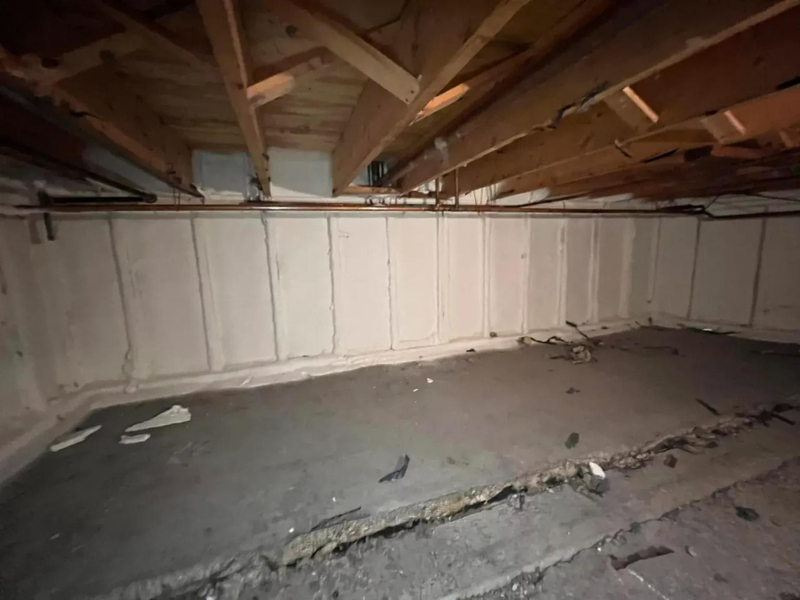
A cold basement usually means heat is still escaping through hidden gaps. Even with foundation insulation installed, temperature loss can continue when materials, placement, or air sealing are not done right. This matters now because cold basements raise energy use and create moisture risk during long winters.
Quick Answers That Matter Most
- Foundation insulation alone does not stop air leaks
- Cold concrete can bypass insulated areas
- Poor detailing causes heat loss at rim joists
Insulation Gaps = Cold Basement Floors
Many basements stay cold because insulation does not form a complete thermal barrier. Heat moves through uninsulated concrete edges, joints, and framing connections. This allows outdoor cold to dominate indoor basement temperatures.
Guidance from the U.S. Department of Energy on basement insulation systems explains that foundation walls must be insulated continuously to prevent heat loss through exposed concrete. When insulation stops short or leaves seams, cold transfers directly inside.
Cold surfaces pull heat from basement air. Floors feel icy, and walls stay damp longer, even when insulation is present.
Common Missed Areas That Stay Cold
- Rim joists above foundation walls
- Slab edges near exterior walls
- Utility penetrations and pipe gaps
Why Does My Basement Feel Colder Than Upstairs?
Basements sit below grade and contact soil that stays cold most of the year. When insulation is incomplete, concrete acts like a heat sink. It pulls warmth out faster than framed walls above.
Building performance research from Building Science Corporation on basement heat flow shows that cold foundations lower indoor surface temperatures. This makes basements feel colder even when the air temperature is similar to upper floors.

Cold surfaces also create drafts. Air near walls drops and circulates, giving a constant chill.
How Air Leakage Makes It Worse
Air leaks move warm air out and pull cold air in. Stack effect forces warm air upward, drawing cold air into the basement through cracks and joints.
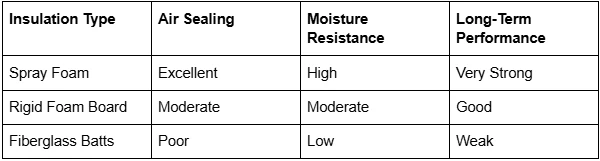
Foundation Insulation Material Comparison
Bonus Tips for Warmer Basements
- Insulate rim joists with closed-cell spray foam
- Seal sill plates and utility penetrations
- Extend insulation to slab edges where possible
Case Studies Showing Basement Improvements
Homes retrofitted with continuous spray foam at foundation walls showed higher basement surface temperatures and lower heating demand. These projects reduced cold-floor complaints and moisture buildup during winter months.
Moisture Problems = Reduced Insulation Performance
Moisture lowers insulation effectiveness. Damp insulation loses resistance to heat flow and allows cold to pass through more easily. Basements are especially vulnerable due to ground contact.
According to data from the U.S. Environmental Protection Agency on moisture control in foundations, wet foundation assemblies increase heat loss and indoor discomfort. Insulation must stay dry to perform as designed.
Spray foam helps by sealing air and resisting moisture absorption. This keeps thermal performance stable over time.
Conclusion on Freezing Basements With Insulation
A freezing basement usually points to incomplete insulation, air leakage, or moisture exposure. Foundation insulation must be continuous, sealed, and moisture-resistant to stabilize temperatures. Material choice and installation details make the difference between comfort and constant cold.

Informed insulation decisions protect energy use, comfort, and long-term building health.
Cascadia Spray Foam Insulation of Seattle Can Help Improve Basement Comfort
Spray foam insulation addresses air leaks, cold concrete, and moisture exposure in one system. Cascadia Spray Foam Insulation of Seattle supports performance-focused insulation upgrades that target real basement comfort issues without shortcuts.
They can be reached at (425) 386-3500 or info@cascadiasprayfoam.com.
FAQs
Why is my basement cold, even with insulated walls?
Cold concrete edges, rim joists, and air leaks still allow heat loss.
Does foundation insulation stop drafts?
Only if it also seals air leaks. Insulation without air sealing cannot stop drafts.
Is spray foam better for basements?
Yes. It seals air, resists moisture, and maintains thermal performance.
Can moisture make insulation ineffective?
Yes. Wet insulation loses heat resistance and increases cold transfer.
Should basement floors be insulated?
Insulating slab edges and floors improves comfort and reduces heat loss.
Reviewer: Olivia Thompson has spent 10 years working in spray foam insulation, helping companies grow their visibility. She reviewed this article and provided valuable suggestions on how to better align the content with the needs and expectations of customers, ensuring it resonates with the target audience.
Sources
- U.S. Department of Energy – Basement Insulation – Explains proper foundation insulation methods and heat loss pathways.
- Building Science Corporation – Basement Insulation – Research on basement heat flow and insulation placement.
- U.S. Environmental Protection Agency – Moisture Control – Details how moisture affects insulation performance and indoor comfort.