



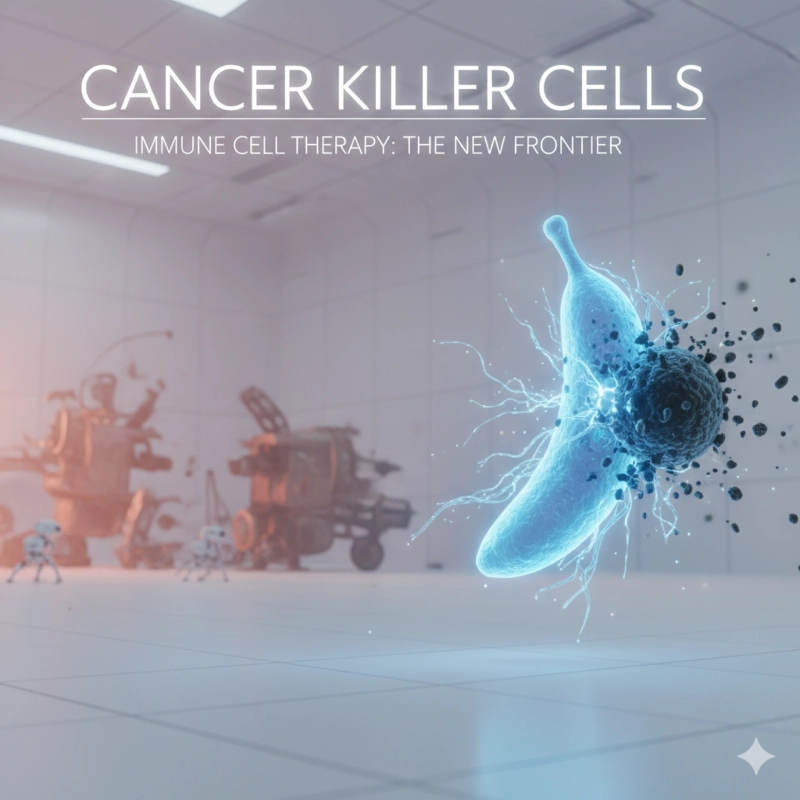
A new era in the fight against cancer has begun. Chemotherapy, radiation, and surgery were the main treatments for cancer for many years; they were efficient but frequently damaging to the body. Immune cell therapy for cancer is currently changing the way doctors and patients approach treatment. By enabling the body's own immune cells to eradicate cancerous cells with unparalleled accuracy, this cutting-edge cell-based cancer therapy is revolutionizing oncology.
This article explains why immune treatment is quickly becoming popular worldwide, how these treatments work, and why more patients are turning to cutting-edge facilities that are spearheading this medical advancement.
Understanding Immune Cell Therapy
Immunological cell therapy is a progressive immune treatment that uses the body's own defenses to destroy cancer cells. This treatment enhances the immune system's capacity to do what it was designed to do—protect the body—rather than relying on external medications or radiation to eradicate cancers.
Immune cell therapy encompasses several cutting-edge treatments, including Natural Killer (NK) cell therapy, TIL (Tumor Infiltrating Lymphocytes) therapy, and CAR-T cell therapy. To better identify and combat cancer, each technique focuses on improving or re-engineering a specific type of immune cell.
In particular, NK cells are well-known for their ability to recognize and eliminate cancerous or virus-infected cells without prior exposure, providing a quick, natural therapy option.
Why Immune Cell Therapy Is Replacing?
Because immune cell therapy uses the body's own immune system to target cancer, it is replacing conventional treatments like chemotherapy. It offers better long-term results, fewer incapacitating side effects (like nausea and hair loss), and the possibility of long-lasting remissions by teaching immune cells to remember cancer, moving from broad cell killing to targeted, individualized attack with "living drugs".
Key Advantages Over Traditional Methods
Targeted Action - Immunotherapy strengthens the immune system to specifically identify and eliminate cancer cells while reducing collateral damage, in contrast to chemotherapy, which destroys fast-dividing cells (including healthy ones).
Long-Term Memory - It produces immunological memory, enabling the body to fend off cancer recurrence and achieve resilient, long-lasting remissions.
Improved Quality of Life - Patients frequently have a higher overall quality of life and fewer long-term problems when there are fewer severe side effects.
Personalized Treatment - CAR T-cell therapy, for example, creates "custom-made" soldiers by using the patient's own cells to identify the patient's specific malignancy.
Also Read: “Top 7 Benefits of Alternative Cancer Treatments Patients Are Choosing in 2026”
Traditional Cancer Treatments: The Growing Limitations
Radiation and chemotherapy have saved many lives, but they have serious drawbacks. These techniques target rapidly dividing cells, destroying both healthy and cancerous cells. This can cause side effects such as nausea, exhaustion, hair loss, and decreased immunity. Many patients eventually become resistant to these therapies, which reduces their efficacy with each cycle.
Furthermore, conventional treatments cannot distinguish between "good" and "bad" cells. Overall health and recuperation are jeopardized by this indiscriminate harm. Immune cell therapy for cancer has grown in popularity as a result of researchers and medical professionals looking for treatments that work with the body rather than against it.
How Immune Drugs For Cancer Are Revolutionizing Cancer Care?
By teaching the body's immune system to combat cancer, immunotherapy drugs for cancer are transforming the treatment by providing long-lasting reactions, individualized care, and fewer side effects than chemotherapy for many. They also shift the emphasis from direct cell death to immune activation.
Long-term remission in previously incurable tumors is made possible by significant developments such as checkpoint inhibitors, which release immune cell brakes, and CAR T-cell therapy, which engineers patient T cells, making it a standard, potent pillar of oncology.
How They Are Changing Treatment?
✅Targeting Cancer's Evasion Tactics:
These medications, such as checkpoint inhibitors (e.g., Keytruda, Opdivo), block proteins (checkpoints) that cancer employs to suppress T-cells, so removing the "brakes" on the immune response. Cancer frequently evades the immune system.
✅Personalized & Precision Medicine:
Treatments such as CAR T-cell therapy, which successfully treats blood malignancies by genetically modifying a patient's own immune cells to produce a live medication.
✅Durable, Long-Term Remissions:
Unlike standard treatments, which frequently only delay the spread of advanced tumors,
immunotherapy can help some patients achieve long-lasting control or even eradication.
✅Decreased Side Effects:
While new immune-related side effects are likely, immunotherapy often spares healthy cells by working with the body, which leads in fewer severe side effects than conventional chemotherapy.
✅Expanding the Cancer Types Treated:
Once experimental, immunotherapies are now standard for many malignancies, including bladder, lung, melanoma, and blood cancers. They are now being used in combination with radiation and chemotherapy to greatly enhance outcomes for early-stage tumors.
Key Types of Immune Drugs:
Checkpoint Inhibitors: To activate T-cells, block CTLA-4 or PD-1/PD-L1.
CAR T-cell therapy uses genetically modified T cells to identify and eradicate tumors.
Lab-produced proteins that target certain cancer indicators are called monoclonal antibodies (e.g., Herceptin).
Cytokines and cancer vaccines: either modulate or stimulate the immune response.
Next Read: “Top 7 Benefits of Alternative Cancer Treatments Patients Are Choosing in 2026”
How Is Immunotherapy Done?
The process of immune cell therapy involves three critical steps:
Collection: Using specialist technology, immune cells are extracted from the patient's blood.
Enhancement: To increase their anticancer potential, these cells are increased, stimulated, or altered in a lab setting.
Infusion: After being reintroduced into the patient's body, the improved cells look for and eliminate cancerous cells.
For some patients, question arise such as “Can immunotherapy cure stage 4 cancer?”. While outcomes depend on the specific case and tumor type, many studies suggest immune cell therapies can achieve remission even in late-stage cancers by restoring immune surveillance and attacking residual disease.
Types of Cancers Treated with Immunotherapy
Clinical success has been demonstrated by contemporary immuno treatments for a variety of malignancies. Research and patient experience show effectiveness in:
· Lung cancer
· Ovarian cancer
· Kidney cancer
· Melanomas
· Leukemias and lymphomas
Other solid tumors resistant to chemotherapy
The question now is not "what types of cancers can be treated with immunotherapy?" but rather "when will these medicines become a mainstream first-line option?" as healthcare changes.
Global Access and Growing Demand
Patients from all around the world are flocking to specialist hospitals where immune cell treatments are easily accessible. One such leader is Cancer Killer Cells, a reputable company that provides Immune Cell Therapy For Cancer in Mexico under the supervision of professionals from the United States. These facilities provide a controlled, secure setting with highly customized treatment plans intended to improve quality of life and survival rates.
By providing therapy in state-of-the-art facilities in Cancún, Tijuana, and Nuevo Vallarta, Cancer Killer Cells enables foreign patients to receive cutting-edge care conveniently and comfortably. The organization guarantees long-term immune support through precision medicine by focusing on customized NK cell dosing, patient monitoring, and repeat-therapy programs.
Final Thought:
The evidence is overwhelming: immune cell therapy for cancer represents not only a medical advancement but also a change in the way that cancer is perceived and treated. It gives patients around the world seeking safer, longer-lasting remedies fresh hope by harnessing the body's natural intelligence to combat illness.
Cancer Killer Cells are a reliable solution for anyone looking for next-generation treatments. The brand allows people to take charge of their health and make confident progress toward recovery by fusing scientific accuracy with compassionate care.