



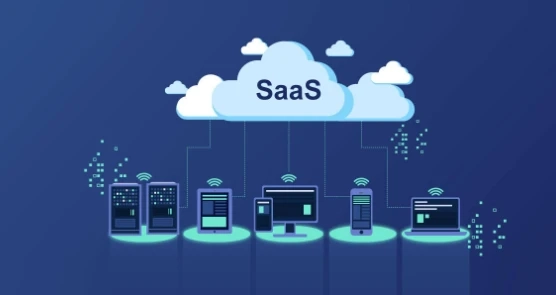
SaaS development services play a critical role in transforming early-stage MVPs into stable, secure, and mission-critical platforms used in high-risk environments.
In sectors like government monitoring, healthcare, fintech, and infrastructure, SaaS failure is not an option—downtime can mean compliance violations, financial loss, or public safety risks.
Modern SaaS development services go beyond feature delivery. They focus on reliability, scalability, fault tolerance, and long-term maintainability, all of which are essential when a product evolves beyond experimentation. A real-world example of this evolution can be seen in government-grade monitoring platforms like the Ohio system, where architecture decisions directly impact operational continuity and public trust.
What Is Mission-Critical SaaS?
Mission-critical SaaS refers to cloud-based software systems that must operate continuously, securely, and accurately because business operations—or public services—depend on them.
Unlike MVPs, mission-critical SaaS platforms require:
- Near-zero downtime
- Strong security and compliance
- Predictable performance at scale
- Rapid incident response
These systems are commonly found in government, healthcare, energy, transportation, and regulated enterprise environments.
How Is an MVP Different from Mission-Critical SaaS?
An MVP is designed to validate an idea, while mission-critical SaaS is designed to sustain risk.
Key differences include:
- MVPs prioritize speed to market
- Mission-critical systems prioritize stability and resilience
- MVP failures are acceptable
- Mission-critical failures are not
This gap is where experienced SaaS development services become essential.
Why Do High-Risk Environments Demand a Different SaaS Scaling Strategy?
High-risk environments expose SaaS systems to stricter compliance rules, higher loads, and real-world consequences.
From a technical perspective:
- Systems must handle unpredictable traffic spikes
- Data integrity must be preserved at all times
- Security breaches carry legal and financial penalties
From a business perspective:
- SLAs are non-negotiable
- Trust and reliability outweigh feature velocity
- Long-term scalability matters more than short-term wins
This is why organizations often partner with a specialized SaaS development company when transitioning beyond MVP.
What Are the Biggest Risks When Scaling SaaS Too Quickly?
The biggest risk of rapid SaaS scaling is architectural debt.
Common scaling mistakes include:
- Overloaded monolithic architectures
- Weak database design
- Insufficient logging and monitoring
- Poor authentication and authorization models
Once these weaknesses exist, fixing them later becomes expensive and disruptive—especially in high-risk industries.
How Do SaaS Development Services Help Reduce Scaling Risk?
Professional SaaS development services reduce risk by introducing proven engineering practices early.
These services typically include:
- Scalable cloud architecture planning
- Secure API design
- Load and stress testing
- Infrastructure automation
- Observability and alerting systems
A mature SaaS software development company builds systems with growth and failure scenarios in mind—not just ideal conditions.
When Should an MVP Start Transitioning to Mission-Critical Architecture?
The right time to transition is before user growth forces architectural change.
Signals that it’s time include:
- Increasing daily active users
- Enterprise or government clients showing interest
- Regulatory requirements emerging
- Performance degradation under load
Early intervention by a SaaS application development services team prevents costly rewrites later.
How Do High-Risk SaaS Systems Handle Availability and Downtime?
Mission-critical SaaS platforms are designed to expect failure—and recover instantly.
Best practices include:
- Redundant infrastructure across regions
- Automated failover mechanisms
- Graceful degradation instead of full outages
- Continuous health checks
These practices are rarely present in MVPs but are standard for enterprise-grade SaaS development companies.
Why Is Security a Core Requirement for Mission-Critical SaaS?
Security shifts from a feature to a foundation in mission-critical SaaS.
Key security priorities include:
- Role-based access control
- Secure authentication flows
- Data encryption at rest and in transit
- Regular vulnerability assessments
Organizations offering SaaS application development services embed security at every layer rather than adding it later.
How Does Compliance Impact SaaS Scaling in Regulated Industries?
Compliance dictates architecture decisions in high-risk SaaS environments.
Common requirements include:
- Audit logs
- Data residency controls
- Access traceability
- Incident reporting workflows
Meeting these expectations requires structured development processes and experienced SaaS development services providers.
For companies looking to scale securely, working with a team that offers end-to-end SaaS application development services becomes a strategic necessity.
What Role Does Monitoring and Observability Play in Mission-Critical SaaS?
You cannot manage what you cannot observe.
Mission-critical SaaS systems rely on:
- Real-time metrics
- Distributed tracing
- Centralized logging
- Proactive alerting
Observability ensures that teams detect issues before users are affected—especially important in public-sector and enterprise deployments.
How Do SaaS Development Companies Balance Speed and Stability?
Speed and stability are not opposites—they are outcomes of good engineering.
Top SaaS development companies achieve balance by:
- Using modular architectures
- Automating testing and deployments
- Enforcing code quality standards
- Investing in CI/CD pipelines
This allows innovation to continue without sacrificing reliability.
What Can Enterprises Learn from Government-Grade SaaS Systems?
Government-grade SaaS systems prioritize resilience over rapid iteration.
Lessons include:
- Design for worst-case scenarios
- Plan capacity before demand arrives
- Document everything
- Treat uptime as a business metric
These principles apply equally to enterprise and B2B SaaS platforms operating in high-risk environments.
Why Is Choosing the Right SaaS Development Company Critical?
Not all SaaS development companies are equipped for mission-critical systems.
The right partner brings:
- Experience in regulated industries
- Scalable architectural expertise
- Security-first development practices
- Long-term support capabilities
A capable SaaS software development company doesn’t just build software—it builds confidence.
What Does a Successful Transition from MVP to Mission-Critical SaaS Look Like?
A successful transition is gradual, intentional, and architecture-driven.
It involves:
- Replacing assumptions with data
- Refactoring before systems break
- Investing in infrastructure early
- Aligning technical decisions with business risk
This approach ensures sustainability rather than short-term success.