



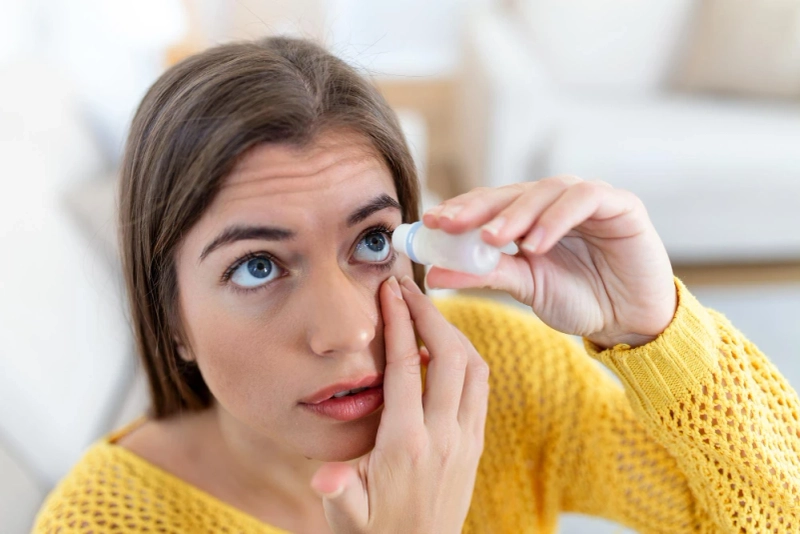
Dry, irritated eyes can feel manageable during the day—but for many people, symptoms become noticeably worse at night. This nighttime discomfort can interfere with sleep, productivity, and overall eye health. Many patients also ask, “do dry eyes cause blurry vision?” Yes, they can, especially when low tear quality or tear evaporation becomes more severe in the evening.
Knowing why dry eyes get worse at night helps you manage symptoms better and protect your vision.
What Makes Dry Eyes Worse at Night?
1. Reduced Blinking During Sleep
When your eyes are closed for hours, blinking stops completely. Blinking normally spreads tears across the surface of the eye, keeping it moist.
With less tear distribution, the eye surface can dry out, especially if tear production is already low.
2. Lagophthalmos Nocturna (Sleeping with Partially Open Eyes)
Some people sleep with their eyelids slightly open, which exposes the eye surface to air. Even a tiny gap can lead to overnight tear evaporation and morning dryness.
Common symptoms include:
- Waking up with a burning or stinging sensation in the eyes.
- Redness in the morning
- Morning photophobia
3. Tear Production Naturally Decreases at Night
Your lacrimal glands produce fewer tears during sleep. This normal rhythm can become problematic if you already have dry eye syndrome, meibomian gland dysfunction (MGD), or hormonal changes affecting tear quality.
4. Bedroom Environment Issues
Your sleeping environment may silently be worsening dryness.
These may include:
- Including overnight-running air conditioners or heaters
- Low humidity inside the room
- Fans blowing directly into one's face
- Allergens, dust, or even poor air circulation
5. Too Much Screen Time Before Bed
The screen use at the end of the day reduces blink rate, hence speeding up tear evaporation, leading to dryness well into bedtime.
6. Contact Lenses
Sleeping in contact lenses or over-wearing them during the day causes your corneas to become oxygen-deprived and dry. Even removing lenses before bedtime fails to reverse a day of irritation.
Common Symptoms of Night-Time Dry Eyes
People with night flare-ups of dry eye often describe:
- Burning or stinging
- Blurred vision in the mornings
- Grittiness or foreign-body sensation
- Reddening
- Sensitivity of light
- Sticky eyes or eyelids that feel “glued” together
If symptoms persist, that would indicate chronic dry eye disease that needs professional treatment.
How to Prevent Dry Eyes from Worsening at Night?
1. Use a humidifier
Increased room humidity favors tear moisture and avoids evaporation during sleep.
2. Switch to Preservative-Free Lubricating Drops
Use 1–2 drops at night, before bedtime. For very dry eyes, use longer-acting gel or ointment formulations that last through the night.
3. Warm Compresses Before Bed
Warm compresses can open up blocked meibomian glands so that your tears contain more natural oils, enabling them to evaporate much more slowly.
4. Blinking Exercise after Screen Work
If your nighttime routine includes TV or mobile use, perform gentle blink exercises to rehydrate the cornea.
5. Avoid Direct Airflow
Move fans, AC vents or heaters so that they don't blow in your face.
6. Hydrate
Adequate water intake during the day helps maintain normal levels of tearing.
7. Clean Eyelids Daily
Buildup on eyelid margins can exacerbate MGD. Keep them clean using mild lid wipes or warm water.
8. Consider Chamber Moisture Goggles
These special sleep goggles trap the humidity around the eyes and are of great service in cases of severe dryness or lagophthalmos.
When To Go To The Eye Doctor?
See a professional for care if:
- Symptoms persist for over 2–3 weeks
- Your vision is constantly blurred
- You have severe burning or pain
- Self-medication over-the-counter remedies are useless.
The physician may prescribe treatments that include prescription eye drops, punctal plugs, thermal gland therapy, or evaluation for underlying conditions like MGD or autoimmune issues.
Wrapping Up
Nighttime dry eyes can be uncomfortable, but the cause is often manageable. Reduced blinking, low humidity, environmental factors, and tear gland issues can all contribute to worsening dryness at night. By understanding the triggers and using targeted relief strategies—such as humidifiers, warm compresses, and protective eye ointments—you can wake up with clearer, more comfortable vision. If symptoms continue or affect daily life, an eye exam can reveal the root cause and help you get long-lasting relief.