



In modern enterprise and data center environments, Cisco Nexus switches play a crucial role in delivering high-performance, scalable, and secure networking. One of the most important concepts while working with these switches is the Nexus port. Understanding what a Nexus port is, how Nexus port numbers work, and how features like port-channel and Cisco port channel commands operate is essential for networking professionals and students preparing for computer network MCQ, computer networks MCQ, and network security MCQ exams.
This blog explains the concept of Nexus ports in detail and also connects related topics such as network hardware, network hardware devices, and TCP header format for a complete learning perspective.
Interested in building a career in networking? Join our CCNA Training Online for easy entry into the networking world. Contact our learner advisors now.
What Is a Nexus Port?
A Nexus port is a physical or logical interface available on a Cisco Nexus switch, primarily designed for data center networking. These ports connect servers, storage systems, other switches, and network hardware devices in high-speed environments.
Cisco Nexus ports support advanced features such as:
- High bandwidth (10G, 25G, 40G, 100G)
- Virtual Port Channel (vPC)
- Port-channel aggregation
- Layer 2 and Layer 3 configurations
In computer networks, a Nexus port acts as a communication endpoint that allows data packets to flow between different network hardware components.
Nexus Port in Computer Networks
From a computer network perspective, a Nexus port performs the same fundamental role as any switch port, but with enhanced capabilities for scalability and reliability.
Key Functions of a Nexus Port
- Connects servers and storage devices
- Supports trunk and access modes
- Enables redundancy using port-channel
- Improves performance with load balancing
These features make Nexus ports highly relevant for computer networks MCQ and computer network MCQ exam questions.
Nexus Port Number Explained
A Nexus port number uniquely identifies each interface on a Cisco Nexus switch. The format typically looks like:
Ethernet1/1
Ethernet1/2
Meaning of Nexus Port Number
- Ethernet → Interface type
- 1 → Module or slot number
- 1 → Port number on that module
Correct understanding of Nexus port numbers is essential while configuring network hardware in computer networks and answering real-world troubleshooting scenarios.
Types of Nexus Ports
Physical Nexus Ports
These are actual hardware interfaces used to connect cables.
Logical Nexus Ports
These include:
- Port-channel interfaces
- Virtual interfaces
- Management ports
Both physical and logical ports are commonly covered in computer network MCQ and network security MCQ topics.
What Is Port-Channel in Cisco Nexus?
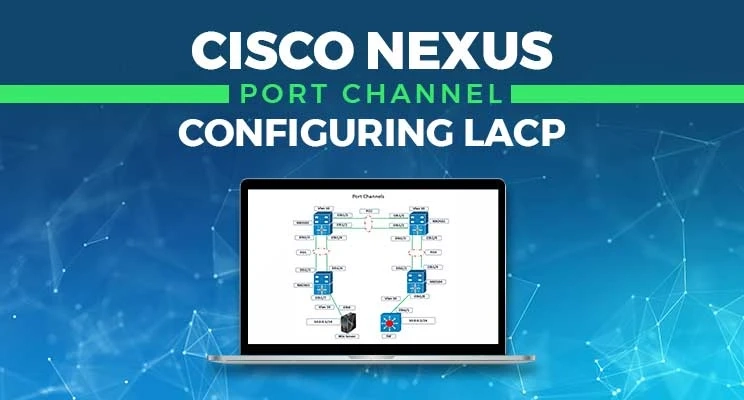
A port-channel is a logical interface that combines multiple physical Nexus ports into one single interface. This improves bandwidth, fault tolerance, and network stability.
Benefits of Port-Channel
- Load balancing across links
- Redundancy if one link fails
- Simplified network design
Port-channel concepts are important for both network hardware devices and enterprise-level computer networks.
Cisco Port Channel Commands (Nexus)
Some commonly used Cisco port channel commands on Nexus switches include:
interface port-channel 1
switchport
show port-channel summary
show running-config interface port-channel
These commands help network engineers verify configuration, troubleshoot issues, and optimize performance. They are also frequently asked in computer network MCQ and network security MCQ exams.
Nexus Ports as Network Hardware Components
Network Hardware in Computer Networks
Cisco Nexus switches and their ports are core elements of network hardware in computer networks. They connect:
- Routers
- Firewalls
- Servers
- Storage systems
Common Network Hardware Devices Using Nexus Ports
- Cisco Nexus switches
- Data center routers
- Network Interface Cards (NICs)
- Firewalls and load balancers
Understanding Nexus ports improves clarity about how network hardware devices interact in real-world networks.
Nexus Ports and Network Security
In network security, Nexus ports support features such as:
- Access Control Lists (ACLs)
- Port security
- VLAN segmentation
- Secure trunking
These capabilities help protect enterprise networks from unauthorized access, making Nexus ports relevant for network security MCQ preparation.
TCP Header Format in Computer Networks
While Nexus ports operate at the physical and data link layers, the data passing through them follows the TCP header format at the transport layer.
What Is a TCP Header?
The TCP header contains control information required for reliable data transmission.
Important TCP Header Fields
- Source Port
- Destination Port
- Sequence Number
- Acknowledgment Number
- Flags
- Window Size
- Checksum
These fields are commonly illustrated using a TCP header diagram.
TCP Header Diagram and Nexus Ports
A TCP header diagram shows how port numbers inside the TCP header identify application processes. When data flows through a Nexus port, the switch forwards packets based on MAC and IP information, while the TCP header format in computer networks ensures end-to-end reliability.
This connection between physical ports and protocol headers is a key concept for computer networks MCQ exams.
Relationship Between Nexus Port and TCP Header Format
Nexus PortTCP HeaderWorks at Layer 2/3Works at Layer 4Handles packet forwardingHandles reliabilityUses port-channel for bandwidthUses port numbers for sessions
Understanding both helps build strong fundamentals in computer networks.
Why Nexus Ports Are Important for Networking Students?
Cisco Nexus ports are:
- Common in data centers
- Widely used in enterprise networks
- Frequently included in computer network MCQ, network security MCQ, and certification exams
They bridge the gap between network hardware, protocol behavior, and real-world network design.
Conclusion
A Nexus port in Cisco networking is more than just a physical interface—it is a powerful component of modern computer networks. From understanding Nexus port numbers to configuring port-channel using Cisco port channel commands, these ports play a vital role in performance, scalability, and security.
When combined with knowledge of network hardware devices, TCP header format, and TCP header diagrams, Nexus ports become an essential topic for anyone preparing for computer networks MCQ, computer network MCQ, or network security MCQ exams.
Mastering these concepts not only improves exam performance but also prepares you for real-world enterprise and data center networking environments.