


Camping has always represented a return to simplicity—an escape from the clamor of cities and a reconnection with nature’s rhythms. But in the modern age, simplicity does not mean isolation from convenience. Outdoor enthusiasts now bring with them an array of devices: portable fridges, lanterns, induction cooktops, fans, battery chargers, and more. Managing this symphony of electric needs—especially in wet, windy, or unpredictable conditions—demands not only reliable power delivery but also robust protection. That’s where outdoor extension cord boxes come into play.
Choosing the right extension cord box for camping is not a matter of aesthetics or brand preference alone; it is a critical decision tied to safety, durability, weather resistance, and practical design. What works in a backyard may fail under the pressure of rugged terrain or a sudden downpour. This article delves deeply into the world of extension cord protection for campers, exploring the characteristics that define top-tier models and the context in which they shine. It does not aim to list a dozen models superficially, but instead to investigate which extension cord boxes truly serve the unique and demanding environment of outdoor camping.
The Realities of Power in the Wilderness
Before analyzing specific extension cord box models, it is crucial to understand the role such equipment plays in a camping environment. Unlike urban spaces, where outlets are sheltered and pathways are paved, the camping landscape is wild, uneven, and exposed. Extension cords must snake across rocks, wind through wet grass, and endure foot traffic, fallen branches, and temperature shifts.
More importantly, the threat of water exposure is ever-present. Morning dew, afternoon rain, and even campsite proximity to rivers or lakes introduce an element of moisture that can easily seep into improperly shielded connections. In such environments, even a brief exposure of an open socket or a cracked connector can lead to short circuits, equipment damage, or worse—injury or fire.
Therefore, the primary function of a camping-friendly extension cord box is not mere convenience; it is prevention. Prevention of water ingress. Prevention of connection failure. Prevention of unplanned downtime when you most need power. The models that rise above the rest are those that take these conditions seriously and engineer against them.
Understanding the Anatomy of a Good Cord Box
To identify the right cord box for outdoor use, one must consider several interconnected qualities—each of which plays a role in ensuring longevity and performance.
First, water resistance is paramount. This does not mean merely splash-proof. For camping, an ideal box must withstand steady rainfall, ground moisture, and in some cases even partial submersion. Ratings like IP44, IP65, or higher signal a level of waterproofing that can be trusted.
Second, impact resistance is vital. Campgrounds are rarely gentle. Gear is thrown, stepped on, and occasionally dropped. A flimsy plastic box will not last long. Instead, look for boxes made from high-density polyethylene or other shock-absorbent polymers.
Third, cord compatibility cannot be ignored. A good box must accommodate heavy-duty cords, multiple outlets, and different plug shapes. Clamping mechanisms must be strong but flexible, allowing for variations in cable thickness.
Fourth, portability and ease of use matter immensely. You may be unpacking this device in low light, with cold fingers, or in the middle of setting up a tent. The ideal cord box should require no tools to operate, should open easily but close securely, and should not weigh more than is reasonable for a backpack or carload.
Finally, locking and sealing mechanisms—whether they’re silicone gaskets, mechanical clips, or threaded closures—must function reliably without wearing out after a few uses.
With these criteria in mind, certain models have emerged over the years as preferred choices among outdoor enthusiasts. Not because they are heavily marketed, but because they have been tested—in mud, in rain, and in the kinds of places where form follows function.
The Rise of Specialized Camping Cord Boxes
Over the past decade, manufacturers have begun to recognize the specific needs of campers. No longer are extension cord boxes designed only for contractors or garage workshops. Instead, we now see a growing subset of models purpose-built for mobile lifestyles.
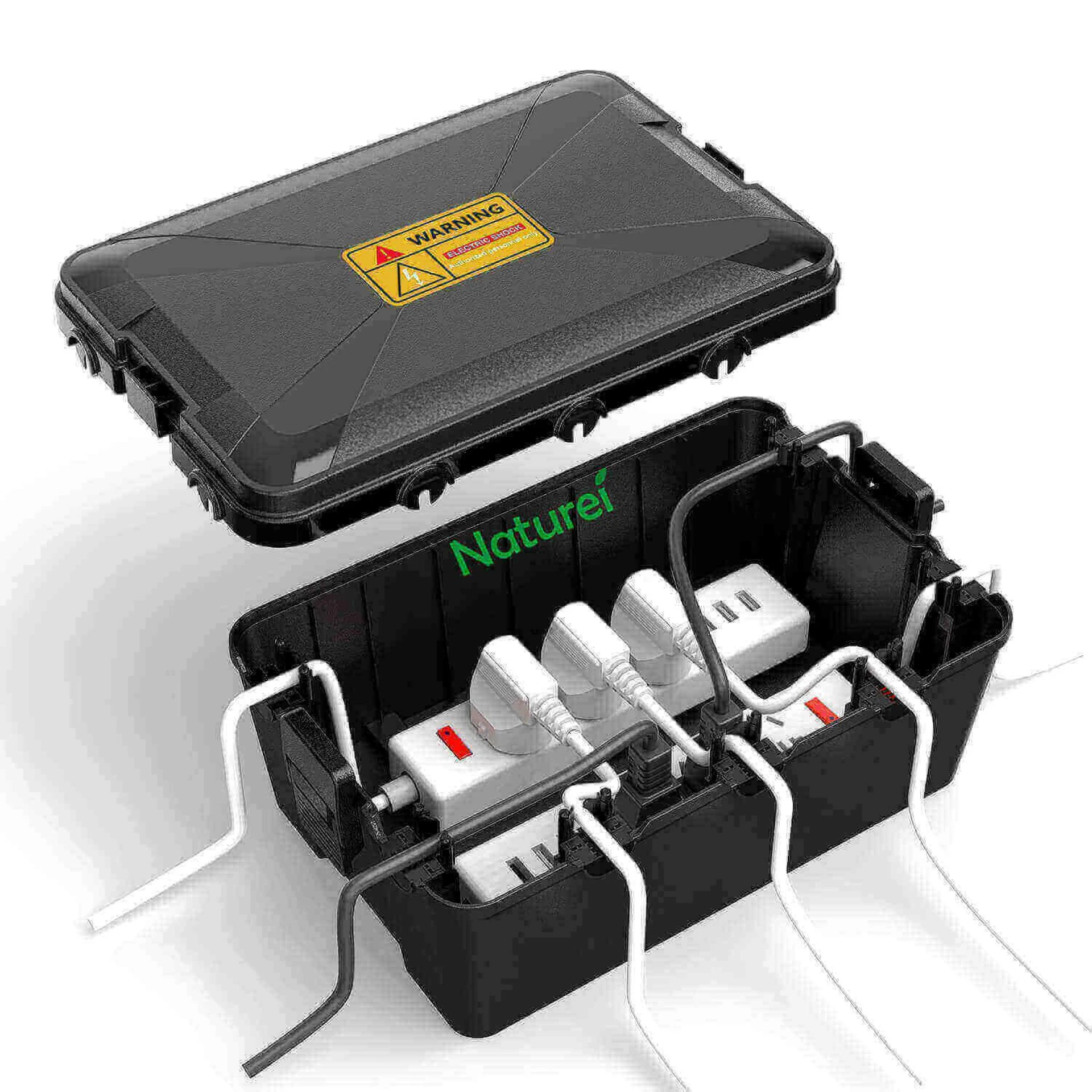
Take, for instance, the cord boxes that incorporate transparent lids—allowing users to visually inspect internal connections without opening the case. These are particularly helpful for nighttime checking or for confirming whether an LED lighted plug is engaged.
Other models include built-in hooks or hangers, allowing the entire box to be suspended from a tent pole or tree branch, keeping it off wet ground. Some have modular foam inserts to cushion delicate plug connections, while others feature color-coded seals to distinguish between waterproof and vapor-proof levels.
This evolution reflects a deeper trend: as camping becomes more accessible and gear-centric, extension cord safety is no longer an afterthought—it is part of the design ecosystem.
Notable Models That Excel in Outdoor Conditions
Among the myriad options, several extension cord boxes consistently receive praise from outdoor users—not because they offer every feature, but because they combine critical elements of protection, convenience, and durability in real-world environments.
One such model is the Twist and Seal Cord Dome. Originally designed for holiday lighting in wet climates, the Cord Dome has found a second life among campers. Its dome-shaped design allows rain to roll off naturally, while its internal compression fit accommodates bulky plugs without damaging them. It is large enough for multiple cords and includes ground stakes—a surprisingly useful feature on windy or sloped campsites.
Another standout is the Iron Forge Cable Weatherproof Safety Seal. It features an elongated clamshell casing with silicone gaskets and thick snap-locks, creating a tight seal that resists moisture ingress. Its compact design makes it suitable for RV power connections or tent-side appliances.
The Kasa Smart Outdoor Plug Box takes things a step further by integrating smart connectivity. While not a box in the traditional sense, this unit includes a weatherproof housing and allows remote control via smartphone—ideal for campers who want to power lights or appliances on timers without leaving the tent.
But perhaps one of the most rugged offerings is the Conntek PDU Enclosure Box, which, while bulkier, provides industrial-level sealing. Designed for portable generator hook-ups, it doubles as a secure storage unit for sensitive plugs. Its weight makes it less ideal for backpackers but perfect for basecamps or group camping setups.
Each of these models shines in a particular context. The right choice depends on whether you’re powering a weekend hammock campsite or a full-blown off-grid base with refrigeration and lighting.
Real-World Scenarios: Matching Gear to Terrain
Imagine setting up camp in a Pacific Northwest rainforest. The ground is saturated. The mist never lifts. You’ve got a portable power station and three cords branching out—to your lantern, your induction stove, and your electric blanket. In this scenario, a box with high IP rating and domed runoff is your best bet—something like the Cord Dome or a high-grade IP65 model with elevated support.
Now picture desert camping in Joshua Tree. The days are hot and dry, but nights drop below freezing. Here, water isn’t the issue—dust and temperature swings are. You want a box that seals out fine particulates and doesn’t crack when temperatures fall. Shock resistance and tight latching become more valuable than drainage.
Or consider urban camping at a festival. You’re plugged into temporary power under a canopy. Your neighbors may not be careful about where they step. A bright-colored box with visible markings and lockable closures can prevent tampering or accidental unplugging.
These are not edge cases—they are typical camping realities. And they highlight the importance of choosing gear that isn’t just weatherproof in theory, but battle-tested in context.
Longevity and Maintenance: Extending the Box’s Lifespan
Even the best extension cord boxes won’t last forever if mistreated. Cracked lids, warped seals, and lost gaskets are common signs of neglect. To ensure long-term yield from your investment, basic care routines go a long way.
After each trip, boxes should be opened, dried, and cleaned of debris. Silicone seals should be inspected for integrity and occasionally lubricated to maintain elasticity. If the box uses metal parts—such as hinges or clasps—checking for rust and applying anti-corrosion sprays can prevent failure during future trips.
Additionally, rotating boxes between uses (especially if you own multiple) can reduce wear on individual units. Storing them out of direct sunlight, away from fuel vapors, and in breathable containers also improves longevity.
The Evolving Role of the Cord Box in Tech-Integrated Camping
Camping is no longer only about flashlights and firewood. Solar panels, battery packs, GPS antennas, laptops, projectors—even portable Wi-Fi hubs—are becoming part of the modern camper’s toolkit. As this trend continues, extension cord boxes are evolving into distribution hubs, complete with USB ports, surge protectors, and built-in diagnostics.
Some manufacturers are even experimenting with modular boxes—units that can daisy-chain together, providing scalability for larger camping groups or events. Others include RFID locks or app-enabled monitoring for power usage and fault detection.
In this future-forward world, cord boxes are not static tools. They are adaptable components of a larger, smarter camping infrastructure. And those who understand their nuances can harness not just protection, but power optimization.
Conclusion: Choosing with Intent, Camping with Confidence
The question of which extension cord box model is best for outdoor camping cannot be answered in isolation. It is inseparable from where you camp, how you camp, and what you power. A family of four running string lights and a cooler has different needs from a solo backpacker charging a phone and headlamp. The ideal model isn’t necessarily the one with the most features—it’s the one that disappears into your routine, performing silently and reliably.
Cord boxes, though often overlooked in the gear hierarchy, play an outsized role in campsite safety and functionality. When chosen well, they prevent inconvenience. When chosen poorly, they invite disaster.
To camp is to trust nature. But to camp wisely is to prepare for its surprises. And that preparation begins with the simple act of plugging in—safely, smartly, and with the right box at your side.