


Learn how to choose the right acoustic partition to reduce noise, boost privacy, and create a more productive space.
Noise can be a major problem in offices and open workspaces. Conversations, phone calls, and background noise can easily distract employees. One smart solution is using acoustic partitions. These are specially designed panels or walls that help block sound and create quieter zones within busy areas.
In this guide, we’ll explore the types of acoustic partitions available, how they work, and how to choose the best one for your office or open space.
What Are Acoustic Partitions?
Simple Dividers with Powerful Sound-Blocking Features
Acoustic partitions are panels made with sound-absorbing materials. They divide spaces while also reducing noise. You can place them between desks, in meeting areas, or around workstations. They help to create privacy and quiet zones without needing to build permanent walls.
These partitions are made using materials like foam, fabric-covered fiberglass, or polyester panels. They come in many shapes and sizes and can be mobile (on wheels) or fixed to the floor or ceiling.
Why Use Acoustic Partitions in Offices?
Key Benefits for Modern Workspaces
Modern offices often have open layouts to promote teamwork and flexibility. But they can also become very noisy. Here’s why acoustic partitions are a great solution:
1. Reduce Distractions
- Acoustic partitions absorb sound
- Help reduce background noise from conversations, phones, and equipment
- Make it easier to focus on work
2. Increase Privacy
- Block direct lines of sight
- Make phone calls and meetings more private
3. Improve Communication
- Reduce echo and sound overlap
- Make conversations clearer and easier to follow
4. Flexible Layouts
- Easily move or reconfigure mobile partitions
- No need for construction or permanent changes
5. Boost Productivity
- Quieter spaces help people stay focused
- Better for teamwork, creative tasks, and calls
Types of Acoustic Partitions
Choosing the Right Type for Your Space
There are several types of acoustic partitions. Each works best in different situations. Here are some popular ones:
Freestanding Acoustic Partitions
- Stand on the floor and can be moved easily
- Ideal for temporary setups or changing layouts
- Great for creating personal work areas or quiet corners
Desk-Mounted Acoustic Panels
- Attach to desks or workstations
- Help reduce noise between coworkers
- Best for shared desks or open benching setups
Ceiling-Hung Acoustic Screens
- Hang from the ceiling to divide space without blocking the floor
- Good for modern, open-plan designs
Modular Acoustic Walls
- Panels that can be connected to create full walls
- Offer maximum sound control and visual privacy
- Can be used to build small meeting rooms or phone booths
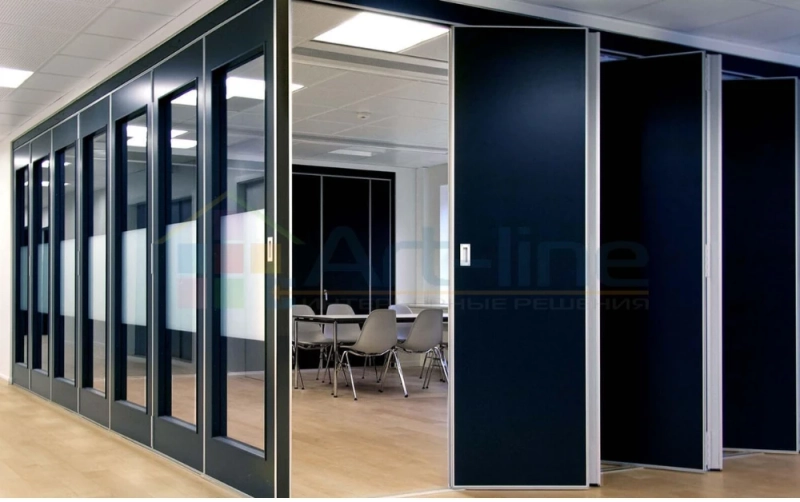
Folding or Sliding Acoustic Panels
- Flexible panels that fold or slide open and closed
- Ideal for spaces that need to change quickly
Which Material Is Best for Acoustic Partitions?
Understanding the Options
The material of your partition affects how much sound it can absorb. Common materials include:
Fabric-Wrapped Fiberglass
- Excellent sound absorption
- Available in many colors and finishes
Polyester Fiber Panels
- Lightweight and often made from recycled materials
- Good for both sound and sustainability
Acoustic Foam Panels
- Affordable and effective
- Suitable for budget-friendly projects
Wood with Acoustic Backing
- Offers a stylish, natural look
- Combines design and sound control
Factors to Consider When Choosing an Acoustic Partition
Match the Right Partition to Your Needs
Here’s what to think about before you buy:
1. Noise Level in the Room
- High noise areas need stronger sound-blocking materials
- Quieter areas may only need light panels for mild noise control
2. Purpose of the Space
- For meeting rooms, use full modular walls
- For desks, smaller panels may be enough
3. Flexibility and Movement
- Need to change the layout often? Go for mobile or folding partitions
4. Style and Design
- Choose colors and shapes that match your office design
- Use bold colors for creative spaces or soft tones for calm environments
5. Budget
- Foam and polyester are usually more affordable
- Fabric-wrapped and decorative panels may cost more but look premium
Installation Tips for Acoustic Partitions
Easy Setup for Big Results
Most acoustic partitions are easy to install. Here’s a quick guide:
1. Plan Your Layout
- Decide where sound control is most needed
- Sketch a simple plan showing where partitions should go
2. Measure the Space
- Make sure you know the height and width needed for each partition
3. Assemble the Panels
- Most freestanding or desk-mounted panels require minimal tools
4. Secure in Place
- Use brackets, clips, or stands
- Check that partitions are stable and safe
5. Test the Sound
- Once in place, listen for a difference
- Add more panels if needed
Real-Life Examples of Acoustic Partitions
See How Others Are Using Them
- Tech Startups: Use mobile partitions to divide shared workspaces and meeting zones
- Design Studios: Choose colorful panels that double as decor and sound control
- Call Centers: Use desk-mounted partitions to cut down on voice overlap
- Coworking Spaces: Combine ceiling-hung and modular walls for flexible soundproofing
971521784024
Donna Towers, Office No - 602, Dubai Silicon oasis, Near Silicon Central Mall, Dubai, United Arab Emirates, Po Box - 19181
Info@perfectgroup.ae
https://perfectacousticsuae.com
https://maps.app.goo.gl/w1rPX8Jd75gXieEn6
https://www.facebook.com/people/Perfect-Acoustic/100089823847481/
https://www.instagram.com/perfectacoustics_uae/
https://www.linkedin.com/company/perfect-acoustics/