



I didn’t think much about roadside assistance until I actually needed it.
It was one of those Detroit winter mornings when the cold feels sharper than usual. I turned the key, waited for the engine to respond—and nothing happened. No warning, no buildup. Just silence. In that moment, speed mattered more than anything else.
Roadside emergencies have a way of showing up at the worst possible time. A dead battery, a flat tire, or locked keys don’t ask whether you’re running late or stuck in heavy traffic. And in a city like Detroit, where weather and road conditions can change quickly, those moments can feel stressful fast.
Why Roadside Assistance Is Especially Important in Detroit
Driving in Detroit comes with its own set of challenges. Winter temperatures can drain batteries overnight. Summer heat can push engines to their limits. Potholes and road construction don’t always give you time to react.
When something goes wrong, waiting hours for help isn’t just inconvenient—it can feel unsafe. Having access to dependable roadside assistance means knowing someone can respond quickly, help keep you safe, and get you moving again with minimal hassle.
Fast Help Without the Fear of High Costs
One concern many drivers share is cost. Emergencies already bring enough stress, and surprise fees only make things worse. Affordable roadside assistance doesn’t mean cutting corners—it means clear pricing, honest communication, and solutions that make sense for the situation.
Knowing what you’re paying for, especially in urgent moments, goes a long way toward peace of mind.
Help Anytime, Day or Night
Car trouble doesn’t follow a schedule. It can happen late at night, early in the morning, or during a holiday weekend when options feel limited. That’s why 24/7 roadside assistance matters.
For night drivers, long-distance commuters, families traveling with children, or delivery drivers working odd hours, knowing help is available at any time makes a real difference.
Common Roadside Problems Drivers Face
Most roadside calls come down to a few familiar situations:
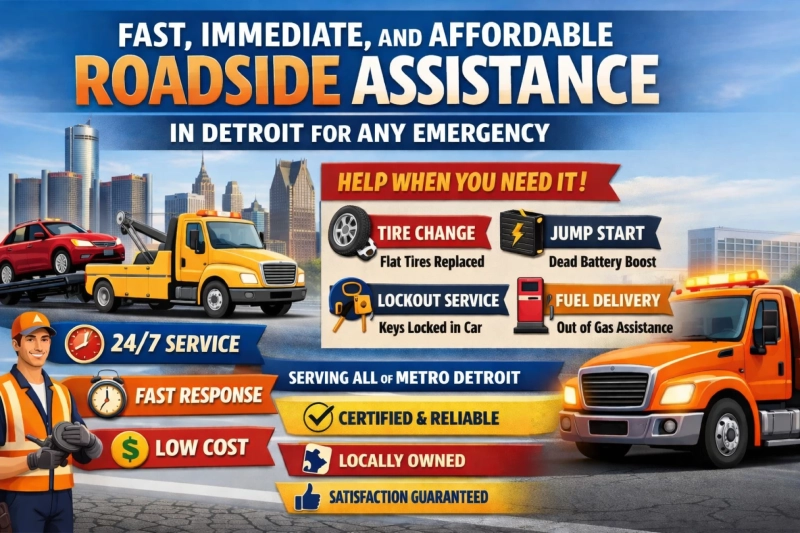
- Breakdowns: Mechanical issues can appear without warning. Sometimes the car can’t move safely, and towing becomes the best option.
- Dead batteries: Cold Detroit winters are especially tough on batteries, making jump-starts one of the most common services.
- Lockouts: It happens more often than people like to admit, and it’s frustrating when you’re already in a rush.
- Running out of fuel: Traffic delays or long drives can catch anyone off guard.
- Flat tires: Potholes, debris, or worn tires can quickly bring a drive to a halt.
Having trained professionals handle these situations saves time and reduces stress when you’re already dealing with enough.
What Makes Roadside Assistance Truly Reliable?
Speed matters, but so does how that help arrives. Reliable roadside assistance depends on local knowledge, experienced technicians, and efficient coordination. Familiarity with Detroit streets and traffic patterns can mean the difference between a long wait and a quick resolution.
When things go wrong on the road, the goal is simple: reduce waiting, restore safety, and help drivers move forward.
Choosing the Right Roadside Assistance Service
If you ever find yourself comparing options, a few things are worth paying attention to:
- How quickly help arrives
- What services are actually offered
- Whether pricing is clear and upfront
- The company’s reputation and customer experiences
- Availability during extreme weather
The right service combines speed, fairness, and professionalism—without adding more stress to an already difficult moment.
A Final Thought
Roadside assistance isn’t just about convenience. In many situations, it’s a lifeline. From dead batteries and flat tires to lockouts and breakdowns, knowing help is available can turn a bad situation into a manageable one.
For Detroit drivers, that peace of mind can make all the difference when the unexpected happens.
AI Disclosure: The author used AI tools for minor editing and clarity support. All ideas, opinions, and final wording are the author’s own.