



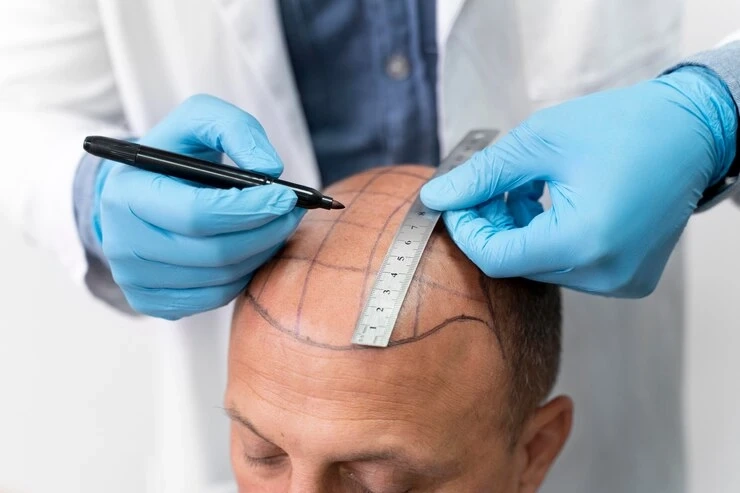
Hair transplant is considered to be a lasting remedy to the loss of hair, yet ‘when we will actually start seeing results’ is one of the most frequent questions patients have. The truth lies in the fact that post-transplant growth of hair is a slow process that needs patience, proper maintenance, and expectations. By knowing the timeline, you can feel confident and knowledgeable during the process of recovery.
Here’s a Quick Breakdown for You
First 1-2 weeks after the Hair Transplant
Immediately after the procedure, there can be some redness, swelling, or scabbing of the area of transplant. This is entirely natural and normal, and is one of the healing processes. The hair follicles that are implanted are rooted into the scalp at this stage.
A significant number of patients will visit a reputable hair doctor in Varanasi and see to it that the care is addressed properly after the procedure, such as washing tenderly, taking medications, and avoiding work with heavy loads and similar. The visible growth is not anticipated at this stage since the emphasis on growth is on healing and not growth.
The Shedding Phase: An Ordinary Stage of the Process (2 to 8 Weeks)
The shedding phase is one of the most alarming phases for the patients. The hairs that are transplanted may fall out two to eight weeks to the transplant. This can be a very unnecessary panic, yet it is quite normal.
This is what is referred to as shock loss, since the hair shafts get lost, but the follicles get securely embedded under the scalp. The patients will be made to believe that shedding is a good indicator that the follicles are in the next growth cycle by experienced specialists, including any skilled hair doctor in Varanasi.
Early Growth Begins (3–4 Months)
In the third to fourth month, there is slow development of new hair. The hair is also normally thin with a texture that is light and soft at this stage. The growth can be irregular, and this is normal as each follicle has its own rate of growth.
Patients cannot anticipate such dramatic changes. The scalp is not fully adapted yet, and regular after care, including nutrition and scalp care, is a major factor contributing to healthy growth.
The visible improvement (5-6 Months)
Most patients begin to feel improvement, which is visible by the fifth or sixth month. Hair is thick, dark, and more evenly distributed. Hair styling gets easier, and coverage in areas where it was growing thin also improves greatly.
This is a time when one tends to have confidence back because they can start noticing results that are evident to the patient and the other people, too.
Significant Transformation Period (8-10 Months)
After eight to ten months, most of the transplanted hair should be growing, and there is an increase in the density, and also the area that has been transplanted begins integrating into the rest of the hair.
Frequent visits to a hair doctor in Varanasi at this stage will be useful in making sure that hair is growing as planned and that the scalp is healthy.
Final Results (12–15 Months)
A hair transplant should take between 12 and 15 months before the final results can be clearly seen. At this stage, hair texture, hair thickness, and pattern of growth become fixed. Patients are able to cut, give their hair styles, and to treat their hair just like natural hair.
It should be mentioned that outcomes differ based on such factors as genetics, age, general health, and compliance with the instructions of post-operative care.
Causes that affect the outcome of hair growth.
The speed and success of hair growth following a transplant may be influenced by a number of factors:
- Quality of donor hair
- Surgical technique used
- Post-procedure care
- Habits in lifestyle like smoking or stress.
- Personal coping ability.
The selection of a qualified professional and adhering to the prescriptions of a doctor can help a lot.
Conclusion
The outcome of a hair transplant does not occur instantly; however, when done properly, it is permanent and seems natural. Knowing the growth schedule will allow setting realistic expectations and eliminating unwarranted anxiety. The process of growth of transplanted hair to full hair is a process of life-altering rewards and patience with appropriate care and professional direction.