



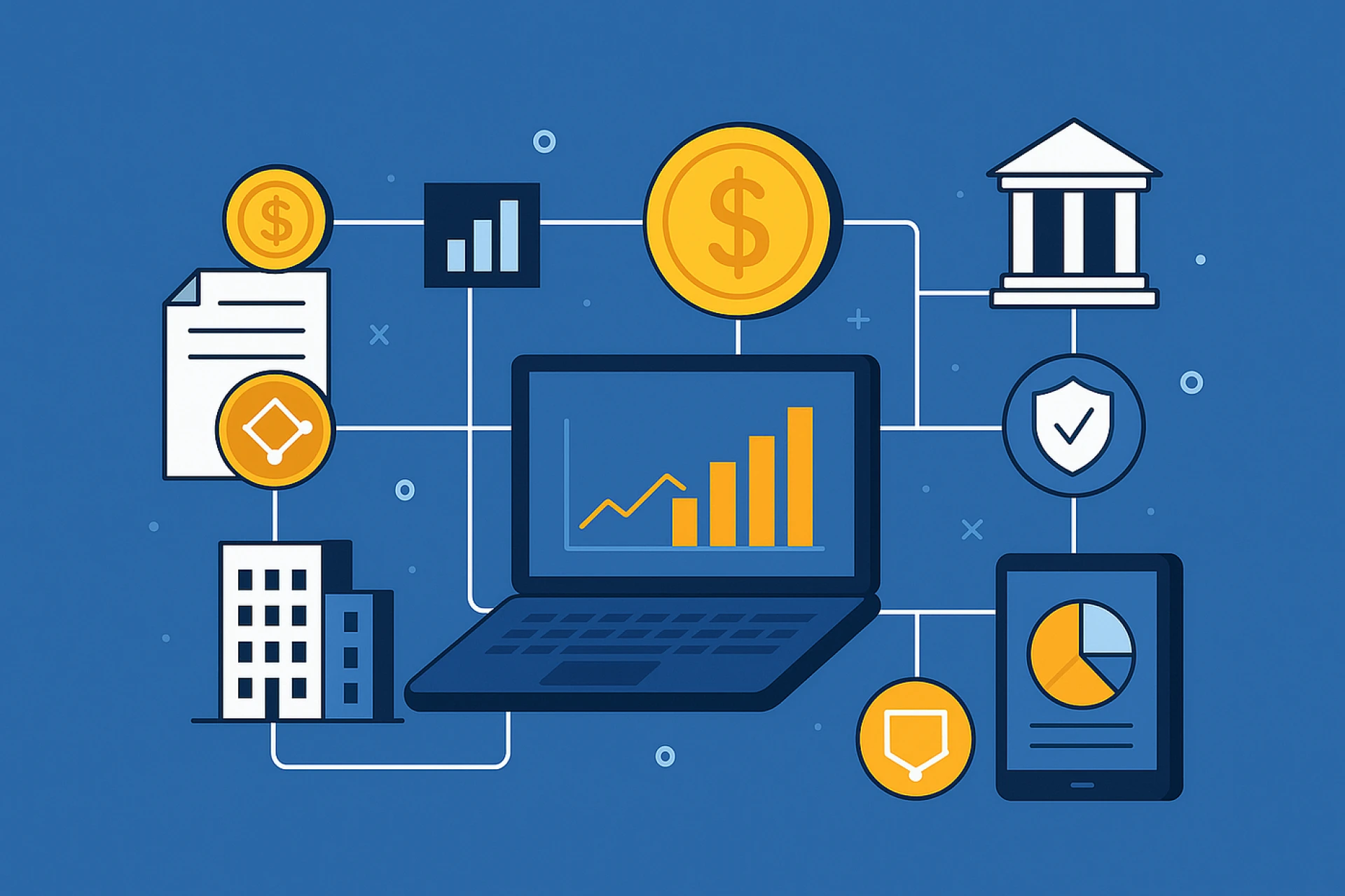
The expansion of real-world asset (RWA) tokenization continues to reshape digital asset ecosystems, enabling physical and financial assets to be represented on decentralized networks. The year 2026 is expected to intensify this shift as institutional players, regulatory bodies, and decentralized frameworks converge to create structured asset flows. The transition toward token-based representations of equity, commodities, infrastructure, and credit instruments is driving a deeper level of capital participation. As the RWA sector matures, the frameworks that define visibility, user engagement, and information accessibility are undergoing structural change. These shifts create new pathways for investors to evaluate transparency, liquidity, user trust, and data accessibility in the RWA token space.
Understanding upcoming trends helps investors anticipate foundational changes, assess risk dynamics, and align their strategies with the evolving nature of tokenized assets. The following sections explore the critical developments shaping RWA token visibility, communication structures, analytical frameworks, network participation patterns, and information dissemination mechanisms expected to influence investor behavior in 2026.
The Rising Emphasis on Data-Driven Transparency Standards
A significant shift in RWA token ecosystems is the emergence of multi-layered transparency protocols that enable investors to verify the authenticity, performance, and underlying value of tokenized assets. Platforms are integrating advanced data-verification systems that collect, validate, and represent asset-related information without requiring intermediaries. These systems ensure that valuation metrics, ownership structures, and performance histories are visible in real time, providing investors with evidence-based insights.
In 2026, transparency is expected to become a core pillar of RWA token adoption as asset-origin data, real-time audits, and chain-based attestations gain prominence. Investors will observe a structural transition toward on-chain reporting, cryptographic proofs of authenticity, and decentralized monitoring systems that reduce information asymmetry. This creates a more resilient environment where asset integrity can be validated independently, improving confidence in tokenized commodities, real estate, debt instruments, and institutional assets.
The Expansion of On-Chain Proof Systems for RWA Verification
The introduction of zero-knowledge proofs (ZKPs), decentralized identity constructs, and automated attestations introduces more reliable structures for verifying RWA ownership and asset legitimacy. These systems remove the need for centralized verifiers by enabling cryptographic mechanisms that validate the existence and performance of underlying physical assets.
In 2026, RWA projects are expected to adopt proof-of-reserves models, sustainability-based attestations, supply chain provenance indicators, and machine-generated verification trails. This increases investor confidence as asset issuers cannot alter core asset information without detection. These changes strengthen the long-term stability of RWA tokens, especially those backed by real estate, commodities, institutional credit, and infrastructure-linked financial assets.
The Integration of AI-Powered Asset Analysis and Behavior Modelling
Artificial intelligence is becoming a defining force in the analysis of tokenized assets. Sophisticated models can study valuation patterns, liquidity flows, historical metrics, and broader economic indicators to create predictive insights. The integration of AI into RWA ecosystems is transforming how investors evaluate asset-backed tokens.
By 2026, AI systems embedded within RWA networks will assess asset performance, identify patterns of value movement, detect anomalies, and calculate potential returns through statistical and machine-learning models. This deepens investor understanding of real-world assets by presenting data-driven interpretations of risk exposure, collateral strength, economic volatility, and interest-rate correlations.
This allows investors to interpret complex macroeconomic conditions and understand how such conditions influence RWA categories such as tokenized bonds, commodity-backed tokens, real estate shares, and corporate credit products.
The Emergence of Institutional-Grade Risk Assessment Models
Institutional frameworks are moving into the tokenization industry, bringing advanced risk-assessment methodologies commonly used in traditional finance. These models categorize risk based on credit performance, macroeconomic indicators, liquidity compression, counterparty obligations, and market sensitivity.
By 2026, RWA platforms are expected to adopt institution-style risk ratings, scenario simulations, stress-testing models, and governance assessments designed to evaluate the long-term sustainability of underlying assets. Investors will have access to rigorous analytical tools that offer structured interpretations of tokenized treasuries, private credit systems, and infrastructure-linked debt products.
This shift improves information accuracy and reduces exposure to unstable RWA offerings, narrowing the gap between traditional investment models and blockchain-based infrastructure.
The Shift Toward Regulatory-Aligned Information Frameworks
As global jurisdictions refine tokenization guidelines, RWA issuers must align their communication frameworks with emerging regulatory standards. This evolution strengthens asset classification, risk disclosure requirements, and investor protection procedures.
By 2026, cross-border interoperability standards, compliance-driven disclosures, and regulatory-aligned audit formats will become central to RWA ecosystems. Investors will observe more uniform representations of asset categories, issuance structures, collateralization ratios, custodial relationships, and redemption conditions.
These frameworks allow investors to analyze RWA tokens through consistent parameters, supporting informed decision-making and reducing uncertainties created by fragmented or opaque disclosure methodologies.
The Movement Toward Real-Time Asset Valuation Systems
Traditional asset valuation methods are often static and updated infrequently. Tokenized assets, however, require dynamic valuation systems due to their fluid nature on decentralized networks. Investors benefit from continuous evaluation mechanisms that present real-time insights.
In 2026, the adoption of oracle-based valuation updates, AI-driven price discovery engines, and decentralized data aggregators will introduce real-time valuation modules. These systems enable investors to analyze asset performance based on demand trends, market liquidity, external economic data, and global financial conditions.
The transition from infrequent updates to continuous valuation mechanisms enhances accuracy and supports deeper analysis of tokenized real estate, commodities, bonds, and institutional portfolios.
The Growth of Cross-Chain RWA Accessibility
The expansion of multi-chain ecosystems is encouraging the distribution of RWA tokens across interoperable networks. This shift enables flexibility, liquidity mobility, and broader participation.
By 2026, RWA tokens are expected to circulate across multiple blockchains using interoperability protocols, cross-chain bridges, and unified liquidity frameworks. Investors will gain access to diversified pools of tokenized assets without being restricted to a single network.
This broader accessibility supports complex investment structures where capital flows seamlessly between chains, allowing investors to compare yields, liquidity depth, and asset performance across multiple ecosystems.
The Development of Fractional RWA Ownership Models
Fractionalization remains one of the most transformative features of RWA tokenization, enabling broader participation in high-value asset classes. Tokenizing assets into smaller units opens access to categories traditionally limited to institutional or high-net-worth participants.
By 2026, fractional ownership models will expand through optimized smart contract systems, compliant investor frameworks, and standardized distribution protocols. Investors will be able to access tokenized fractions of commercial real estate, renewable energy infrastructure, corporate credit instruments, and commodity reserves.
This structure democratizes participation while maintaining transparent valuation and governance frameworks that support scalable investor engagement.
The Emergence of Decentralized Liquidity Hubs for Tokenized Assets
Liquidity is a critical factor for investor decision-making, and tokenized asset markets continue to develop new mechanisms to manage liquidity depth, distribution, and conversion pathways. Decentralized liquidity hubs provide a unified environment where RWA tokens can achieve efficient trading conditions.
By 2026, advanced liquidity aggregation systems, automated pricing engines, and asset-backed swap networks will enhance the movement of capital within RWA ecosystems. These liquidity hubs enable investors to exchange tokenized real estate, bonds, commodities, and institutional credit instruments with improved transparency and reduced inefficiency.
This strengthens sector stability and supports greater investor participation.
The Reinforcement of Governance-Anchored Investment Frameworks
Tokenized assets often rely on governance structures that determine asset management procedures, operational guidelines, and decision-making processes. Investors increasingly value governance transparency as a factor influencing long-term sustainability.
In 2026, decentralized governance layers, standardized voting frameworks, and oversight committees will guide operational choices related to RWA assets. Investors will gain clear visibility into how decisions impact asset performance, fee structures, collateral management, and long-term sustainability.
These governance frameworks increase investor confidence by ensuring accountability and alignment between asset issuers and token holders.
The Rise of Sustainable and ESG-Aligned RWA Tokenization
Environmental, social, and governance criteria are gaining relevance in investment landscapes. Tokenization introduces new ways to verify sustainability claims and evaluate ESG alignment.
By 2026, RWA ecosystems will integrate sustainability metrics, energy-efficiency scores, ethical sourcing data, and ESG-based rating modules. Investors will be able to assess how tokenized assets contribute to sustainable finance goals.
This trend enhances the utility of RWA tokens in institutional portfolios where ESG compliance and environmental performance remain key decision-making factors.
The Advancement of Tokenized Real-Estate Information Models
Real estate remains one of the most influential segments of the RWA sector. In 2026, real-estate tokenization will evolve through enhanced property-level data structures, automated rental-flow reporting, tenant-performance analytics, and location-based valuation updates.
Investors will gain access to comprehensive datasets related to building condition, occupancy metrics, regulatory compliance, and income distribution frameworks. These data-rich systems improve risk analysis and strengthen asset emission frameworks aligned with investor expectations.
The Expansion of Tokenized Credit and Yield-Based Instruments
RWA tokenization is accelerating the transformation of the credit sector. Investors are gravitating toward tokenized treasury products, private credit pools, corporate debt tokens, and infrastructure-linked yield instruments.
In 2026, investors will observe a growing emphasis on structured yield models, automated principal-interest distribution systems, and credit-performance analytics. These instruments are supported by enhanced transparency frameworks that deepen investor understanding of repayment cycles, risk profiles, and collateral movements.
This trend reflects the rising institutional interest in tokenized income-generating assets.
The Role of Decentralized Identity in RWA Participation
Identity verification plays a crucial role in the distribution and governance of tokenized assets. Decentralized identity constructs enable secure, privacy-preserving verification mechanisms.
By 2026, decentralized identifiers (DIDs), verifiable credentials, and blockchain-based access controls will form the core of investor authentication systems. These identity layers reduce the need for centralized institutions while allowing investors to interact with RWA ecosystems securely and efficiently.
This enhances compliance, reduces operational risk, and improves user trust across tokenization networks.
The Evolution of Smart Contract Assurance and Security Audits
RWA tokens rely on secure smart contracts that govern asset issuance, ownership transfer, liquidity movement, and value distribution. Security remains a foundational requirement for investor confidence.
In 2026, advanced audit mechanisms, automated vulnerability detection systems, and continuous verification protocols will form the backbone of RWA contract assurance. Investors will observe rigorous standards designed to safeguard asset flows, contractual obligations, and ownership rights.
These improvements strengthen the reliability of RWA ecosystems and protect long-term investor interests.
The Impact of Global Macro-Economic Conditions on RWA Token Demand
Macroeconomic variables such as inflation shifts, central-bank policies, geopolitical tensions, and commodity cycles exert significant influence on RWA token demand. Investors often gravitate toward tokenized assets that maintain stability during economic uncertainties.
By 2026, RWA tokens linked to government bonds, institutional credit, energy commodities, and infrastructure projects are expected to gain increased traction. The correlation between macroeconomic conditions and RWA investment demand will become more pronounced, encouraging investors to evaluate economic indicators more closely.
This trend positions RWA tokens as a bridging point between decentralized networks and traditional financial systems.
Conclusion
The RWA token marketing sector is entering a transformative phase characterized by data-driven verification systems, real-time valuation mechanisms, cross-chain accessibility, institutional-grade risk assessment frameworks, and sustainability-focused evaluation models. The emergence of advanced transparency standards, AI-powered analytical systems, ESG-aligned asset structures, and decentralized identity layers will redefine how investors interpret and engage with tokenized real-world assets.
As the boundaries between traditional finance and decentralized infrastructure continue to dissolve, investors will require deeper analytical skills and a more comprehensive understanding of asset behavior, risk composition, regulatory alignment, and governance structures. The trends outlined in this analysis demonstrate that RWA token ecosystems in 2026 will prioritize structural integrity, transparency, reliability, and data-rich decision support rather than superficial engagement. These developments collectively strengthen the foundation of RWA tokenization and position the sector for sustained growth, institutional engagement, and long-term relevance within global financial architecture.