


Choosing the right preschool for your child is one of the most important decisions you’ll make as a parent. A good preschool lays the foundation for lifelong learning, social skills, and emotional growth. With so many options available, it can be challenging to identify the right one that truly meets your child’s needs. If you’re looking for the Best Preschool in Ahmedabad, here’s a complete guide to help you make an informed decision.
1. A Safe and Nurturing Environment
Safety should always come first when selecting a preschool. The environment must be secure, hygienic, and designed keeping in mind the curiosity and movement of young children. Check for features like CCTV surveillance, proper fencing, clean restrooms, child-proof furniture, and a favorable student-teacher ratio.
A nurturing environment also means teachers who are warm, patient, and genuinely care for each child’s well-being. A preschool should feel like a second home — a place where your child feels comfortable exploring and learning every day.
2. Qualified and Passionate Teachers
Teachers are the heart of any preschool. Their qualifications, training, and attitude can make all the difference in your child’s learning experience. Look for preschools that employ trained educators who specialize in early childhood education.
However, qualifications alone are not enough. Passion, creativity, and empathy are equally important. Great preschool teachers know how to engage children through storytelling, play, and hands-on learning — encouraging curiosity and confidence in every little learner.
3. A Balanced Curriculum
A good preschool curriculum should balance academic readiness with play-based learning. At the preschool stage, children learn best through activities that stimulate their imagination and encourage exploration.
Check if the preschool offers a curriculum that focuses on key developmental areas such as:
- Cognitive skills (basic math, problem-solving, and memory)
- Language development (phonics, storytelling, and communication)
- Social and emotional learning (teamwork, empathy, and self-regulation)
- Physical development (fine and gross motor skills through play and movement)
An effective curriculum integrates both structured learning and free play to ensure children develop holistically.
4. Child-Cent
ered Approach
Every child learns differently. A good preschool acknowledges this and offers flexible learning experiences that cater to different learning styles.
Observe how teachers interact with children — do they encourage independent thinking, curiosity, and problem-solving? Do they celebrate each child’s unique pace of learning?
A preschool that follows a child-centered philosophy prioritizes experiential learning, where children actively participate and learn through doing rather than rote memorization.
5. Infrastructure and Learning Resources
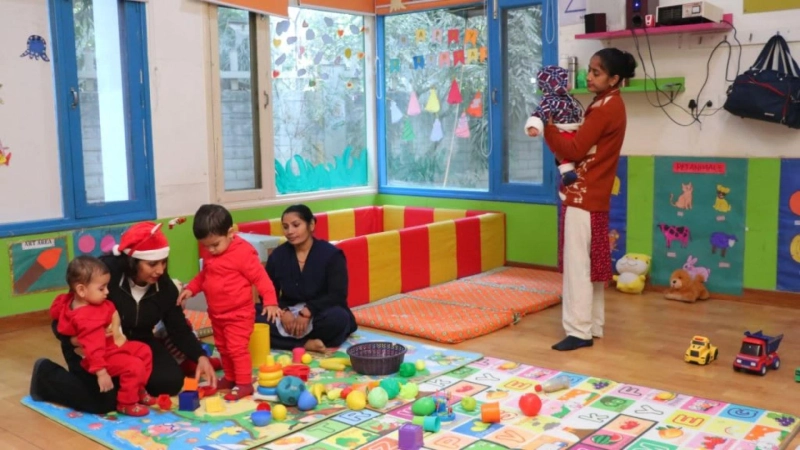
A well-designed preschool space should be bright, colorful, and inviting. Classrooms must have age-appropriate furniture, educational toys, books, and art supplies that stimulate creativity and curiosity.
Outdoor play areas are equally essential. Activities such as sand play, water play, and group games enhance physical coordination and social interaction.
Modern preschools also integrate technology in meaningful ways — using interactive learning tools or audio-visual aids to make lessons more engaging.
6. Focus on Emotional and Social Development
Preschool isn’t just about academics; it’s where children learn vital life skills. A good preschool emphasizes emotional intelligence — teaching children how to share, take turns, express their feelings, and resolve conflicts.
Programs that encourage group activities, storytelling, and dramatic play help children build communication and empathy. These skills are foundational for success not only in school but in life.
7. Transparent Communication with Parents
Parental involvement is key to a child’s growth. A good preschool maintains open communication with parents through regular updates, meetings, and progress reports.
You should feel welcome to discuss your child’s progress, habits, and challenges with teachers. Transparency in communication builds trust and ensures that the preschool and parents work together to support the child’s development.
8. Positive Reputation and Reviews
Before enrolling, do some research. Talk to other parents, read online reviews, and visit the preschool personally. A reputable preschool will have positive feedback, a consistent track record, and visible evidence of happy, engaged children.
You can also observe a class in session to see how teachers manage activities and how children respond. This firsthand experience often reveals more than brochures or advertisements.
9. Emphasis on Safety and Hygiene Standards
Especially in today’s world, health and safety are non-negotiable. Ensure the preschool follows strict hygiene practices — clean classrooms, sanitized toys, and healthy meal options.
Ask about their emergency procedures, first-aid availability, and child pickup policies. Knowing your child is safe gives you peace of mind and allows your child to learn freely.
10. Encouragement of Creativity and Exploration
Preschool should spark a child’s natural curiosity. Activities like painting, music, dance, storytelling, and pretend play encourage creativity and imagination.
A good preschool provides opportunities for children to explore their interests — whether through building blocks, nature walks, or simple science experiments. This freedom to explore helps children develop problem-solving skills and confidence in their abilities.
11. Location and Accessibility
While quality is the top priority, convenience also matters. Choose a preschool that is easily accessible from home or work. Short travel times reduce fatigue for children and make pick-up/drop-off stress-free for parents.
However, don’t compromise quality for proximity. Sometimes traveling a little farther for a better learning environment is worth it in the long run.
12. Value System and Teaching Philosophy
Every preschool has its own educational philosophy — Montessori, Reggio Emilia, Play-Way, or traditional. Understand the philosophy behind the preschool’s teaching approach and see if it aligns with your parenting values.
For instance, if you believe in experiential learning and independence, Montessori-style schools may appeal to you. If you prefer guided play and structured routines, a more traditional setup might work better.
13. Opportunities Beyond Academics
Preschool education should go beyond the classroom. Extracurricular activities such as field trips, festivals, music days, and art exhibitions broaden children’s horizons and make learning fun.
A preschool that celebrates cultural diversity and encourages participation helps children appreciate differences and develop confidence in expressing themselves.
14. Long-Term Vision and Growth Opportunities
If you are a parent looking ahead or an entrepreneur considering educational opportunities, understanding the long-term potential of early childhood education is valuable. The growing demand for quality education has also made the Preschool Franchise in India a promising business avenue for those passionate about nurturing young minds.
Parents benefit from choosing preschools that are part of a reputed franchise network, as they often maintain consistent standards, quality training, and proven methodologies across all centers.
Conclusion
Finding the right preschool requires time, observation, and trust. The best preschool will not only prepare your child academically but will also nurture their emotional, social, and creative development.
As a parent, focus on what truly matters — a loving environment, engaging learning, and teachers who understand your child’s unique potential. With the right choice, you’re setting the stage for a lifetime of confidence, curiosity, and joy in learning.