


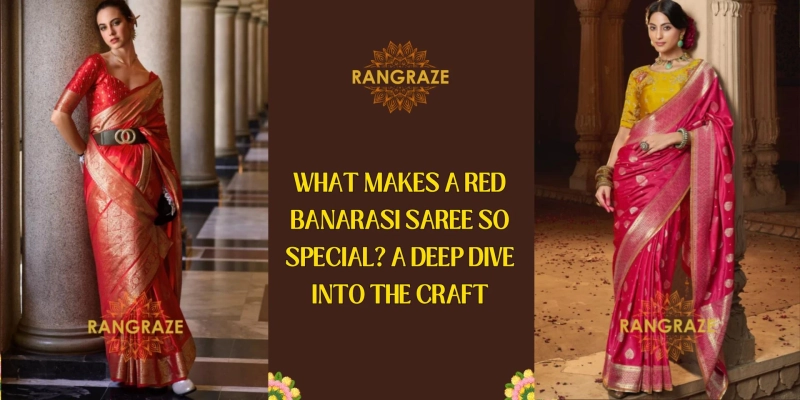
A red Banarasi saree has a personality of its own. The moment you unfold it, the fabric almost glows. Brides treat it like treasure, collectors love its history, and even someone who’s not a saree-person can’t ignore the charm it carries. There’s something magnetic about the way red blends with zari—bold, royal, and deeply rooted in Indian culture.
The Story Begins in Banaras
Walk through the old lanes of Varanasi and you’ll hear looms before you see them. The city still breathes handwoven magic. Every banarasi saree India is known for begins with a weaver sitting hours on a wooden loom, guiding silk threads like a musician handling notes.
A red Banarasi saree stands out because of its relationship with tradition. For ages, red has been the colour of weddings, beginnings, and blessings. Pair that with Banarasi weaving, and you get a piece that feels almost sacred.
Why Red Feels Different on Banarasi Silk
Red is not just “red” in Banarasi weaving. You’ll see deep maroons with gold, bright sindoor red with antique zari, wine-red hues with copper tones—each shade has its own mood.
Silk takes colour in a very dramatic way. So when you drape a red Banarasi saree, it doesn’t just sit on your body. It frames you. It highlights every fold, every step, every bit of jewellery you add.
The softness of the silk, the subtle shine, and the weight of zari create a combination that doesn’t feel like everyday clothing. It feels like stepping into a role.
The Weaving: Slow, Patient, and Beautifully Complicated
Jamdani, kadwa, jangla, meenakari—these aren’t just fancy weaving terms. They’re techniques that take endless hours and unreal precision.
- Kadwa weaving feels rich and textured.
- Jamdani motifs look delicate and floaty, almost like the pattern is sitting on the fabric.
- Meenakari work adds tiny bits of colour inside the zari, making the saree feel alive.
Many weavers say a single mistake in the positioning of threads can change the entire motif. And they redo it without complaining. That level of devotion becomes part of the saree’s soul. You can sense it when you touch the fabric.
Why This Craft Still Feels Magical
Even though you can buy banarasi silk sarees online today, the craft hasn’t lost its old-world charm. If anything, the digital world has made people appreciate the human effort behind it even more.
A red Banarasi saree isn’t something you buy casually. You pick it after imagining how it’ll look under wedding lights, how it’ll photograph, how it’ll feel years later when you open your wardrobe and catch that familiar pop of red again.
And let’s be honest—every woman who has owned a Banarasi saree remembers who gifted it, where she wore it, the compliments she got. Sarees like these create memories by default.
Why It Still Matters Today
Even though fashion trends keep changing, the Banarasi never steps aside. There’s a sense of permanence in it. A red Banarasi can be styled traditionally, or paired with a modern blouse, or even worn for a photoshoot. It adapts without losing its identity.
Maybe that’s why brides still choose it. Maybe that’s why families hold on to it. And maybe that’s why anyone who falls in love with this craft ends up wanting more than one.
If you’re planning to explore authentic weaves or want to buy banarasi silk sarees online without worrying about quality, Rangraze curates collections that keep the craft alive while offering colours, textures, and designs that feel timeless. A red Banarasi isn’t just clothing—it’s heritage wrapped in six yards.