



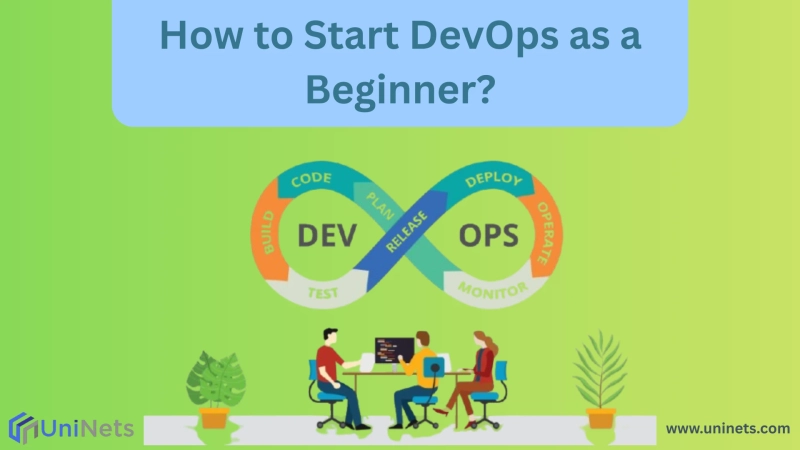
DevOps continues to evolve each year, and in 2025 it remains one of the most in-demand skills across IT, cloud computing, automation, and software development. For beginners planning a DevOps career, it’s important to understand the complete DevOps roadmap, the essential tools to learn, and how automation, cloud, and networking skills connect.
This guide explains the devops roadmap for beginners in 2025 with step-by-step stages from Linux fundamentals to cloud platforms, CI/CD pipelines, and even network automation basics, which have now become a crucial part of modern DevOps.
What Is DevOps? Why It Matters in 2025
DevOps is a culture and set of practices that bring development (Dev) and operations (Ops) together to deliver applications faster, more securely, and more efficiently. It focuses on:
- Automation
- Collaboration
- Continuous delivery
- Error reduction
- Infrastructure as code
- Monitoring and feedback
As cloud adoption and automation grow, the DevOps role expand and so does the need for learning What is Network Automation?, IaC, and emerging tools.
Complete DevOps Roadmap for Beginners in 2025
Below is the beginner-friendly roadmap covering everything you need to become job-ready in DevOps in 2025.
Learn the Basics (Linux, Git, Networking)
A strong foundation is the first requirement in any devops roadmap for beginners.
1. Linux Fundamentals
Linux is the backbone of servers, cloud, DevOps tools, and containers.
This is also where beginners learn network automation basics, such as:
- File system navigation
- Shell scripting
- Process management
- Permissions & ownership
- Package management
- Basic networking commands
- Using SSH
Learning Linux gives you clarity for automation and cloud tasks.
2. Git & Version Control
Git is essential for tracking code changes and working in teams. Learn:
- Git init / clone / push / pull
- Branching
- Merging
- GitHub / GitLab / Bitbucket
Git is also used in automation workflows for storing Infrastructure as Code (IaC).
3. Networking Fundamentals
Basic networking is crucial in DevOps.
Here is where you also begin to understand What is Network Automation? and how networking connects with cloud and CI/CD.
Learn:
- IP addressing
- Subnetting
- DNS
- Firewall basics
- Load balancing
- HTTP/HTTPS
Learn a Programming Language (Python Recommended)
Python is the most recommended language in the devops roadmap because it supports:
- Scripting
- Automation
- Networking
- Cloud SDKs
- Infrastructure as Code tools
Python is also the preferred language for learning network automation basics and reaping network automation benefits.
Master CI/CD Pipelines
CI/CD is at the heart of DevOps workflows.
Tools to Learn:
- Jenkins
- GitHub Actions
- GitLab CI
- Azure DevOps
- CircleCI
Learn how to create:
- Build pipelines
- Test automation
- Deployment workflows
- Automated approvals
CI/CD is where beginners begin to see real DevOps impact.
Learn Infrastructure as Code (IaC)
IaC is a non-negotiable skill in the devops roadmap for beginners and a major skill for DevOps jobs in 2025.
Essential IaC Tools:
1. Terraform
Used to create cloud resources automatically.
2. Ansible
Used for configuration management and is also widely used in network automation basics.
3. Pulumi (optional)
A modern IaC tool using real programming languages.
Learn Containers & Orchestration
Containers are everywhere from microservices to cloud workloads.
Learn Docker
Docker helps package applications into portable units.
Learn:
- Docker images
- Dockerfiles
- Containers
- Volumes
- Networks
Learn Kubernetes
Kubernetes (K8s) is the most in-demand DevOps skill today.
Learn:
- Pods
- Deployments
- Services
- ConfigMaps
- Ingress
- Autoscaling
- Helm charts
These skills heavily support automation and align with devops roadmap requirements.
Learn Cloud Platforms (AWS, Azure, GCP)
Cloud is at the center of DevOps in 2025.
What You Should Learn in Cloud:
- Virtual machines
- Serverless functions
- Storage
- Load balancing
- VPC networking
- IAM security
- Monitoring & Logging
- Cloud automation tools
Cloud skills also support network automation benefits such as faster deployments and scalability.
Monitoring & Logging
Monitoring helps maintain reliability and performance.
Tools to Learn:
- Prometheus
- Grafana
- ELK Stack
- Datadog
- Zabbix
- CloudWatch (AWS)
- Azure Monitor
Monitoring forms a crucial part of DevOps operations.
Security & DevSecOps Basics
Security is integrated into every stage of DevOps.
Learn:
- Vulnerability scanning
- Container security
- Secrets management
- Zero trust concepts
- IAM principles
These skills complete the beginner-friendly devops roadmap.
Optional but Highly Valuable: Network Automation
In 2025, DevOps and network automation work closely together.
Beginners should learn:
- What is Network Automation?
- Python for network automation
- Ansible automation for switches, routers, and firewalls
- API-based automation using REST APIs
- Git-based automation workflows
Why learn it? Because network automation benefits include:
- Faster deployment
- Reduced manual errors
- Consistent network configuration
- Smoother cloud integration
- Improved security automation
This optional step gives beginners a huge advantage in DevOps and cloud jobs.
Final DevOps Roadmap for Beginners in 2025 (Quick Summary)
Linux, Git, Networking
Python
CI/CD
Infrastructure as Code (Ansible, Terraform)
Docker & Kubernetes
Cloud Platforms (AWS, Azure, GCP)
Monitoring & Logging
DevSecOps
Network Automation (optional but powerful)
This is the complete and practical devops roadmap for beginners in 2025.
Conclusion
The DevOps field continues to grow rapidly, and beginners in 2025 must focus on automation, cloud, containerization, and security. By following this DevOps roadmap, learning network automation basics, understanding What is Network Automation?, and benefiting from the network automation benefits, you can build a strong foundation for a successful career in DevOps, cloud, and automation engineering.