



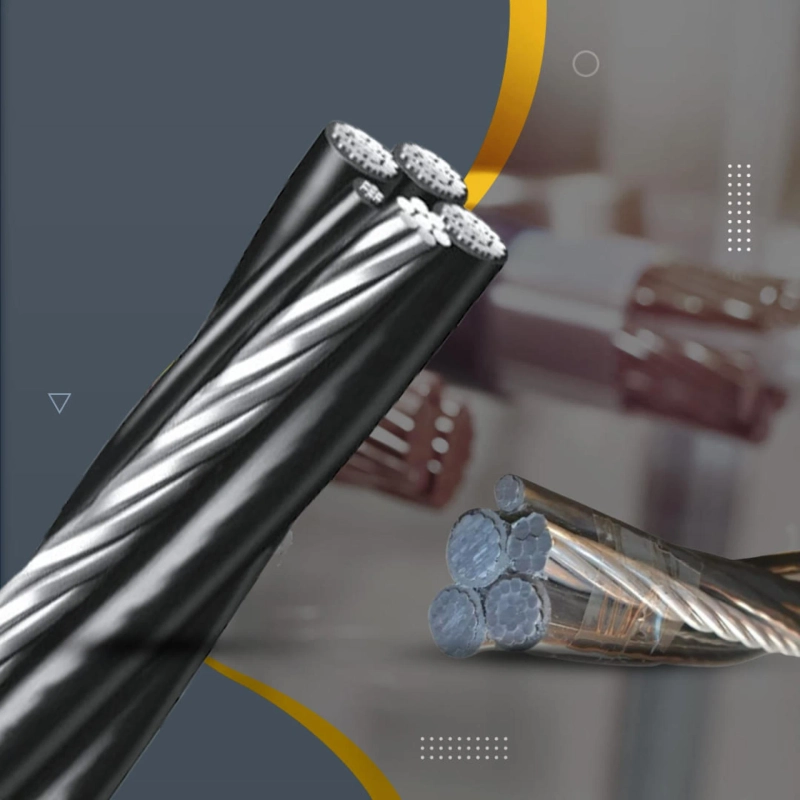
LT ABC (Low-Tension Aerial Bunched Cable) refers to a type of overhead power-distribution cable that bundles together multiple insulated conductors along with a messenger conductor for mechanical support. In contrast to traditional bare overhead wires, each phase conductor in an ABC cable is insulated, making the entire assembly much safer and more reliable. For residential and rural electricity distribution in both urban and remote areas, LT ABC offers a modern alternative to conventional overhead or underground cables.
Key advantages and features
One of the primary benefits of LT ABC is safety: insulation greatly reduces the risk of accidental contact, short circuits caused by environmental factors like wind or fallen tree branches, and related electrical hazards. Because the conductors are bundled and insulated, the lines require fewer poles and less maintenance; this makes installation simpler and cost-effective over time — a big plus when distributing electricity across congested urban lanes, rural landscapes, hilly terrains or forested zones. Additionally, the use of high-grade aluminium conductors with robust insulation (often XLPE) ensures good tensile strength, durability against UV, moisture and temperature variation, and stable voltage regulation with reduced power loss.
Applications and why LT ABC is increasingly preferred
LT ABC is widely used for overhead electricity distribution in a variety of environments: from narrow, congested city lanes where underground wiring is impractical, to remote villages, hilly regions, forests or coastal areas where terrain or weather makes traditional cables difficult or unsafe. Moreover, for power contractors and utility providers, LT ABC means fewer poles, easier rerouting in expanding urban setups, lower maintenance costs, and a more reliable supply — making it a practical, efficient solution for modern power distribution networks.