



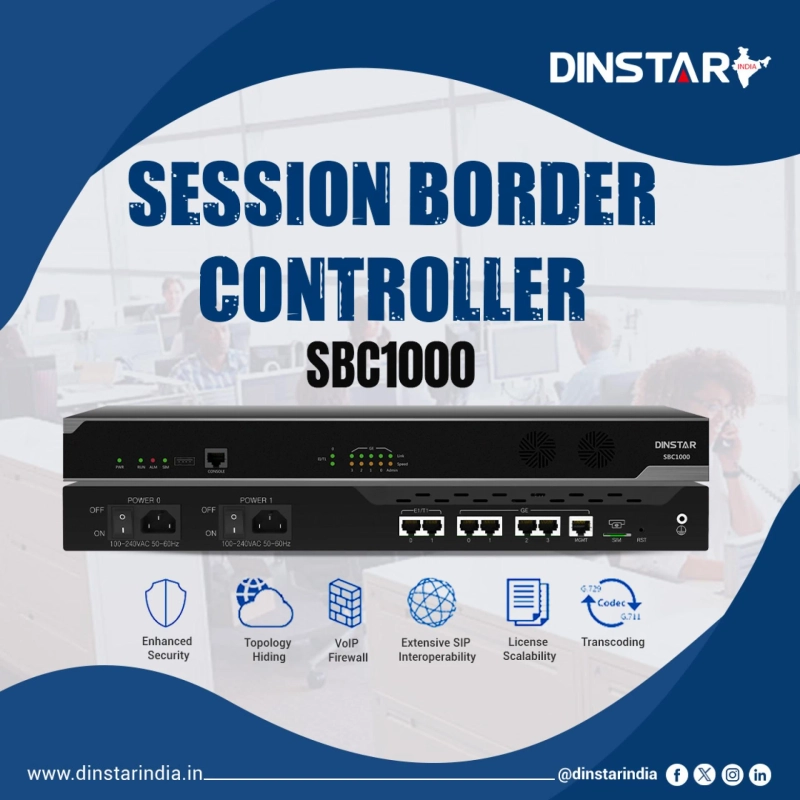
In today’s digital-first business world, voice and video communication over IP networks have become the backbone of organizational collaboration. With more companies moving towards Unified Communications (UC), VoIP (Voice over IP), and cloud-based telephony, the need for secure and reliable communication infrastructure is stronger than ever. One essential component that makes this possible is the Session Border Controller (SBC).
If you’re hearing the term for the first time or looking to understand how it works, its benefits, and why modern businesses rely on it, this guide covers everything you need to know.
What is a Session Border Controller (SBC)?
A Session Border Controller (SBC) is a network element that manages and secures real-time communication sessions like voice, video, and messaging over IP networks. It sits at the “border” between different networks, such as a company’s internal VoIP system and an external carrier’s network, controlling how sessions are initiated, maintained, and terminated.
In simpler terms, think of the SBC as a gatekeeper for IP-based communications. It ensures that calls are routed correctly, securely, and with high quality, while protecting the network from potential threats such as fraud, denial-of-service (DoS) attacks, and eavesdropping.
Why Are SBCs Important?
The importance of SBCs stems from the rapid adoption of VoIP and cloud communications. Unlike traditional phone systems, IP-based calls run over the internet or private networks, making them vulnerable to various risks. SBCs solve these challenges by:
- Securing Communication – Preventing unauthorized access and protecting data.
- Ensuring Interoperability – Allowing different VoIP systems and protocols to work together.
- Maintaining Call Quality – Managing traffic and avoiding network congestion.
- Providing Compliance – Meeting regulatory standards like lawful interception and emergency call routing.
Without an SBC, businesses may face poor call quality, service disruptions, or security breaches in their communication systems.
Key Functions of a Session Border Controller
An SBC performs multiple roles to ensure seamless, secure, and efficient communications. Let’s break them down:
1. Security
Security is the core function of any SBC. It prevents threats such as:
- Call hijacking
- Toll fraud
- Denial-of-Service (DoS) attacks
- Unauthorized network access
By inspecting and filtering traffic, SBCs safeguard sensitive business communications.
2. Interoperability
Different carriers, devices, and communication platforms often use varying protocols and codecs. SBCs act as a translator, ensuring that systems from different vendors can communicate smoothly.
3. Quality of Service (QoS)
SBCs prioritize voice and video traffic to maintain high call quality. They handle tasks like:
- Bandwidth management
- Traffic shaping
- Jitter and latency reduction
This ensures that communication remains clear and uninterrupted even during peak network usage.
4. Regulatory Compliance
SBCs help businesses comply with legal requirements by enabling features like:
- Emergency call routing (E911 in the U.S.)
- Call recording for audits
- Lawful interception when required
5. Session Management
SBCs control how calls are initiated, maintained, and ended. They manage signaling and media flows, ensuring that calls are properly routed without disruptions.
Benefits of Using a Session Border Controller
Businesses adopting SBCs gain several strategic advantages:
1. Enhanced Security
Protects against cyber threats, fraud, and unauthorized access.
2. Improved Communication Quality
Delivers consistent voice and video quality with minimal disruptions.
3. Cost Savings
Prevents fraudulent activities like toll bypass, which can lead to high bills. Also optimizes bandwidth usage.
4. Flexibility and Scalability
Supports hybrid work models by connecting remote employees securely. Easily scales as businesses grow.
5. Business Continuity
SBCs ensure communication services remain operational even during failures by offering redundancy and failover capabilities.
6. Seamless Integration
Connects with different carriers, PBX systems, and UC platforms without compatibility issues.
Session Border Controller vs. Firewall
Some may wonder if a traditional firewall is enough to secure VoIP traffic. The answer is no. While firewalls protect general data traffic, they are not optimized for the complexity of real-time communications.
Here’s how SBCs differ from firewalls:
- VoIP Awareness – Firewalls cannot understand SIP (Session Initiation Protocol) as deeply as SBCs.
- Call Quality Management – Firewalls don’t prioritize voice/video traffic, while SBCs do.
- Advanced Features – SBCs offer features like NAT traversal, codec translation, and lawful interception.
In essence, an SBC complements a firewall, providing specialized security and control for communication sessions.
Real-World Applications of SBCs
SBCs are widely used across industries and by service providers. Some common applications include:
- Enterprises – Protecting corporate VoIP networks and enabling secure remote work.
- Telecom Carriers – Managing large-scale call traffic between networks.
- Call Centers – Ensuring reliable and secure customer interactions.
- Cloud Communication Providers – Offering secure SIP trunking services.
Choosing the Right Session Border Controller
When selecting an SBC for your business, consider these factors:
- Scalability – Can it handle future growth in call volume?
- Deployment Model – Do you need on-premises, cloud, or hybrid deployment?
- Interoperability – Does it support multiple carriers and communication systems?
- Security Features – Look for strong encryption, DoS protection, and fraud prevention.
- Management Tools – Easy-to-use interfaces and monitoring features simplify administration.
- Cost – Balance initial investment with long-term savings and value.
The Future of Session Border Controllers
With the rise of cloud communication, Unified Communications as a Service (UCaaS), and 5G, SBCs are evolving. Future SBCs will likely focus more on:
- Cloud-native architectures
- AI-driven traffic analysis
- Enhanced support for collaboration platforms like Microsoft Teams and Zoom
- Integration with IoT and next-gen communication services
As businesses continue to embrace digital transformation, SBCs will remain central to delivering secure and high-quality communication experiences.
Conclusion
A Session Border Controller (SBC) is far more than a technical component; it is a business enabler. By ensuring secure, high-quality, and interoperable communication, SBCs allow organizations to connect with customers, partners, and employees without compromise.
As communication technologies evolve, the role of SBCs will only grow, making them a vital investment for any business serious about modern communication.