



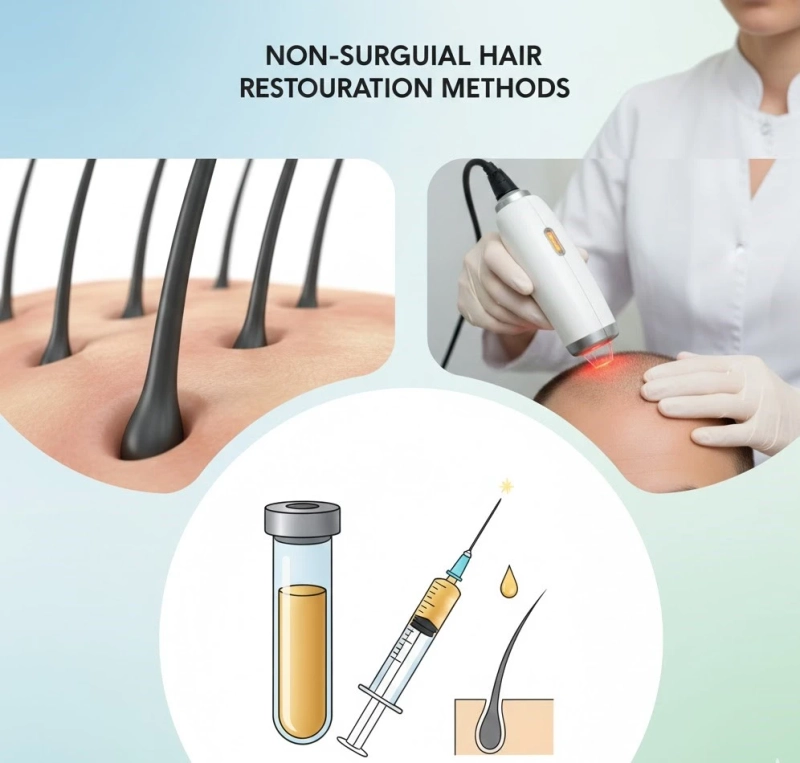
Hair loss is a deeply personal experience that affects millions of men and women worldwide. For some, it begins gradually with subtle thinning, while for others it appears more rapidly, altering their confidence and self-image. Fortunately, advances in modern hair restoration have created multiple pathways to regain fuller, healthier-looking hair without immediately turning to invasive procedures. Understanding the most reliable treatments — and knowing when surgery may or may not be appropriate, can help individuals make informed, long-term decisions.
This guide explores the most effective non surgical hair loss solutions, explains how they support lasting hair improvement, and clarifies where procedures like scalp reduction surgery fit within the broader restoration landscape.
Understanding Why Hair Loss Happens
Before choosing a treatment, it is important to understand the root cause of hair loss. Hair follicles are highly sensitive structures influenced by genetics, hormones, nutrition, stress levels, and overall health.
Some of the most common causes include:
- Androgenetic alopecia (pattern hair loss): A hereditary condition affecting both men and women.
- Hormonal fluctuations: Pregnancy, menopause, thyroid disorders, or medical treatments.
- Stress-related shedding: Often temporary but emotionally distressing.
- Nutritional deficiencies: Low iron, protein, or essential vitamins can weaken follicles.
- Inflammatory scalp conditions: Such as seborrheic dermatitis or psoriasis.
Because every case is unique, professional evaluation is essential. Treating hair loss without identifying its cause often leads to disappointment.
Why Many Patients Prefer Non-Surgical Approaches First
Not everyone is ready for a surgical procedure when they first notice thinning. Many patients prefer to begin with treatments that require little to no downtime and allow them to continue daily life uninterrupted.
High-quality non surgical hair loss solutions focus on strengthening existing follicles, improving scalp health, and encouraging natural growth cycles rather than replacing hair immediately.
Key advantages include:
- Minimal recovery time
- Lower upfront cost compared to surgery
- Gradual, natural-looking improvement
- Ability to combine multiple therapies
- Suitable for early to moderate hair loss
For many individuals, these treatments can delay — or even eliminate — the need for surgical intervention.
Clinically Proven Non-Surgical Treatments That Deliver Results
1. Medical-Grade Topical Therapies
Topical medications remain one of the most widely recommended starting points in hair restoration. When prescribed and monitored by a specialist, they can help prolong the growth phase of hair follicles.
Modern formulations often include:
- Vasodilators that improve blood flow
- Anti-inflammatory compounds
- DHT-blocking ingredients
- Peptide complexes that support follicle activity
Consistency is critical. Patients typically begin noticing reduced shedding within a few months, followed by gradual thickening.
These treatments work best for individuals in the early stages of thinning rather than those with extensive baldness.
2. Oral Medications Under Medical Supervision
Certain prescription medications help address the hormonal triggers of pattern hair loss. By limiting the conversion of testosterone into DHT — a hormone linked to follicle shrinkage — these treatments can slow progression significantly.
Important considerations include:
- Must be prescribed by a qualified professional
- Require ongoing use to maintain results
- Periodic monitoring ensures safety
For many patients, combining oral medication with other non surgical hair loss solutions produces stronger, more stable outcomes.
3. Platelet-Rich Plasma (PRP) Therapy
PRP therapy has become a respected option in regenerative medicine. The process involves drawing a small amount of the patient’s blood, concentrating the growth factors, and injecting them into targeted scalp areas.
These growth factors help:
- Stimulate dormant follicles
- Improve circulation
- Extend the growth phase
- Enhance hair thickness
PRP is especially appealing because it uses the body’s own healing mechanisms. Most patients require a series of treatments followed by maintenance sessions.
Results tend to appear gradually, making patience an important part of the process.
4. Low-Level Laser Therapy (LLLT)
Laser-based devices are designed to deliver light energy to the scalp, encouraging cellular activity within follicles.
Research suggests this technology can:
- Increase hair density
- Improve strand strength
- Reduce shedding
- Support overall scalp health
It is painless, non-invasive, and suitable for home or clinical use depending on the device.
While LLLT rarely acts as a standalone cure, it complements other therapies exceptionally well.
5. Advanced Scalp Care and Detoxification
A healthy scalp creates the environment necessary for sustained growth. Excess oil, buildup, and inflammation can restrict follicles and weaken hair over time.
Professional scalp treatments may include:
- Gentle exfoliation
- Hydration therapy
- Microcirculation stimulation
- Medical-grade cleansing
These services are often overlooked but can significantly enhance the effectiveness of broader non surgical hair loss solutions.
6. Nutritional Optimization
Hair is a reflection of internal health. Without adequate nutrients, even the best treatments may struggle to deliver meaningful improvement.
Specialists often recommend evaluating levels of:
- Iron
- Vitamin D
- Biotin
- Zinc
- Protein intake
Rather than guessing, lab testing allows providers to correct deficiencies strategically.
Balanced nutrition supports stronger regrowth and helps protect long-term results.
When Hair Loss Progresses Beyond Non-Surgical Care
Although modern therapies can produce impressive improvements, they are not always sufficient for advanced baldness. When follicles have been inactive for years, revival becomes unlikely.
At this stage, surgical options may be discussed.
One historically recognized procedure is scalp reduction surgery, which involves removing areas of bald scalp and stretching hair-bearing skin to cover the space.
While effective in specific cases, it is far less common today due to advancements in transplant techniques that typically provide more natural density and flexibility.
Still, understanding this procedure helps patients appreciate how far restoration medicine has progressed.
How Scalp Reduction Surgery Compares to Modern Treatments
Scalp reduction surgery was once considered a practical solution for individuals with significant crown baldness. However, it requires careful patient selection and surgical expertise.
Potential Benefits:
- Immediate reduction in bald surface area
- Permanent removal of non-growing scalp
- Can be combined with transplantation
Important Considerations:
- Involves surgical recovery
- Leaves a linear scar
- Limited styling flexibility
- Not suitable for everyone
Because today’s patients often seek subtle, natural-looking outcomes, many physicians recommend exhausting non-invasive therapies before considering procedures like scalp reduction surgery.
In some cases, a blended strategy, combining surgery with regenerative treatments — may provide the most balanced result.
Building a Long-Term Hair Improvement Strategy
Successful restoration is rarely about choosing a single treatment. Instead, it involves creating a personalized plan that evolves over time.
A strong strategy typically includes:
Early Intervention
The sooner thinning is addressed, the more follicles can be preserved.
Combination Therapy
Layering treatments often produces better density than relying on one method alone.
Professional Monitoring
Hair patterns change. Regular assessments ensure your plan adapts accordingly.
Realistic Expectations
Improvement takes time. Hair grows in cycles, not overnight.
Patients who approach restoration with patience tend to feel more satisfied with their progress.
Emotional Impact: Why Treating Hair Loss Matters
Hair is closely tied to identity. When it begins to thin, the psychological effects can be just as significant as the physical ones.
Many patients report:
- Increased self-consciousness
- Social hesitation
- Changes in personal style
- Lower confidence
Seeking treatment is not about vanity — it is about well-being.
High-quality non surgical hair loss solutions allow individuals to take proactive steps without feeling rushed into surgery.
Regaining control over one’s appearance often restores a powerful sense of confidence.
Choosing the Right Specialist
Not all hair restoration providers offer the same level of expertise. Selecting a qualified professional greatly influences outcomes.
Look for clinics that provide:
- Comprehensive scalp evaluations
- Transparent treatment plans
- Evidence-based therapies
- Experienced medical staff
- Long-term follow-up care
Avoid one-size-fits-all promises. Personalized care almost always produces better results.
The Future of Non-Surgical Hair Restoration
Research continues to reshape what is possible in hair medicine. Emerging therapies focus on cellular regeneration, follicle cloning concepts, and advanced biologics.
While some innovations remain under study, the direction is clear: treatments are becoming more precise, less invasive, and increasingly effective.
For patients hesitant about surgery, this is encouraging news.
Modern non surgical hair loss solutions already offer meaningful improvement — and the next generation of therapies may expand those possibilities even further.
Frequently Asked Questions
How soon should I seek treatment after noticing hair thinning?
It is best to consult a professional as early as possible. Early intervention protects active follicles and broadens your treatment options.
Are non-surgical treatments permanent?
Most therapies help maintain and strengthen existing hair rather than permanently cure hair loss. Ongoing care is typically required for lasting benefits.
Can these treatments completely replace surgery?
For mild to moderate thinning, they often provide excellent results. However, individuals with extensive baldness may eventually explore surgical options such as scalp reduction surgery or transplantation.
Do these treatments work for women as well as men?
Yes. Many therapies are highly effective for female pattern thinning and hormonally driven hair loss when properly prescribed.
Is there downtime involved?
Most non-invasive treatments allow patients to return to normal activities immediately or within a day.
How do I know which treatment is right for me?
A detailed scalp assessment is the most reliable way to determine the cause of your hair loss and identify the therapies most likely to help.
Final Thoughts
Hair restoration is no longer limited to surgical procedures. Today’s patients have access to sophisticated, medically guided treatments that prioritize follicle health, encourage natural growth, and support long-term improvement.
Beginning with non surgical hair loss solutions gives many individuals the opportunity to stabilize thinning, enhance density, and delay more invasive procedures. And while scalp reduction surgery remains part of the medical conversation for advanced cases, it is now just one option within a much broader spectrum of care.
If you are experiencing hair loss, the most important step is seeking professional guidance. With the right strategy, patience, and expert support, fuller and healthier-looking hair is an achievable goal — and one that can positively influence confidence for years to come.