



Understanding Lab-Grown Diamonds at a Scientific Level
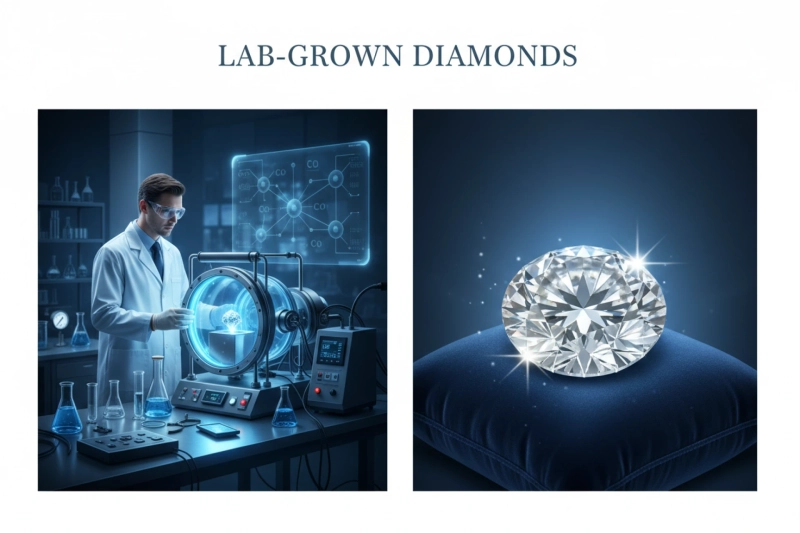
We define lab-grown diamonds as real diamonds that are created in advanced laboratories using cutting-edge technology designed to replicate the natural diamond formation process. These diamonds possess the same physical, chemical, and optical properties as mined diamonds. The only difference lies in their origin. Instead of forming over billions of years beneath the Earth’s surface, lab-grown diamonds are cultivated in a controlled environment within a matter of weeks.
Experts confirm that lab-grown diamonds are composed of pure crystallized carbon, arranged in a cubic crystal structure identical to natural diamonds. This makes them indistinguishable from mined diamonds without specialized gemological equipment.
How Lab-Grown Diamonds Are Made
High Pressure High Temperature (HPHT) Method
The HPHT process mimics the natural conditions under which diamonds form deep within the Earth. A small diamond seed is placed in a press and exposed to extreme heat exceeding 1,500°C and intense pressure. Carbon atoms bond to the seed, growing layer by layer into a fully formed diamond crystal.
Chemical Vapor Deposition (CVD) Method
The CVD method uses a carbon-rich gas that is broken down in a vacuum chamber. Carbon atoms adhere to a diamond seed and crystallize over time. This technique allows for exceptional control over clarity, color, and size, making it the preferred method for premium lab-grown diamonds.
Both methods produce diamonds that meet international gemological standards and are certified by leading institutions.
Are Lab-Grown Diamonds Real Diamonds?
Experts unanimously confirm that lab-grown diamonds are 100 percent real diamonds. They are not cubic zirconia, moissanite, or simulants. Lab-grown diamonds are graded using the same 4Cs criteria: Cut, Color, Clarity, and Carat weight.
Major gemological laboratories such as GIA and IGI recognize and certify lab-grown diamonds, further validating their authenticity and value in the global jewelry market.
Lab-Grown Diamonds vs Natural Diamonds
Physical and Visual Comparison
From a visual standpoint, lab-grown diamonds are identical to natural diamonds. Even professional jewelers cannot distinguish between them without advanced testing equipment. Both types exhibit the same fire, brilliance, and scintillation.
Price and Value Differences
Lab-grown diamonds typically cost 30 to 60 percent less than mined diamonds of equivalent quality. This pricing advantage allows buyers to choose larger carat sizes or higher clarity grades without exceeding their budget.
Ethical and Environmental Considerations
Lab-grown diamonds are widely recognized as a more ethical and sustainable choice. They eliminate concerns related to mining practices, land degradation, and conflict sourcing. Experts highlight that lab-grown diamonds require significantly less water and energy, resulting in a lower carbon footprint.
Certification and Quality Standards
Every high-quality lab-grown diamond is accompanied by a certification report from reputable gemological institutes. These reports detail precise measurements, growth method, fluorescence, and grading metrics.
We emphasize the importance of purchasing certified lab-grown diamonds to ensure transparency, authenticity, and long-term value.
Types of Lab-Grown Diamond Jewelry
Engagement Rings
Lab-grown diamond engagement rings are increasingly favored for their exceptional brilliance and affordability. Couples can select intricate designs and larger center stones while maintaining ethical values.
Wedding Bands and Fine Jewelry
From tennis bracelets to earrings and pendants, lab-grown diamonds are redefining luxury jewelry by offering premium aesthetics with responsible sourcing.
Durability and Longevity of Lab-Grown Diamonds
Lab-grown diamonds rank 10 on the Mohs hardness scale, making them the hardest known material on Earth. This ensures lifelong durability, resistance to scratching, and suitability for everyday wear.
Experts confirm that lab-grown diamonds will never fade, cloud, or lose brilliance over time, making them a permanent and reliable investment in fine jewelry.
Resale and Market Acceptance
The market acceptance of lab-grown diamonds has grown rapidly across international luxury sectors. While resale values differ from natural diamonds, lab-grown diamonds offer exceptional value through quality, size, and design flexibility at the time of purchase.
Industry analysts predict continued growth as consumer awareness and sustainability priorities increase.
Common Myths About Lab-Grown Diamonds
Myth: Lab-Grown Diamonds Are Fake
Fact: Lab-grown diamonds are chemically and physically identical to mined diamonds.
Myth: They Lack Value
Fact: Value is defined by quality, certification, and craftsmanship, not solely by origin.
Myth: They Do Not Last
Fact: Lab-grown diamonds offer the same lifetime durability as natural diamonds.
Why Experts Recommend Lab-Grown Diamonds
Experts across the jewelry and gemology industries highlight lab-grown diamonds as the future of fine jewelry. Their combination of ethical sourcing, technological precision, affordability, and unmatched beauty positions them as a superior choice for modern buyers.
We recognize lab-grown diamonds as a refined solution for those seeking luxury without compromise.
Final Expert Perspective
Lab-grown diamonds represent a transformation in the diamond industry. They offer scientific excellence, visual perfection, ethical integrity, and economic advantage in one extraordinary gemstone. As technology advances and global standards evolve, lab-grown diamonds continue to redefine what it means to own a truly exceptional diamond.