




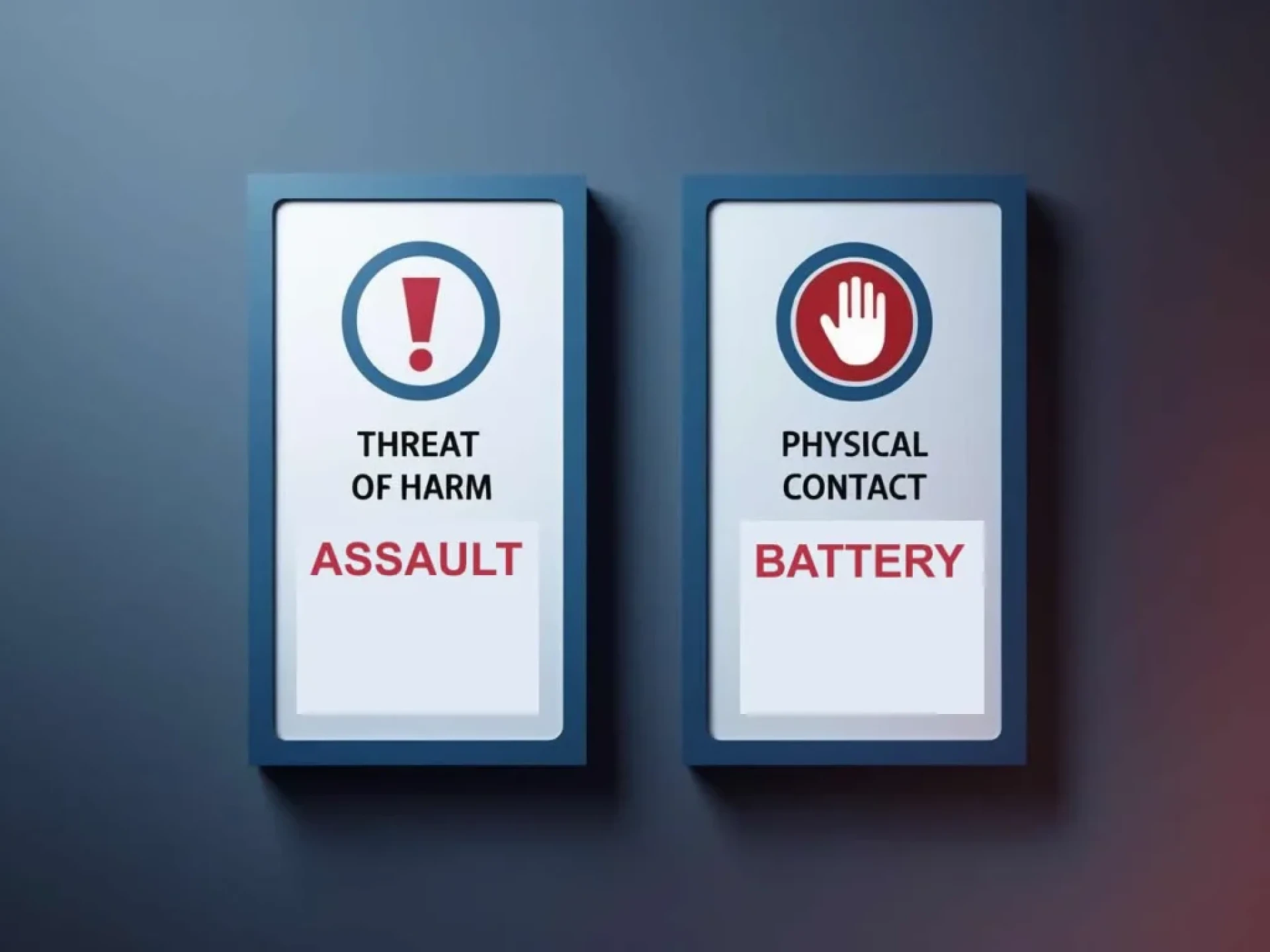
Assault and battery charges are common criminal offenses that involve threats, attempts, or acts of physical harm against another person. Although the terms are often used together, assault and battery are legally distinct crimes, and understanding the difference is essential if you or someone you know is facing these charges.

What Is Assault?
Assault generally refers to an act that causes another person to reasonably fear imminent harmful or offensive contact. Physical contact is not always required for an assault charge.
Examples of assault include:
- Threatening someone with physical harm
- Raising a fist or weapon in a threatening manner
- Attempting to strike someone but missing
In many jurisdictions, verbal threats alone may not qualify as assault unless they are accompanied by actions that create a genuine fear of immediate harm.
What Is Battery?
Battery involves actual physical contact with another person that is harmful or offensive. Unlike assault, battery requires physical touching, even if the injury is minor.
Examples of battery include:
- Hitting, punching, or slapping someone
- Pushing or shoving another person
- Throwing an object that strikes someone
In some cases, even unwanted physical contact without injury can be classified as battery.Often, a single incident can result in both assault and battery charges, especially if a threat is followed by physical harm.

Types of Assault & Battery Charges ➖
Assault and battery offenses can vary in severity, including:
- Simple assault or battery – Minor injuries or threats
- Aggravated assault or battery – Involves serious injury, weapons, or vulnerable victims
- Domestic assault & battery – Occurs between family members or intimate partners
- Felony assault & battery – Causes severe bodily harm or involves deadly weapons
The classification depends on factors such as intent, injury level, use of weapons, and the victim’s status.

Penalties for Assault & Battery Charges ➖
Penalties vary by state and severity but may include:
- Fines
- Probation
- Mandatory anger management or counseling
- Jail or prison time
- A permanent criminal record
Felony convictions often carry harsher sentences and long-term consequences affecting employment and housing.
Defenses Against Assault & Battery Charges ➖
Common legal defenses may include:
- Self-defense or defense of others
- Lack of intent
- False accusations
- Insufficient evidence
- Mutual combat (in some jurisdictions)
An experienced criminal defense attorney can evaluate the facts and build a strong defense strategy.

Why Legal Representation Matters?
Assault and battery charges can have serious legal and personal consequences. Even misdemeanor convictions can impact your reputation and future opportunities. Seeking legal counsel early helps protect your rights and ensures you understand your options.
Conclusion ➖
Assault and battery charges cover a wide range of behaviors, from threats to physical violence. Knowing the difference between the two and understanding potential penalties is crucial. If you are facing assault & battery charges, consulting a qualified criminal defense lawyer is the best step toward protecting your future.