


In today’s fast-moving digital landscape, content alone is no longer enough to capture attention. Audiences crave stories—stories that feel real, human, and emotionally grounded. Among the most impactful ways to create such connection is through visual storytelling in content marketing, a powerful approach that transforms ordinary moments into meaningful narratives.
For organizations dedicated to authenticity, representation, and social impact, visual storytelling is not just a strategy—it’s a purpose. And at the center of this movement is The Move Movement, a storytelling platform that uses photography, film, and art to spotlight real people, real movement, and real stories that challenge norms and inspire change.
What Is Visual Storytelling in Content Marketing?
Visual storytelling is the art of using images, videos, and visuals to tell a story that resonates emotionally and communicates a deeper message. Instead of relying on text-driven campaigns, visual storytelling lets audiences see, feel, and experience the narrative.
It’s not about polished perfection—it’s about authenticity.
Visual storytelling includes:
- Documentary-style photography
- Behind-the-scenes visuals
- Short films and mini-series
- Social-first video content
- Immersive visual experiences
- Photo essays and digital stories
- Branded video campaigns
When done well, visual storytelling becomes a universal language. It transcends words and creates emotional bonds that traditional marketing can’t achieve on its own.
Why Visual Storytelling Works
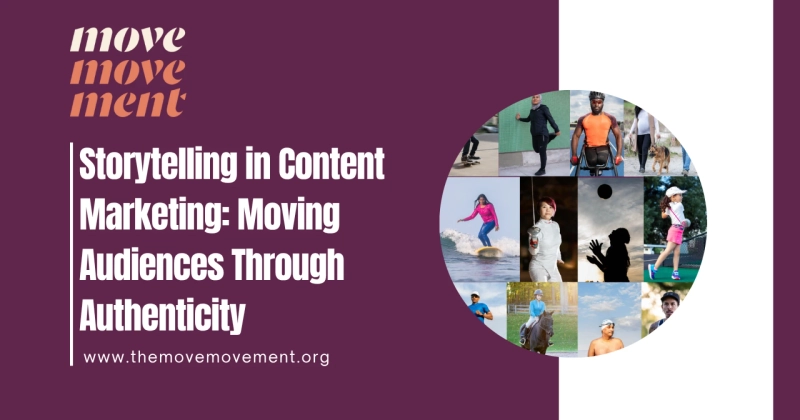
Whether it's an adaptive athlete pushing through challenges or a community celebrating movement, visuals have the ability to communicate what words cannot. Here’s why visual storytelling in content marketing is so effective:
1. Visuals Speak to Emotion
People are wired to respond to images. Visual content activates emotional centers of the brain, making stories more memorable and impactful.
2. Movement Adds Narrative Power
Movement—whether in sports, dance, work, or everyday life—symbolizes progress, resilience, joy, and identity. It tells a story without needing text to explain it.
3. Audiences Trust Authenticity
Overly polished or staged visuals create distance. Real, unscripted moments build trust and strengthen brand connection.
4. Stories Drive Action
People are far more likely to support a cause, share content, or engage with a brand when they feel emotionally moved by what they see.
5. Representation Matters
Visual storytelling helps break stereotypes by showing real people in real environments—reflecting diversity in gender, race, ability, identity, culture, and age.
The Move Movement: Where Movement Becomes Meaning
The Move Movement is redefining what visual storytelling in content marketing can look like. Instead of focusing on idealized versions of sport or fitness, the platform highlights raw, authentic stories grounded in lived experience.
Here’s how The Move Movement is changing the narrative:
1. Challenging Stereotypes Around Movement
For too long, the worlds of sports, fitness, and movement have been portrayed through a narrow lens—featuring only certain bodies, abilities, or identities. The Move Movement disrupts this by showcasing:
- adaptive athletes
- diverse communities
- women and girls in underrepresented sports
- nontraditional forms of movement
- athletes across cultures and backgrounds
Through storytelling, the platform redefines what strength, joy, and movement really look like.
2. Visual Authenticity That Truly Connects
The power of The Move Movement lies in its commitment to authenticity. Instead of staged moments, the team captures:
- real training sessions
- community events
- behind-the-scenes journeys
- everyday people moving with purpose
Every visual tells a deeper story—a story that feels honest, human, and relatable.
3. Collaborative Storytelling for Social Impact
The Move Movement partners with nonprofits, universities, organizations, and brands that want to use storytelling in content marketing for greater purpose. Rather than creating one-off visuals, they craft entire narratives that support long-term impact.
These partnerships include:
- documentary photography projects
- branded campaigns
- donor and impact reports
- awareness-driven visuals
- purpose-driven videos
- immersive art installations
Through collaboration, visual storytelling becomes a tool for:
- advocacy
- representation
- community engagement
- social change
4. Transforming Movement Into Meaningful Narratives
Every person has a story, and every story has a message. The Move Movement takes these moments of movement—running, boxing, swimming, climbing, skateboarding—and turns them into narratives of:
- empowerment
- identity
- resilience
- joy
- cultural expression
- community connection
It’s not just about the action. It’s about what the action represents.
Why Visual Storytelling Matters for Social Impact Brands
Brands that want to make a difference must communicate with purpose. Visual storytelling is one of the strongest tools they can use, especially when working with a platform like The Move Movement.
• It Builds Human Connection
Stories of movement feel universal—they connect across cultures and backgrounds.
• It Drives Awareness
Visual content makes social issues visible, helping audiences understand the communities involved.
• It Encourages Representation
When brands showcase real people, they help break down barriers and foster inclusivity.
• It Inspires Action
Emotion-driven visuals motivate people to support causes, join campaigns, donate, or participate.
• It Creates Lasting Impact
Stories stay with audiences much longer than traditional advertisements.
Storytelling in content marketing becomes more than a tactic—it becomes a responsibility.
A Case Example: Elevating Women and Girls in Sport
One of The Move Movement’s most meaningful collaborations has been with Canadian Women and Sport. With only 4% of sports media coverage focusing on women, the need for representation was urgent.
Through documentary photography and a purpose-driven approach, The Move Movement helped create a robust visual library showcasing young female athletes in action. These weren’t posed images—they were real moments capturing strength, determination, and identity.
The result: a powerful shift in how organizations could communicate about women’s sport—with honesty, energy, and authenticity.
How Brands Can Embrace Visual Storytelling Today
Here are ways organizations can integrate more meaningful visual storytelling:
1. Capture Real Moments
Focus on authentic environments—not overly designed sets.
2. Highlight Diversity
Tell stories that reflect the communities you serve.
3. Focus on Movement
Movement adds emotion, symbolism, and narrative depth to visuals.
4. Create Stories With Purpose
Ask: What message will this visual communicate?
5. Collaborate With Experts
A partner like The Move Movement brings artistic vision, cultural understanding, and storytelling expertise.
Why Partner With The Move Movement
If your brand wants to:
- create content that inspires,
- break stereotypes through storytelling,
- celebrate human movement,
- amplify diverse voices,
- and drive meaningful social impact,
then The Move Movement is the visual storytelling partner you need.
Their content doesn’t just look beautiful—it carries purpose. It sparks emotion. It empowers communities. It turns movement into meaning.